

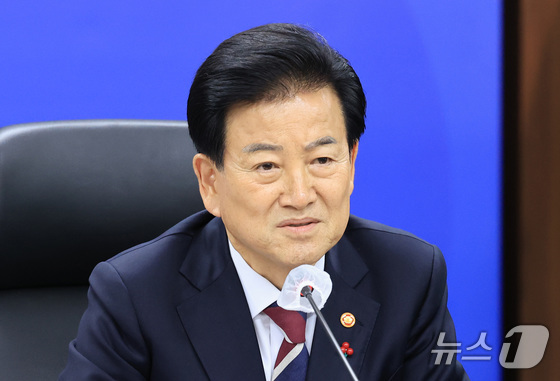
On December 19, President Lee Jae Myung effectively endorsed the Ministry of Unification as the primary agency for North Korea policy during a joint 2026 work plan briefing from the Ministries of Foreign Affairs and Unification. This move is expected to reshape the government’s approach to North Korea policy, centering it around the Ministry of Unification.
Proposal for a Special Envoy for Korean Peninsula Peace…Concept to Establish a Chief Representative for North Korea Encompassing the NSC and Ministry of Foreign Affairs
During the live-streamed briefing, President Lee emphasized that it must proactively and patiently work to ease tensions between North and South Korea, fostering an environment where trust can grow. He believes the Ministry of Unification is best positioned to lead this crucial effort.
The President devoted most of his opening remarks to assessing the situation in North Korea and inter-Korean relations. By highlighting the role of the Ministry of Unification at the conclusion, he signaled that this ministry would spearhead his vision. Lee also commended the Ministry of Foreign Affairs, stating that there’s nothing to criticize, effectively resolving past tensions between the two departments over North Korea policy control.
Following this briefing, it appears that the Ministry of Unification will take the lead in implementing the Lee Jae Myung North Korea policy.
In line with this shift, the Ministry of Unification announced plans to appoint a Special Envoy for Korean Peninsula Peace. While specific powers weren’t detailed, the ministry indicated it would urge the U.S. to appoint a dedicated North Korea policy representative, suggesting that the special envoy would serve as the government’s chief representative for U.S. negotiations on North Korean issues.
The U.S. State Department has previously had a special representative for North Korea policy. During the first Donald Trump administration in 2018, former representative Stephen Biegun led negotiations with North Korea. This position is currently unfilled.
After the briefing, Unification Minister Chung Dong-young clarified that the Special Envoy for Korean Peninsula Peace differs significantly from a special envoy to North Korea for direct dispatches. He explained that it believes appointing a high-level special representative for North Korea is crucial to facilitate a U.S.-North Korea summit. Given the delicate situation with North Korea, it sees this role as essential for communicating with neighboring countries.
This approach appears to consider that the National Security Council (NSC), which oversees foreign policy, is chaired by Kim Sung-han, and that the government’s ‘chief representative for North Korean nuclear issues’ is the head of the Foreign Ministry’s diplomatic strategy and information bureau. The plan seems to create a new position with broader authority to streamline government communication on North Korean issues.
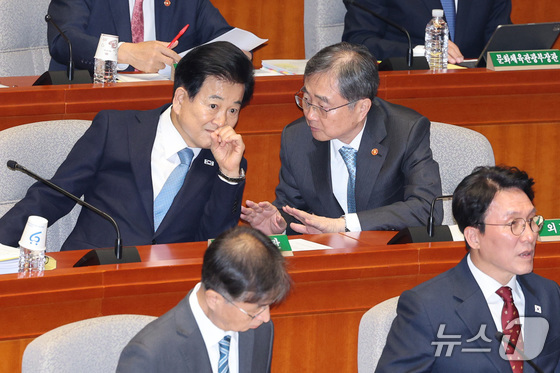
U.S. Response Remains Uncertain; Trump Likely to Prefer a Unified Voice Approach
If the Ministry of Unification’s vision materializes, it will lead negotiations with the U.S. regarding North Korea. This puts the spotlight on potential U.S. reactions.
During the 2018 North Korean nuclear negotiations, the Trump administration formed a working group with South Korea to discuss various matters. This group also ensured that inter-Korean cooperation projects under the Moon Jae-in administration didn’t outpace U.S.-North Korea denuclearization talks.
The recent attempt by South Korea and the U.S. to start regular North Korea policy consultations led by their respective foreign ministries on December 15 likely stems from this precedent. Some worry that the Trump administration might be hesitant about the Unification Ministry’s leading role in North Korea policy discussions, especially given its approach to easing tensions and promoting inter-Korean exchanges.
However, Foreign Minister Park Jin’s post-briefing statement is noteworthy. He said that the Foreign Ministry will work tirelessly to realize the Unification Ministry’s vision, emphasizing the need to examine various goals and garner international support, particularly focusing on eliciting a response from North Korea. This suggests that previous unified voice concerns between the U.S. and South Korea have been addressed.
Experts believe that unlike the comprehensive U.S.-led negotiations with North Korea in 2018, North Korea’s current unresponsiveness means the U.S. is unlikely to create conflicts with its South Korean ally.
Furthermore, some speculate that since President Trump has already responded positively to President Lee’s Peacemaker initiative, he would welcome improved coordination within the South Korean government.
The Ministry of Unification considers the period leading up to President Trump’s planned China visit in April next year critical for North Korea policy and intends to implement bold, proactive measures. They are expected to fast-track the appointment of the Special Envoy for Korean Peninsula Peace.