North Korea showcased its military capabilities, including nuclear, missile, and conventional forces, throughout 2025. However, experts assessed on Wednesday that its operational readiness remains incomplete. Analysts suggest that instead of expanding its strategy based on fully developed military capabilities, North Korea is designing its approach to compensate for its imperfect abilities through diplomatic, psychological, and coalition effects.
On Wednesday, Yang Wook, a researcher at the Asan Institute for Policy Studies, released an issue brief titled, Assessment of North Korea’s Military Activities in 2025: Predictions from the 9th Party Congress and Our Response. Yang stated that the upcoming 9th Party Congress will be a critical juncture in determining North Korea’s future trajectory as a nuclear power and overseas military actor.
According to Yang, the most significant shift in North Korea’s military activities this year is its overseas military intervention. Evidence has surfaced indicating that North Korea has provided troops and military supplies to the conflict in Ukraine. This development suggests that North Korea has evolved from a military actor confined to the Korean Peninsula to one engaging in overseas military operations. Yang interprets this shift as a calculated move to demonstrate strategic solidarity with China and Russia.
Yang predicts that this trend will become more pronounced around the 9th Party Congress scheduled for early next year. He anticipates that North Korea will use the congress to cement its status as a nuclear power and may introduce a new military doctrine combining nuclear and conventional forces under an integrated nuclear operational strategy.
Following the congress, Yang expects North Korea to set strategic goals aimed at enhancing its ability to strike the U.S. mainland and secure second-strike capabilities. This move would reaffirm the regime’s reliance on nuclear capabilities as a core means of ensuring its survival.
Yang argues that South Korea must recalibrate its response strategy. He advocates for reclassifying North Korea as a nuclear power and an overseas military actor rather than viewing it solely as a regional threat. Moving forward, South Korea should prioritize strengthening trilateral security cooperation with the U.S. and Japan, establishing a multi-layered missile defense and reconnaissance system, and applying pressure through international norms and sanctions.
Furthermore, Yang cautions against dismissing North Korea’s overseas projection capabilities as hypothetical scenarios. He warns that North Korean arms exports could expand beyond Russia to the Middle East, Africa, and Southeast Asia. To counter this threat, Yang emphasizes the need for systematic defense and security cooperation with allied and partner nations to protect U.S. export markets and security interests.
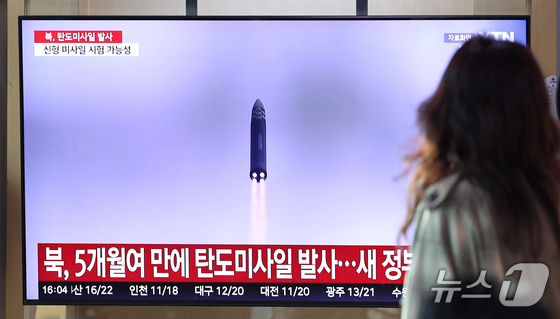
While North Korea has reduced the frequency of missile test launches this year, Yang notes that it has focused on enhancing its military presence through the unveiling of new weapon systems. These include the short-range hypersonic missile Hwasong-11 and the new intercontinental ballistic missile (ICBM) Hwasong-20. However, Yang points out that despite showcasing these new missiles, large surface vessels, and strategic submarines, these systems have not undergone sufficient testing and validation.
Regarding the five-year defense development plan presented at the 8th Party Congress in 2021, Yang assesses that North Korea’s claims of significant progress often fall short of substantial outcomes. While the appearance of nuclear weapons and ICBMs has improved, their precision, reliability, and deployment capabilities remain limited. Additionally, reconnaissance satellites and unmanned aerial vehicles have yet to reach a practical operational stage.