

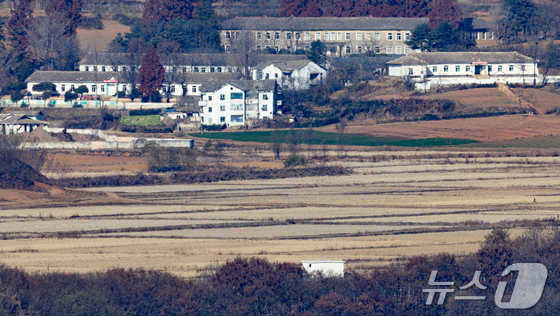
North Korea’s food crop production is estimated to have slightly increased this year compared to last year.
The Rural Development Administration announced on Tuesday that after a comprehensive analysis of weather conditions, pest occurrences, fertilizer supply, satellite imagery, and crop data from domestic and international research institutions, North Korea’s food crop production for 2025 is projected to reach 4.9 million tons, an increase of 120,000 tons (2.5%) from the previous year.
The analysis shows mixed results across different crops, with increased production in rice, wheat, barley, and beans, while corn production decreased due to adverse weather conditions and reduced cultivation area.
According to the Rural Development Administration, North Korea’s total food crop production this year is estimated at 4.9 million tons, up 120,000 tons (2.5%) from 4.78 million tons in 2024.
The estimated production by crop includes 2.25 million tons of rice, 1.52 million tons of corn, 550,000 tons of potatoes and sweet potatoes, 360,000 tons of wheat and barley, 200,000 tons of beans, and 20,000 tons of other grains.
Rice production increased by 100,000 tons (4.6%) compared to last year. Despite lower sunlight during the rice vegetative growth stage (May to June), which was somewhat unfavorable for growth, sunlight during the ear formation stage (July) was more abundant than the previous year. Additionally, lower average temperatures and slightly higher sunlight during the ripening stage (August to September) favored grain filling. The rice cultivation area also increased by 3.3%, contributing to the estimated rise in rice production.
Corn production decreased by 90,000 tons (5.6%) compared to last year. While there was no cold damage during the early growth stage (May) and rainfall from May to June was adequate, heavy rainfall and drought in some regions during the July flowering period likely led to poor pollination rates and reduced kernel formation. Continuous rainfall and high temperatures until September probably hindered proper grain filling. The corn cultivation area also decreased by 3.6%, contributing to the estimated decline in production.
Potatoes and sweet potatoes saw an increase of 10,000 tons (1.9%) compared to last year. The potato cultivation area slightly increased, leading to a 2% rise in production from the previous year. In contrast, sweet potato production likely experienced a slight decrease compared to last year due to diseases caused by excessive rainfall and poor tuber development.
Wheat and barley production increased by 80,000 tons (28.6%) compared to last year. The gradual temperature rise and adequate sunlight during March and April likely contributed to effective tillering and increased yields for fall-planted wheat and barley. The significant increase in cultivation area (21.8%) was also a major factor in boosting production.
Bean production also increased by 20,000 tons (11.1%) compared to last year. Although low average temperatures and rainfall during the planting season (May) were expected to result in poor initial germination rates, favorable weather conditions during the early growth period (June) likely led to good crop development and increased production.
This year, the average temperature during the summer crop growing season in North Korea (May to September) was 21.1°C (about 70°F), which is 0.2°C (about 32°F) lower than last year. Rainfall totaled 889.5 mm (about 35 inches), 24.8 mm (about 0.98 inches) less than the previous year. Solar radiation was 2,891.5 MJ, an increase of 55.9 MJ from last year.
Lee Kyung-tae, head of the International Technology Cooperation Division, stated that this year’s gradual temperature rise until April in North Korea was favorable for effective tillering of winter crops. Although temperatures in August and September were somewhat high, the abundant sunlight likely favored rice ripening. He added that overall, it estimates that food crop production in North Korea has increased slightly compared to last year.