

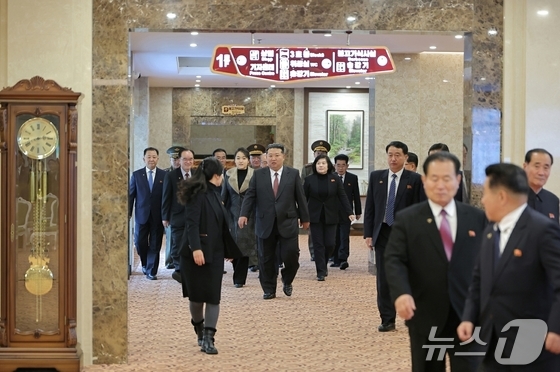
North Korea has installed a press center in a newly constructed hotel in Samjiyon City, an area the regime promotes as a revolutionary sacred site associated with the Kim dynasty. This move signals Pyongyang’s intention to accelerate its gradual opening to the outside world through tourism next year.
The Workers’ Party’s official newspaper, Rodong Sinmun, reported on Tuesday that inauguration ceremonies for five hotels in the Samjiyon tourist district took place on Saturday and Sunday. Kim Jong Un, General Secretary of the Workers’ Party, attended the opening ceremony for the Ikgal and Milyong Hotels on Saturday. The following day, the Sobaksu, Cheongbong, and Botnamu Hotels were inaugurated.
Notably, the lobby sign at the Milyong Hotel, which Kim closely inspected with his daughter Ju Ae, indicated the presence of a press center alongside a bulgogi dining room. Given that North Korean media operate under strict government control, analysts interpret this press room as a facility designed for foreign journalists, suggesting a potential opening to international media.
Samjiyon City, located in North Korea’s northernmost region and often dubbed the North Korean Alps because of its heavy snowfall, holds significant symbolic value. It’s the birthplace of Kim Jong Il, the late Chairman of the National Defense Commission, and a site that encapsulates the anti-Japanese armed struggle narrative of his father, Kim Il Sung. Moreover, it serves as North Korea’s closest major city to Mount Baekdu, acting as a gateway and hub for tourism to this iconic mountain.
Since 2018, North Korea has undertaken an extensive four-year, three-phase modernization project in Samjiyon City. The regime has constructed large ski resorts and hotels, promoting the area as a year-round mountain tourism destination. North Korea has emphasized its newly established stay-type tourism infrastructure, which combines hotels, roads, and ski facilities. This development, along with the July opening of the Wonsan Galma Coastal Tourist Area, North Korea’s largest coastal resort, reflects the regime’s ambition to position itself as a major tourism hub.
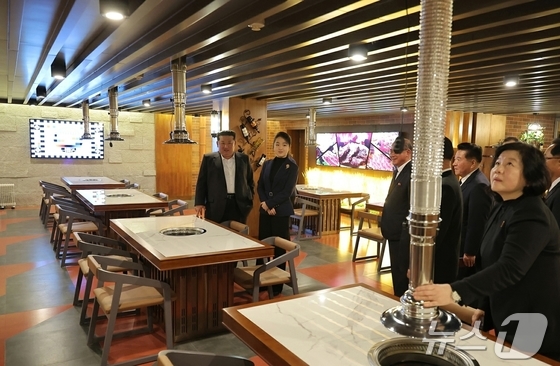
The presence of Foreign Minister Choe Son Hui during the inspection of the hotel with the press center further suggests that North Korea has designed this location with international engagement in mind. It’s highly likely that future summits, visits from foreign delegations, international organizations, and friendly nations will involve events in Samjiyon City.
Last December, Kim Jong Un visited the Wonsan Galma area and indicated that its key facilities were developed to a high standard, capable of hosting important state external projects and political-cultural events. He suggested that similar diplomatic activities could take place in Samjiyon City, which now appears equipped to host events of comparable significance.
The large ski resort in Samjiyon City also has the potential to host winter sports competitions. The Mount Baekdu region’s heavy, persistent snowfall creates ideal natural conditions for winter sports, particularly skiing.
Professor Lim Eul Chul, a professor at Kyungnam University’s Institute for Far Eastern Studies, observed that with the resumption of tourism, North Korea may attempt to host politically low-risk international events such as winter sports competitions, friendly matches, and invitational sports events.
North Korea has announced plans to finalize a major initiative for constructing large-scale tourism and cultural districts across the country at the 9th Workers’ Party Congress, scheduled for early next year. Following the development of major tourist destinations in Wonsa, Galm, and Samjiyon City this year, North Korea is expected to significantly expand its openness to the outside world beginning next year.