

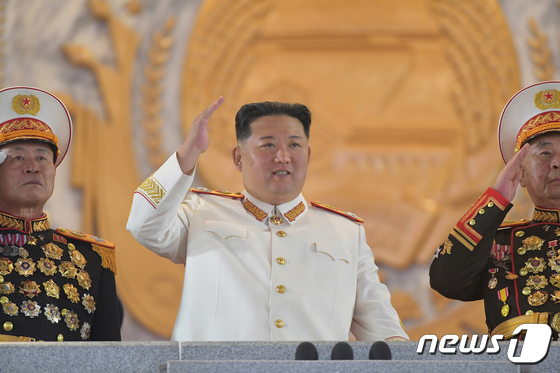
On Tuesday, North Korea marked the 14th anniversary of Kim Jong Un’s appointment as Supreme Commander of the Armed Forces, touting the current era as the pinnacle of revolutionary military enhancement.
The regime’s official newspaper, Rodong Sinmun, published an article titled, The Golden Age of Revolutionary Military Strengthening Under the Great Commander’s Guidance. The piece asserted that with the esteemed General Secretary at the helm of the Republic’s Armed Forces, the nation has entered an unparalleled period of military advancement. It claimed the Korean People’s Army has evolved into an elite revolutionary force, unwavering in its loyalty to the Party’s leadership and capable of swiftly crushing any invading power.
The article further emphasized that the formidable might of the Republic’s military has transformed the nation into an impregnable fortress, deterring even the most powerful adversaries. It boasted of North Korea’s ability to achieve remarkable feats under any circumstances, projecting an image of strength and dignity to the world.
The newspaper highlighted Kim’s February visit to Kim Il Sung Military University, where he stressed the importance of ideological fortitude, stating that weapons without ideology are mere scrap metal. It reported Kim’s directive to bolster the military’s political capabilities. The Supreme Leader reportedly emphasized that the military’s development should consistently prioritize political, ideological, and moral strengthening, while also acknowledging the significance of modernizing military technology and equipment across all domains, including nuclear capabilities.
Rodong Sinmun also praised the military’s involvement in major infrastructure projects, such as the construction of the Yangdok Hot Spring Cultural Resort, the ambitious 50,000-unit housing initiative in Pyongyang, and the development of local industrial facilities. The paper lauded the armed forces for demonstrating their prowess not only in national defense but also in safeguarding public welfare and contributing to civilian construction efforts.
The appointment of Kim as Supreme Commander was decided at a Politburo meeting on December 30, 2011, approximately two weeks after the death of his father, Kim Jong Il. At the time, Kim held the position of Vice Chairman of the Party Central Military Commission.