

On Monday, reports surfaced that Russia plans to produce a propaganda film showcasing the heroic actions of North Korean troops engaged in the ongoing Battle of Kursk against Ukraine. This development is significant as it indicates that military cooperation between North Korea and Russia is expanding beyond the mere provision of weapons and manpower, evolving into a shared narrative of collective war experiences and memories.
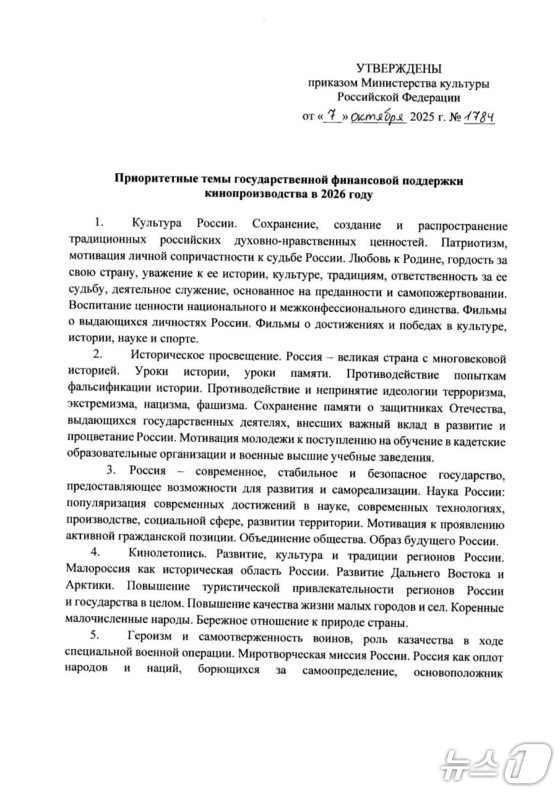
Russian journalist Ivan Filipov recently disclosed on his Facebook page that a film focusing on the courage and valor of North Korean soldiers during the liberation of the Kursk region has been prioritized for state financial backing, citing a document from the Russian Ministry of Culture.
The document, titled, Priority Tasks for State Financial Support for Film Production in 2026, reportedly received official approval from the Russian Ministry of Culture last October. It outlines that the film will cover key propaganda and ideological themes, including the heroic dedication of soldiers, the role of Cossacks in special military operations, Russia’s peacekeeping missions, and Russia’s position as a bastion for nations and ethnic groups fighting for self-determination, alongside the bravery of North Korean soldiers in the Kursk region.
This marks the first official instance where the Russian government has revealed its intent to incorporate North Korean troop participation into its war narrative, viewing it as more than just allied support. The inclusion of North Korean forces in state-funded cultural and media projects is particularly noteworthy.
North Korea is also openly glorifying its People’s Army’s involvement in the Ukraine conflict, using it as a propaganda tool. North Korean media have increased coverage of fallen soldiers, with significant emphasis on Supreme Leader Kim Jong Un personally honoring participating troops. They’ve even held a groundbreaking ceremony for a monument to commemorate North Korean forces, elevating their war involvement to a matter of national pride.
Analysts suggest that Russia’s framing of the Ukraine war as a special military operation and an anti-Western, anti-imperialist struggle could be bolstered by North Korean troop involvement, lending a sense of international legitimacy to this narrative. North Korea aims to strengthen both its internal cohesion and external negotiating power by showcasing its combat experience alongside Russia as a tangible example of anti-U.S. and anti-Western solidarity.
In conclusion, the planned cinematic portrayal of North Korean soldiers’ heroism in the Battle of Kursk symbolizes the evolution of North Korea-Russia military cooperation. This relationship appears to be transforming from one of mere mutual interest to a more profound alliance, sharing war memories and ideologies.