

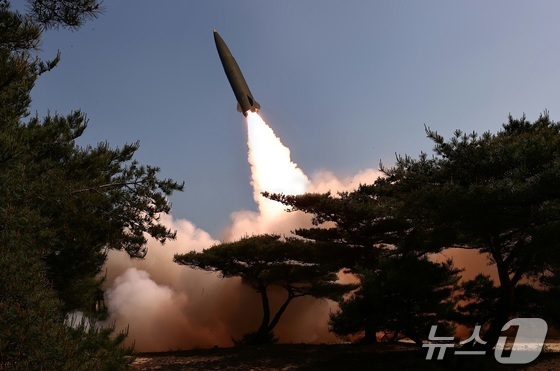
North Korea kicked off the new year with a provocative ballistic missile launch into the East Sea on January 4, triggering swift reactions from Japan and the U.S. This move is seen as both a test of trilateral cooperation between the U.S., South Korea, and Japan, and a possible debut of new North Korean missile technology.
Japanese Defense Minister Shinjiro Koizumi held an urgent press briefing to strongly condemn the launch. He reported that at least two ballistic missiles were fired from near Pyongyang, each traveling approximately 900 to 950 kilometers (about 559 to 590 miles) before splashing down outside Japan’s Exclusive Economic Zone (EEZ).
South Korea’s Joint Chiefs of Staff corroborated this information, stating that multiple missiles were launched, traveling about 900 kilometers (about 559 miles) before landing in the East Sea. Japan’s analysis aligned with these findings.
Minister Koizumi immediately briefed Prime Minister Sanae Takaichi on the situation. The Prime Minister issued directives to intensify intelligence gathering and analysis, provide timely and accurate public information, ensure the safety of air and maritime traffic, and maintain a high state of readiness.
Koizumi emphasized that Japan would strengthen intelligence sharing and analysis with the U.S. and South Korea, while maintaining heightened vigilance against potential further incidents.
The Defense Minister characterized North Korea’s actions as a threat to regional and global security, a violation of United Nations (UN) Security Council resolutions, and a direct challenge to public safety. He confirmed that Japan had sent a formal protest to the North Korean embassy in Beijing.
The U.S. Indo-Pacific Command quickly issued a statement acknowledging the missile launch. While noting that the missiles posed no immediate threat to U.S. personnel, territory, or allies, the command reaffirmed its commitment to defending the homeland and regional partners.
This rapid response showcases the effectiveness of the new trilateral real-time missile warning information sharing system implemented in December 2023.
The coordinated and swift reaction from the three nations marks a notable shift from their response to North Korea’s November missile tests, indicating a more unified approach to regional security challenges.
Intelligence sources suggest that the latest launch may have involved a new missile type, possibly an upgraded version of the Hwasong-11 short-range hypersonic ballistic missile that North Korea unveiled and tested twice last year.
Some analysts view this coordinated response as a deliberate demonstration of enhanced trilateral cooperation following recent government transitions in South Korea and Japan, aimed at presenting a united front against North Korean provocations.