

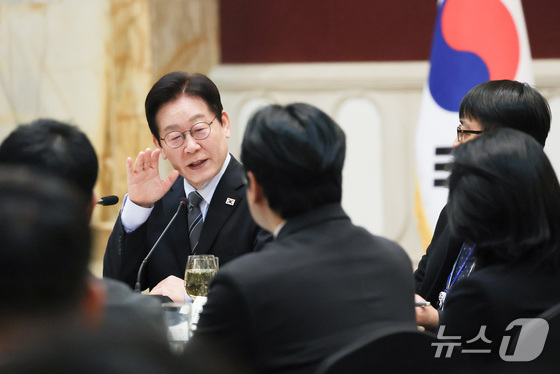
On Wednesday, South Korean President Lee Jae Myung reported that during the South Korea-China summit, Chinese President Xi Jinping emphasized the need for patience regarding the North Korean issue. This suggests that while China seeks peace on the Korean Peninsula, it currently lacks the willingness to take strategic actions to engage North Korea in dialogue.
During his state visit to China that began on January 4, President Lee addressed reporters at the Shanghai Press Center, stating that he requested President Xi to take a more active mediating role in Korean Peninsula issues, including the North Korean nuclear problem. He conveyed his hope that China would act as a peace mediator.
President Lee explained that given the long-standing hostilities between the two Koreas, resuming dialogue will require significant time, effort, and assistance from neighboring countries. I made this request to China, and they responded that they would try to make an effort in that role.
China’s urgency in addressing the Korean Peninsula issue appears less pressing than that of the U.S. Xi’s call for patience indicates that China currently has no intention or capacity to actively intervene in North Korean and Korean Peninsula matters. President Yoon also mentioned that Li Qiang, China’s second-highest official, similarly emphasized patience.
Following the inauguration of Donald Trump’s administration, China, which has been at odds with the U.S. over tariffs and security issues, seems to believe it is not the right time to disperse its diplomatic resources. Alternatively, it may feel that the timing is not ripe to present the North Korean issue as a decisive card to the U.S.
Indeed, during the South Korea-China summit, China expressed this sentiment in various ways. State-run media outlets like CCTV and Global Times did not report any remarks from President Xi regarding denuclearization of the Korean Peninsula or the North Korean issue.
Wi Sung-lac, head of the Office of National Security, confirmed during a post-summit briefing that China expressed its willingness to play a constructive role in maintaining peace and stability on the Korean Peninsula. However, when asked if China made any specific statements regarding North Korean denuclearization, he only replied that various issues were discussed under the broader topic of peace and stability on the Korean Peninsula.
Some analysts interpret Xi’s comments as indicating that China cannot closely control North Korea, which is increasingly aligning with Russia. This suggests that China not only has no intention to act immediately but also believes that any action taken would likely yield minimal results.
North Korea Faces No Obstacles in Pursuing its Own Path… Preparing for a Challenging April Turning Point
Consequently, Xi’s remarks may provide North Korea with the opportunity to strengthen its position without external intervention. This complicates the South Korean government’s efforts to create a turning point in the situation during President Trump’s visit to China in April.
The South Korean government envisions an ideal scenario where North Korea engages in dialogue under China’s protection or persuasion, with South Korea’s involvement in the process. However, given China’s lukewarm stance, it is challenging to establish a decisive trigger for negotiations.
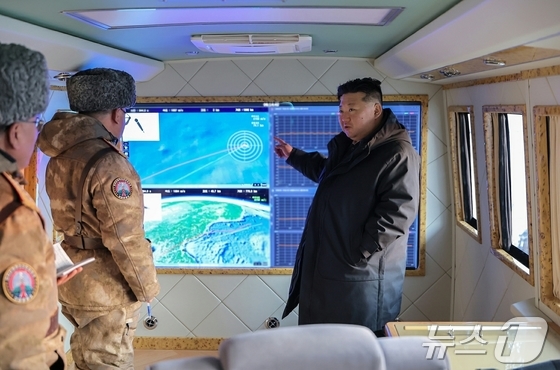
North Korea is concluding its National Economic and Defense Development Plan for 2021-2025 and is set to establish a new five-year plan at this year’s Ninth Party Congress. While some speculate that North Korea may show a more proactive attitude, it has openly displayed hostility toward the U.S.-South Korea alliance since December of last year.
Kim Jong Un, the General Secretary of the Workers’ Party of Korea, previously described the U.S.-South Korea alliance as a master-servant relationship during the launch of a nuclear-powered strategic guided missile submarine last December. He referred to U.S. involvement in Venezuela as an international incident and expressed intentions to strengthen North Korea’s defense capabilities through enhanced nuclear deterrence. North Korea is focusing on its own interests, avoiding haste in inter-Korean relations and U.S.-North Korea dialogue.
Particularly, North Korea is expected to maximize diplomatic synergy centered on its close ties with Russia, currently its most important diplomatic partner. Analysts believe that significant changes in North Korea’s stance are unlikely to be detected during the 9th Party Congress scheduled for January or February.