On Thursday, Jang Dong-hyuk, the representative of the People Power Party, criticized President Lee Jae Myung’s response to a reporter’s question about the Coupang hacking incident during his state visit to China. Lee had dismissively replied, “What do you want me to do?” Jang retorted that on behalf of the people, he wants to ask President Lee: What about unification?
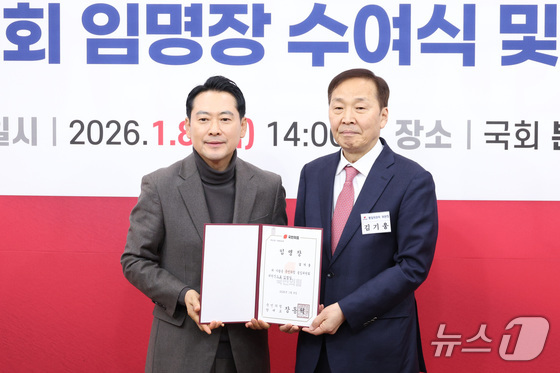
During the appointment ceremony for the Unification Committee held in the National Assembly that afternoon, Jang remarked that President Lee went to China and made only one notable statement, which left our citizens bewildered. What do you want me to do?, he said.
Jang continued that last year, during his keynote speech at the United Nations (UN) General Assembly, President Lee openly endorsed North Korea’s two-state theory. In this recent Korea-China meeting, he didn’t even mention North Korea’s denuclearization. Jang criticized Lee for making absurd claims about North Korea fearing a South Korean invasion and suggesting that South Korean citizens are being indoctrinated to believe North Korea will invade.
He added that North Korea constantly threatens to annihilate South Korea, and just days ago, they launched missiles. He has to question whose interests this president is serving.
Jang then targeted Unification Minister Chung Dong-young, stating that North Korea refers to itself as the Democratic People’s Republic of Korea and has ruled out a German-style unification. So, what kind of unification is it pursuing? He labeled Chung not as a Unification Minister but as a Minister of Anti-Unification and a Minister of Division Entrenchment.
He further commented that by shutting down broadcasts to North Korea and banning leaflets while allowing Rodong Sinmun to operate and opening up North Korean websites, it is unilaterally disarming themselves. He pointed out that they’ve even created the ridiculous term North-bound residents to replace defectors just because North Korea doesn’t like it.
Jang asserted that from the founding Constitution to the current one, the nation has upheld unification as its fundamental principle. He argued that however, this administration rejects the constitutional principles outlined in Article 3 regarding territory, Article 4 concerning unification orientation, and Article 66 that mandates the president to pursue peaceful unification.
He emphasized that while this administration seems to be abandoning unification and only catering to North Korea, it must stand the ground more firmly and adhere to the path of democratic and peaceful unification mandated by the people and the Constitution. He insisted that it must continue to impose sanctions and pressure North Korea to abandon its nuclear weapons while maintaining channels for dialogue and support.
Kim Gi-woong, the chairperson of the Unification Committee and a former vice minister of unification, reflected that he’s dedicated 30 years to this cause, but looking at the current international situation, North Korea’s attitude, and the internal circumstances, it’s disheartening. He questions what he’se accomplished.
He noted that after the 1910 Japan-Korea annexation and until liberation, many of the ancestors were too preoccupied with survival to remember the cause. Some even doubted if independence was possible. If all ancestors had thought that way, it might not have achieved its current status.
He continued that back then, many forgot our cause, made irrelevant comments, or even collaborated with Japan. However, thanks to a few ancestors who fought for independence in various places, including Manchuria, it achieved liberation and exist as it does today.
He concluded that even though the current situation regarding the government’s stance and North Korea’s attitude is deeply concerning and seems to contradict unification efforts, it is precisely during such times that it should channel the spirit of those who fought for independence. It must think critically about what it needs to do to achieve unification.