North Korea has escalated its rhetoric in response to South Korea’s allegations of drone incursions, hinting at a proportional response. However, experts say immediate provocations, such as a resumption of balloon launches, remain unlikely. Following the South Korean government’s firm stance against military provocations and its commitment to a swift investigation, analysts suggest Pyongyang is currently prioritizing internal cohesion over escalating tensions.
North Korea has suggested a proportional response to the alleged drone incursions. Still, the South Korean administration’s prompt and decisive actions appear to have reduced the likelihood of an immediate escalation.
On Sunday, Kim Yo Jong, deputy director of the Workers’ Party of Korea, wrote in Rodong Sinmun that the South Korean Defense Ministry’s position that it does not possess the drone and has no intention to provoke the North was a wise choice for survival. This was widely interpreted as a partial acknowledgment of Seoul’s explanation, while signaling that Pyongyang does not intend to escalate military tensions at this stage.
However, Kim warned that if North Korea were to accept the argument that civilian drones do not violate sovereignty, the world could see numerous flying objects launched by civilian organizations within the Democratic People’s Republic of Korea. Analysts view this as political and psychological pressure aimed at deterring similar incidents in the future.
The apparent de-escalation of drone provocations seems largely influenced by Seoul’s changed response strategy.
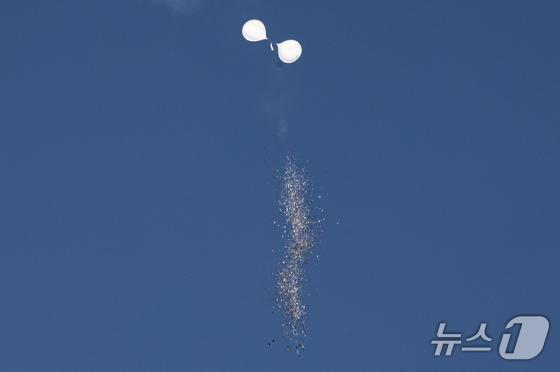
In October 2024, North Korea claimed that South Korean drones had entered its airspace three times to scatter anti-North Korean leaflets and threatened retaliation. At the time, the South Korean government adopted what it described as an ignore strategy, saying it would not respond to every provocation. The Defense Ministry initially stated that the matter was not related to military operations, but later said it could not confirm the claims. Then, Defense Minister Kim Yong Hyun even suggested the allegations could be fabricated. North Korea subsequently resumed its balloon propaganda campaign, which had been suspended for about five months, continuing until late November.
However, this time, the Defense Ministry officially denied any involvement in drone operations and announced an investigation. President Lee Jae Myung directly ordered a joint military and police investigation, stating that if the drones were civilian-operated, it would constitute a serious crime, indicating a commitment to swiftly resolving the situation. In this context, analysts suggest that North Korea has also taken a step back, adopting a wait-and-see approach.
Kim Yong Hyun, a professor of North Korean studies at Dongguk University, noted that while the expression indicating a proportional response may seem harsh, it is difficult to interpret it as an immediate provocation, such as resuming balloon launches. He suggested that it serves more as a warning to manage any accidental actions from the South and reflects a desire to observe Seoul’s further responses.
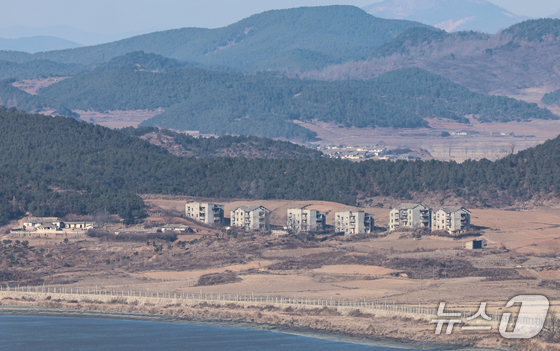
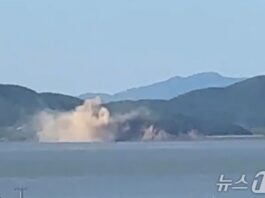
Some experts caution that, given North Korea’s history of unexpected actions, it is premature to feel completely secure. In 2020, Pyongyang rapidly deteriorated inter-Korean relations by destroying the liaison office in Kaesong without prior notice.
However, with the 9th Party Congress expected in January or February, analysts argue that North Korea’s emphasis on strengthening internal unity through the two hostile nations narrative carries greater political weight.
Park Won Gon, a professor of North Korean studies at Ewha Womans University, stated that North Korea maintains the stance that whether the drone’s operator is civilian or military, South Korea must take responsibility for violating its sovereignty. He pointed out that even if the investigation reveals civilian involvement, North Korea is likely to use this as a message to intensify hostility toward both the government and the entire South Korean population.
Nevertheless, he added that with the 9th Party Congress approaching, North Korea may prioritize shaping public opinion over provocations, believing that it is more important to promote the narrative of two hostile nations. While the possibility of unexpected actions cannot be entirely ruled out, the incentive to escalate tensions beyond political messaging appears limited at this point.