

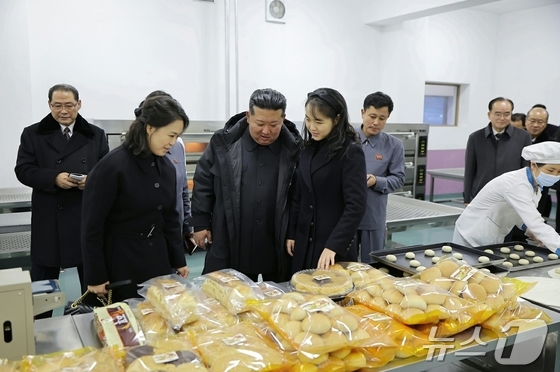
Kim Jong Un, North Korea’s ruling Workers’ Party Secretary, directly ordered the construction of grain management centers across the country, but the project appears to be lagging. Analysts estimate that the delay stems from the prioritization of local factories and housing projects, which North Korea focused on until last year.
Although the First Grain Management Center Broke Ground in Hwangju County, There has Been No News of its Completion Yet
In August 2024, during an on-site inspection of several local industrial factory sites, Kim directed the construction of health facilities, science and technology distribution hubs, and grain management centers as part of the Local Development 20X10 Policy. Originally, this policy aimed to establish 20 local factories over ten years, but it has since expanded its construction targets.
Kim described the grain management centers as facilities for processing and storing grains. He emphasized that these centers should not merely refurbish existing facilities but instead be constructed directly by the state to ensure that every grain collected is stored and managed without loss, guaranteeing quality food for the people.
This initiative aims to create a foundation for the state to manage grain using the most modern facilities, establishing regional hubs for grain management.
On February 27 last year, North Korea announced the start of construction for local industrial factories and the first grain management center in Hwangju County. However, when North Korea announced the completion of local industrial factories on December 17, it did not disclose any progress regarding the grain management centers.
Observers interpret the lack of mention regarding the already initiated grain management centers as an indication of significant setbacks in the project, given that the leader’s directives are tasks that must be executed. North Korea has not reported the commencement of grain management centers in any region other than Hwangju County.
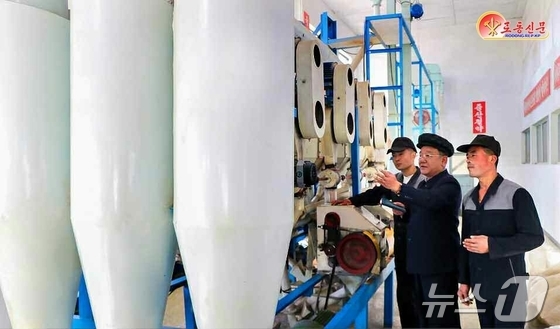
The Authorities are Pushing to Establish a State-Led Food Distribution System, With the Possibility of Revealing Project Modifications During the Party Congress
Since introducing a new grain policy in October 2022, North Korea has consistently tightened its control over food by cracking down on grain transactions between individuals. The government restricted the sale of rice in markets and mandated that grain transactions occur only through state-run grain sales outlets. However, analysts suggest that the inability to match market prices has hindered significant achievements. Some experts believe that this reality may have impacted North Korea’s grain management center construction project.
In September of last year, North Korea reaffirmed its commitment to strengthening state control over grain transactions by enacting the Grain Management Law during the 13th meeting of the 14th Supreme People’s Assembly. This law aims to establish a comprehensive and integrated grain management system by specifically regulating all issues related to grain purchasing, storage, processing, supply, sales, and consumption. While it can be seen as a follow-up measure for the construction of grain management centers, analysts suggest that it has not translated into actual results.
Although the specific reasons for the delay in constructing grain management centers remain unclear, experts believe that the North Korean authorities, eager to strengthen control through grain management, will not abandon this project but will eventually intensify its implementation.
Yang Mun-soo, a professor at the Graduate School of North Korean Studies, stated that the current regime’s intention is to maintain the market while having the state dominate it. He noted that there have been recent movements toward state-led initiatives in trade, commerce, and food, and that this economic policy trend is likely to continue.
Some speculate that North Korea may reveal project modifications related to grain management center construction during the 9th Workers’ Party Congress, expected to take place between January and February.