

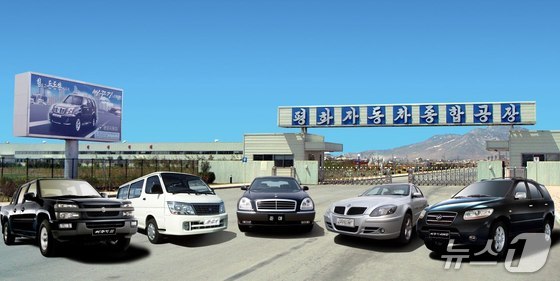
In January 2024, during a visit to Dandong, China, a Chinese entrepreneur shared some surprising news. He stated that recently, there’s been a significant influx of cars and auto parts into Pyongyang from China. The car market in Pyongyang is set for major expansion, and we’ll soon see many vehicles bearing North Korea’s own brand. At the time, he didn’t fully grasp the implications of his statement.
A month later, news broke that North Korea had amended Article 134 of its Civil Code, allowing personal registration for private car owners. A Unification Ministry official confirmed this, stating that North Korea revised its laws regarding private car ownership in 2024, clarifying procedures for individuals to own vehicles. Unlike before, people can now purchase cars without proving the source of their funds, and vehicle inheritance has also been recognized.
Legally, private car ownership has been permitted in North Korea for quite some time. The 1998 revised constitution included income from legitimate economic activities as personal property, extending to ownership of personal vehicles. However, in reality, few North Koreans could afford cars with legitimate income. Vehicle ownership was limited to those receiving remittances from overseas relatives or state rewards. Even then, personal registration was impossible; vehicles had to be registered with state institutions or enterprises, essentially functioning as corporate cars rather than truly personal vehicles.
A North Korean defector who left Sinuiju in 1999 shared her experience: While in North Korea, they imported a car from China and registered it with the Ministry of Social Security for personal use. They occasionally used it for official work with the Sinuiju Ministry of Social Security, but mainly for business travel. In August 1999, when Jeong Seong-ok won the women’s marathon at the World Athletics Championships in Spain, North Korean authorities awarded her a house and a car.
As markets expanded and North Korea-China trade increased in the 2000s, more individuals began unofficially using private cars. This group included market traders and executives from joint ventures with foreign capital. The 2000 completion of the Pyongyang Peace Automobile Factory, a North-South joint project, improved access to vehicles by starting domestic production and opening repair shops.
In 2017, private vehicles with yellow license plates, distinct from government or company-owned cars, finally appeared in Pyongyang. However, personal vehicle registration remained prohibited. It took seven more years for private car ownership to become fully legal and practical.
The process of institutionalizing private car ownership in North Korea seems to mirror the lengthy debates that preceded the formalization of local markets following their spontaneous expansion during the 1990s economic crisis.
Analysts suggest that North Korea’s move to institutionalize private car ownership is a strategy to integrate the informal economy into an official registration system, thereby strengthening state finances and control. As the wealth and demand for cars generated by residents’ economic activities became impossible to ignore, this decision represents a pragmatic choice to officially recognize these developments while maintaining state oversight.
If the government can’t control increasing indirect ownership, it can collect fees through personal registration, absorb private foreign currency into state coffers, and gather vehicle data to enhance traffic and social control.
The push for individual car ownership might also aim to boost domestic consumption and stimulate the economy. Some interpret this as part of a broader strategy to partially adopt a market economy model similar to China’s.
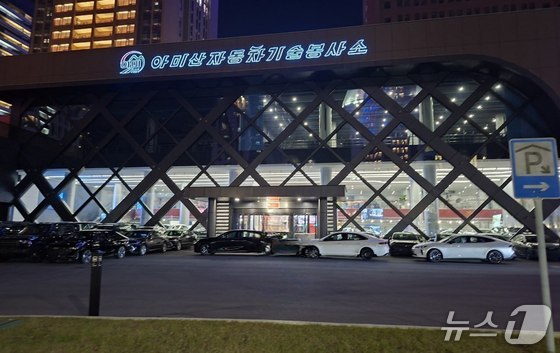
Following the legalization of private car ownership, North Korean authorities began focusing on improving consumer convenience for vehicle purchases and repairs. A prime example is the Amisan Automobile Technical Service Center, which opened last April in Pyongyang’s Hwasong District new city.
North Korean media described this center as a comprehensive auto service facility offering sales, repairs, and all car-related services, calling it a new concept never seen before. It reportedly stocks various car parts and accessories, and provides services like automated car washes, tire changes, and painting. An increasing number of women are also reportedly taking driving lessons to obtain licenses, as the Amisan center offers car rentals in addition to sales.
The Chollima Automobile Trade General Company, overseeing several auto-related entities, has expanded from its initial focus on truck production in 1998 to include passenger vehicles. A recent issue of a magazine for overseas Koreans described the company as specializing in research, assembly, sales, repairs, and parts services for various vehicles, praising its comprehensive repair system for different vehicle types.
How are Pyongyang residents using their private cars? Jo Cheol-nam from the Amisan center noted that the demand for private cars among Pyongyang citizens is rising. They use them for commuting, business, family visits, medical appointments, and leisure travel. Reports suggest over 8,000 private cars were sold in Pyongyang last year.
While these usage reports and sales figures should be viewed cautiously, foreign tourists’ photos and videos from last year confirm a significant increase in yellow-plated private cars in Pyongyang. An October visitor observed that yellow-plated cars were common, and even saw vehicles with 8000-series plates.
A decade ago, the locally produced sport utility vehicle (SUV) Cuckoo sold for about 30,000 USD , while the Junma, based on a South Korean model, cost around 40,000 USD. These prices far exceed the 250-500 USD range for smartphones, raising questions about how widespread private car ownership can become in North Korea.
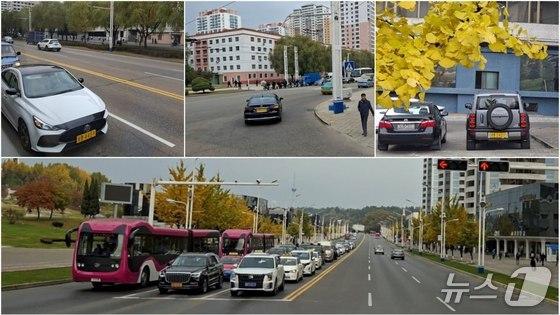
The potential ripple effects of private car ownership policy are particularly intriguing. One possibility is expanded individual and family tourism. North Korea’s constitution guarantees freedom of residence and travel. Even in the 2000s, tourists in registered private cars were seen at major attractions. This policy could significantly boost such private travel.
Another key point is whether private car ownership rules might lead to formalizing individual home ownership and sales. North Korea’s 1998 constitutional amendment allowed private home ownership, and the civil code nominally recognizes it. However, in practice, homes are state-provided, with only certified residents allowed occupancy and transactions prohibited. Legally, only home exchanges are permitted.
Nevertheless, an informal market for buying and selling housing usage rights has become an open secret. When state agencies and businesses construct homes with private capital, the private portion is often nearly formalized for individual sale.
A Chinese entrepreneur who visited Pyongyang last October noted that it’s not impossible for North Korea to announce nationwide regulations on commercial housing sales, drawing parallels to early reform-era China when private wealth exceeded state funds.
In fact, Kim Jong Il, as Chairman of the National Defense Commission, instructed in 2001 that in the future, when food and consumer goods issues are resolved, workers should be able to buy food at full price with their own income, and either purchase housing or pay full rent for its use. Additionally, in November 2018, North Korean authorities enacted the Rason Economic and Trade Zone Housing Sales and Usage Regulations, allowing approved institutions, enterprises, and organizations to construct and sell housing on a trial basis.
In light of these developments, it will be important to observe whether the institutionalization of private car ownership will extend to the formalization of housing sales practices.