

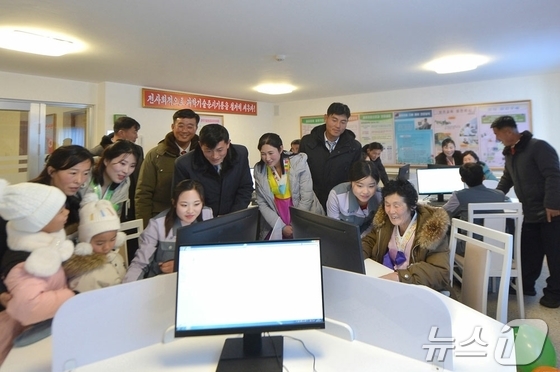
North Korea has launched its first-ever online platform to gather citizens’ opinions and complaints. This initiative, reminiscent of South Korea’s National Petition System, is seen as a strategic move by Kim Jong Un’s regime. Analysts interpret it as an attempt to directly manage public sentiment, curb official misconduct, promote people-centered governance, and strengthen regime cohesion.
On January 11, the Workers’ Party’s official newspaper, Rodong Sinmun, reported that the Pyongyang City People’s Committee had introduced a new system called Household Support for Improving Residents’ Lives. This system aims to enhance the quality of life for the capital’s citizens.
The newspaper explained that when residents post their opinions on the website, relevant departments from both city and district people’s committees will simultaneously receive and address these comments.
Quoting Kim’s directive that the party prioritizes the people’s livelihood above all else, the newspaper detailed how committee officials developed this website to ensure they hear every voice from households.
The term household, referring to the head of a family, was chosen to emphasize the government’s responsibility towards its citizens. This name aligns with North Korean concepts like the socialist large family and socio-political organism theory, designed to foster national unity.
While acknowledging operational challenges, the newspaper promoted the website’s potential to evolve into a dialogue channel between citizens and government agencies.
Experts are closely monitoring this development in North Korea’s typically top-down decision-making structure. The website is seen as a tool for the party and state to gather public opinion and incorporate it into policies, promoting people-centered governance while also serving as a check on official misconduct.
This move also reflects North Korea’s recent focus on information technology (IT). By applying IT to administration, the regime aims to quickly identify and address citizens’ daily challenges related to food, utilities, and infrastructure, thereby mitigating public discontent and maintaining regime stability.
Professor Im Eum-chul from Kyungnam University’s Institute of East Asian Studies noted that the expansion of digital administrative services in North Korea indicates an accelerating level of informatization. This shift suggests a move towards more efficient and transparent governance, departing from traditional face-to-face administration.
However, Professor Im cautioned that if the website fails to deliver tangible solutions due to resource shortages, it could backfire, potentially increasing public disappointment and dissatisfaction with the state.