

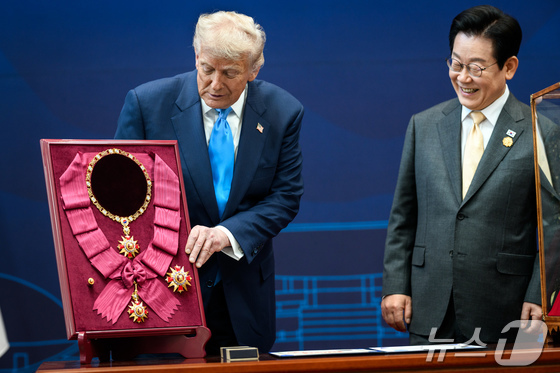
The Chemistry’ Between the Korean and U.S. Presidents Is Described as a Perfect 10
According to Foreign Minister Park Jin. President Lee Jae Myung of South Korea and President Donald Trump of the U.S., who assumed office six months apart, have forged a robust relationship.
As pragmatic realists, these leaders’ aligned interests have broadened the South Korea-U.S. alliance beyond security to encompass economic and industrial cooperation. The new challenge for Presidents Lee and Trump is to transform the outcomes of previous trade and security talks into concrete results.
Political insiders reported on the 18th that U.S.-South Korea relations have faced hurdles since Trump’s second term began. The U.S. America First policy has pressured allies, including South Korea, with tariffs and defense cost demands.
After President Lee’s inauguration, concerns about the alliance grew due to U.S. misconceptions of South Korea being pro-China. A telling moment occurred last August during Lee’s first U.S. visit when Trump’s social media post likened the situation in Korea to a purge or revolution, revealing his misunderstanding of Lee’s administration.
The alliance seemed precarious until the Washington summit, where Lee and Trump’s face-to-face meeting dispelled misunderstandings and significantly advanced their partnership.
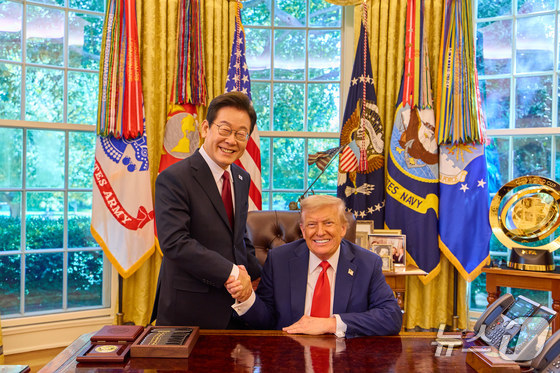
Both leaders, having overcome adversity to reach power, have formed a personal bond through shared experiences. Their mutual recognition of economic and security interdependence has been crucial in rapidly advancing their relationship.
At the Washington summit, Trump hailed Lee as a great leader, expressing unwavering support for the alliance in a letter stating that he’s always with Lee. During the Gyeongju summit, Trump remarked that working together, he believes Lee will be remembered as Korea’s greatest president, encouraging Lee to reach out in times of difficulty.
Building on this strong rapport, South Korea and the U.S. have concluded tariff negotiations and reached significant security agreements, including South Korea’s acquisition of nuclear-powered submarines and expanded rights for uranium enrichment and spent nuclear fuel reprocessing.
Professor Min Jeong-hoon of the National Diplomatic Academy noted that both Trump and Lee have faced political oppression and overcome assassination attempts, which aligns their chemistry well.
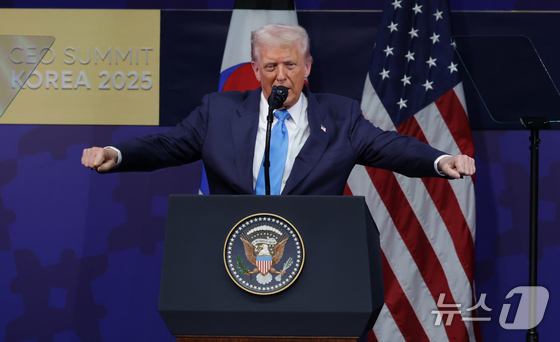
The upcoming U.S. midterms present both opportunities and risks for South Korea amid the Lee and Trump administrations. While the alliance is progressing, challenges remain in producing tangible results. The Trump administration is likely to leverage foreign policy successes, including the alliance, for the November elections, creating a double-edged sword for South Korea.
Intense negotiations lie ahead as both nations work to solidify last year’s joint fact sheet on trade and security.
The government is closely monitoring U.S. semiconductor tariffs. On January 14, Trump issued an executive order imposing a limited 25% tariff on advanced computing chips.
While memory semiconductors, South Korea’s key products, are currently exempt, the U.S. has hinted at expanding the scope, necessitating further bilateral talks.
South Korea secured a promise of non-discriminatory treatment on semiconductor tariffs. However, given Taiwan’s 250 billion USD investment for a tariff waiver, the U.S. might seek additional investments from South Korea.
Moreover, introducing nuclear submarines and expanding uranium enrichment and reprocessing rights will require protracted negotiations. The nuclear submarine issue, in particular, needs U.S. legislative changes, demanding visible progress before the midterms.
Both presidents’ political acumen is crucial for Korean Peninsula peace. Lee proposed Trump as a peacemaker and facilitator, tasking them with improving inter-Korean relations through North Korea-U.S. dialogue.
Trump’s April visit to China could be pivotal in initiating North Korea-U.S. talks.
Professor Min analyzed that Trump, needing to showcase achievements before the midterms, will likely prioritize the U.S.-South Korea relationship. He anticipates a more conciliatory atmosphere than last year, rather than friction.
However, he foresees numerous challenges in solidifying existing negotiation outcomes.