

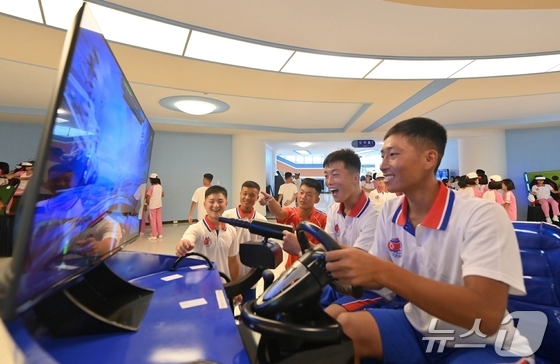
North Korean state media’s recent push to promote e-sports among its citizens has caught the attention of international observers. As the younger generation in North Korea shows increasing curiosity about South Korean pop culture, experts suggest that this initiative may be a strategic move by the regime to address their cultural desires internally.
On January 18, North Korea’s state-run newspaper Rodong Sinmun published an article titled, A New Form of Physical Activity – Electronic Sports.
The paper described e-sports as an evolved form of video gaming, where players control virtual athletes through computers, competing against each other according to specific game rules.
The article highlighted several advantages of e-sports, including its accessibility to people of all ages and physical abilities, the absence of injury risks, and its potential to enhance cognitive skills and concentration. It also emphasized that players can showcase their abilities without having to adapt to different climates or venue conditions.
This positive portrayal of gaming culture in state media marks a significant departure from North Korea’s traditionally conservative stance on such activities.
Notably, Rodong Sinmun has reframed e-sports from mere entertainment to organized physical activity, likely aiming to present gaming as a state-sanctioned sport.
Analysts suggest that this shift in North Korea’s approach aligns with the ongoing tensions between the two Koreas.
Since 2021, Pyongyang has implemented various laws to tighten ideological control over its youth and block outside influences, particularly from South Korea.
However, the regime has simultaneously introduced new cultural elements previously unseen in North Korea, possibly to appease the younger population.
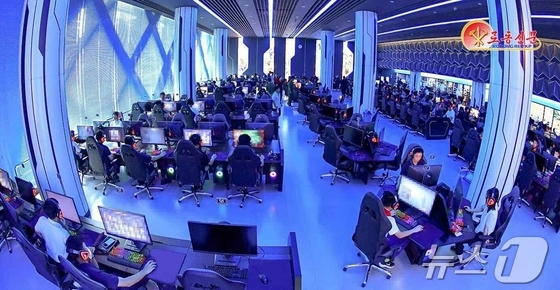
A prime example is the opening of a computer arcade in Pyongyang’s Hwasong district last April. Kim Jong Un personally visited the facility with his daughter Ju Ae, emphasizing its importance as a pioneering service sector establishment in the country.
Interestingly, the arcade’s design closely resembled South Korean internet cafes, suggesting a strategy of adapting and reinterpreting South Korean culture while maintaining strict control over foreign influences.
Professor Lim Eum-chul from Kyungnam University’s Institute for East Asian Studies notes that North Korea is promoting a filtered North Korean-style digital entertainment culture rather than completely blocking out foreign gaming influences. This approach aims to manage youth interests while maintaining ideological control.
Furthermore, some experts believe that by encouraging e-sports, North Korea is creating an environment for its younger generation to familiarize themselves with new technologies.
Professor Lim adds that North Korea has recently placed significant emphasis on robotics and artificial intelligence education for students. This focus suggests an intention to naturally enhance the younger generation’s computer skills and understanding of network technologies.