

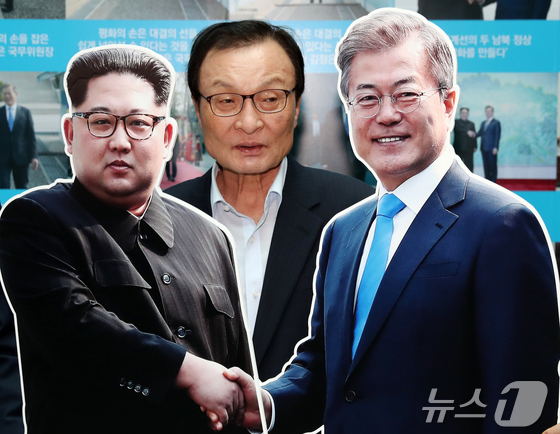
Lee Hae-chan, the Vice Chair of the Democratic Peaceful Unification Advisory Council, passed away from a heart attack during a business trip to Vietnam. He was known as a bridge-builder in politics, frequently traveling between North and South Korea at crucial moments in inter-Korean relations. Recognized for his hands-on approach to relationship coordination and trust-building, he recently expressed disappointment over the prolonged stalemate in inter-Korean dialogue.
In June 2000, Lee visited Pyongyang as part of former President Kim Dae-jung’s delegation during the historic inter-Korean summit. He also worked to facilitate Kim’s return to North Korea while serving as Prime Minister under the Roh Moo-hyun administration.
In March 2007, as a political advisor to President Roh, Lee made an unofficial visit to North Korea, playing a key role in behind-the-scenes negotiations leading up to the October inter-Korean summit. Though not officially designated as a special envoy, political circles and media interpreted his trip as a de facto presidential mission to coordinate pre-summit details and set the agenda.
Lee joined the September 2018 Pyongyang Inter-Korean Summit as a special envoy representing political parties. He held a 40-minute discussion with Kim Yong-nam, Chairman of the Supreme People’s Assembly, and proposed inter-parliamentary exchanges between North and South.
Later that year, Lee participated in the 11th anniversary event of the October 4 inter-Korean declaration as chairman of the Roh Moo-hyun Foundation. A delegation of over 150 civilians and government officials visited Pyongyang via the West Sea direct route, attending joint commemorative events, cultural performances, and engaging in sector-specific talks. This visit symbolized a moment of renewed dialogue, with representatives from government, politics, and civil society coming together in Pyongyang.
Having been present at key junctures in inter-Korean relations, Lee recently voiced repeated disappointment over the prolonged breakdown in dialogue between the two Koreas.
During his tenure as Vice Chair of the Democratic Peaceful Unification Advisory Council, Lee often highlighted the reality of severed communication channels between North and South. He expressed to colleagues that the current impasse in inter-Korean relations was personally disheartening. Analysts view this as evidence of his belief that inter-Korean relations should be seen as a long-term structural challenge rather than a short-term political event.
Lee, who held key positions including Minister of Education, Prime Minister, and leader of the ruling party, was known for his strong drive and coordination skills. Political insiders described him as a strategist and practical politician. In inter-Korean affairs, many emphasized his role as a connector who conveyed political trust and facilitated relationships rather than as an official negotiator.
Lee’s political career was deeply influenced by his experiences during the democratization movement. He endured illegal detention and torture under the military regime, resulting in chronic health issues that burdened him for years. Colleagues noted his intense work ethic, but the effects of torture remained a lifelong struggle.
On January 22, Lee visited Ho Chi Minh City, Vietnam, for a Democratic Peaceful Unification Advisory Council meeting. The next morning, he experienced health issues while preparing to return home. After experiencing breathing difficulties at the airport, he was rushed to a nearby hospital and diagnosed with a heart attack. Despite undergoing stent placement and other treatments, he did not regain consciousness and passed away on January 25 at 2:48 p.m. local time.
Political circles reflect that Lee Hae-chan consistently emerged at critical moments of change in Korean politics. They emphasize that the timing of his involvement in inter-Korean relations carries more significance than his actual visits to North Korea. A ruling party member remarked that he was a politician who combined the roles of policy maker, strategist, and mediator, adding that Lee will be remembered as a key figure in the history of inter-Korean relations.