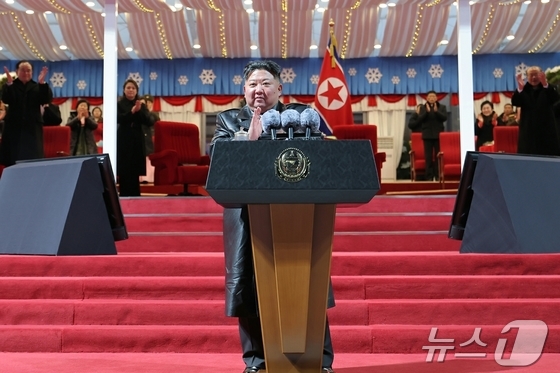
The 9th Congress of North Korea’s Workers’ Party, which will set the nation’s five-year strategic plan, is slated for early to mid-February. Party officials have already selected delegates from regional and central organizations, with only the final schedule to be confirmed.
North Korean state media reported the completion of grassroots party meetings to finalize attendees on January 24, followed by the Central Committee’s selection of representatives on January 28. Analysts predict that on Monday, Supreme Leader Kim Jong Un will convene a Politburo meeting to announce the congress schedule.
Defense experts anticipate that the congress will endorse military measures to bolster North Korea’s nuclear capabilities, including the simultaneous development of nuclear and conventional weapons and strengthening its nuclear deterrent. The party may also formalize the hostile two-state stance towards South Korea. Regarding the U.S., Pyongyang is expected to maintain a wait-and-see approach without issuing specific messages.
Dual Enhancement of Nuclear and Conventional Forces… Potential for AI-Integrated Weapons Development
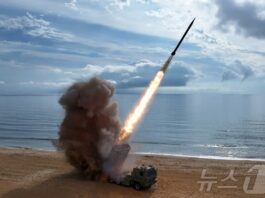
At the 8th Party Congress in 2021, North Korea prioritized the development of strategic weapons to advance its nuclear and missile capabilities. Since then, the regime has focused on creating advanced attack and reconnaissance drones, artillery systems, cruise missiles, and underwater weapon systems, including alleged nuclear-capable torpedoes.
The emergence of military reconnaissance satellites, the first submarine capable of launching nuclear weapons, and nuclear-powered submarines represent new weapon systems developed post-8th Party Congress. These advancements underscore Pyongyang’s commitment to strengthening its strategic nuclear arsenal.
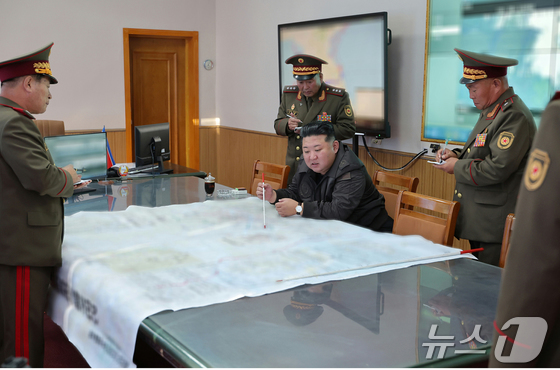
During a September inspection of defense research institutes, Kim stated that the upcoming 9th Party Congress would propose a dual-track policy for nuclear and conventional forces. This strategy aims to continue developing nuclear strategic weapons while also enhancing conventional capabilities to potentially overwhelm South Korea in a conflict scenario.
This decision appears influenced by North Korea’s involvement in the Russia-Ukraine conflict. Pyongyang has observed firsthand the continued effectiveness of asymmetric and conventional weapons in modern warfare, including drones, artillery, and self-propelled guns.
Hong Min, a senior researcher at the Korea Institute for National Unification, notes that as modern warfare evolves, the likelihood of nuclear weapon use has significantly decreased. The global trend is to balance conventional and nuclear forces appropriately, a strategy North Korea seems to be adopting.
Hong suggests that North Korea may integrate artificial intelligence (AI) systems into new asymmetric weapon developments. The defense sector could be tasked with exploring AI applications in next-generation weapons systems.
Expected Follow-Up on Hostile Two-States Policy… Likely Restraint in U.S. Messaging
After declaring South Korea a hostile state in late 2023, North Korea hinted at constitutional amendments to reflect this policy shift but has yet to formalize these changes. Experts believe the upcoming party congress may announce further measures to cement the two-state approach, followed by constitutional revisions.
The current Workers’ Party charter still contains language about unification and development of the homeland and peaceful reunification. The congress could potentially purge these inter-Korean concepts from the party doctrine. Some analysts cautiously suggest that Pyongyang might even declare arbitrary borders to reinforce the state-to-state relationship stance.
While maintaining a critical posture towards the U.S., North Korea is expected to exercise restraint in its messaging. This approach stems from Pyongyang’s prioritization of ties with Russia and the absence of concrete U.S. initiatives for dialogue.
As Washington intensifies its containment of China and promotes South Korea’s leading role in deterring North Korea through its new defense strategy (NDS), Pyongyang is likely to formulate its response before considering any engagement.
While speculation exists about potential North Korea-U.S. contact during President Donald Trump’s April visit to China, the prevailing view is that Trump’s recent military action in Venezuela against President Maduro may have negatively influenced North Korea’s strategic calculus.
Potential Consolidation of Kim Jong Un-ism… Establishing a Distinct Ruling Ideology
The congress may also see the formal introduction of Kim Jong Un-ism as the regime’s guiding ideology. While the party charter officially enshrines Juche ideology and Songun politics as state doctrines, internal efforts to establish Kim’s personal ideology have been ongoing.
Should Kim Jong Un-ism be officially proclaimed, this party congress could mark a pivotal moment in solidifying the ideological foundation of Kim’s rule. However, some analysts believe that even if the term is introduced, specific details may remain undisclosed.
Kim In-tae, a senior researcher at the National Security Strategy Institute, observes that if the 7th Party Congress in 2016 formalized the party-state system, and the 8th Congress in 2021 institutionally strengthened Kim’s regime, this 9th Congress could complete the ideological and institutional deification process.