

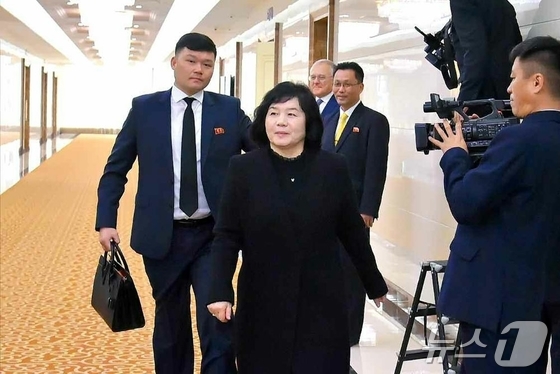
On Tuesday, representatives from five anti-Western nations—Russia, North Korea, Iran, Belarus, and Myanmar—convened to initiate discussions on the Eurasian Charter, a framework aimed at establishing a new security and economic order in Eurasia.
Belarus’s state-run BelTA news agency reported that the meeting was held concurrently at the foreign ministries of Belarus and Russia. The delegates collaboratively drafted a statement titled, Towards Diversity and Multipolarity in 21st Century Eurasia.
According to the statement, the concept of the Eurasian Charter for Diversity and Multipolarity in the 21st Century was first proposed at the inaugural Eurasian Security International Conference in Minsk, Belarus, in October 2023. The charter’s purpose was described as providing guidelines for Eurasia’s integration and collective progressive development.
The statement also referenced the Joint Vision for the Eurasian Charter for Diversity and Multipolarity in the 21st Century, signed by Belarusian Foreign Minister Maxim Ryzhenkov and Russian Foreign Minister Sergey Lavrov in November 2024.
The document reportedly outlines perspectives on diversity and multipolarity, Eurasia’s global significance and influence, principles for a new, equitable, and indivisible Eurasian security structure, and an action plan for realizing the joint vision.
The statement declared that it has agreed to initiate a comprehensive consultation process in the Eurasian format to address practical and procedural matters related to the Eurasian Charter for Diversity and Multipolarity in the 21st Century concept.
Russian news agency TASS reported that Minister Ryzhenkov noted last August that many countries had expressed interest in this charter initiative, particularly in light of the West’s unilateral approach and the perceived failures of globalization and unipolar systems.
TASS also suggested that the charter is expected to assist Eurasian nations in breaking free from the Western-centric dependencies that the West has allegedly weaponized against its adversaries.
In a related development, North Korea dispatched its Foreign Minister, Choe Son-hui, to the third Eurasian Security International Conference held in Minsk, Belarus, last October.
During her address, Minister Choe criticized the current state of international security, asserting that the foundation of today’s international security has been fundamentally undermined by the arbitrary actions and double standards of the U.S. and its allies. She emphasized North Korea’s commitment to contributing to a multipolar system and fostering friendly relations with nations that advocate for justice.