

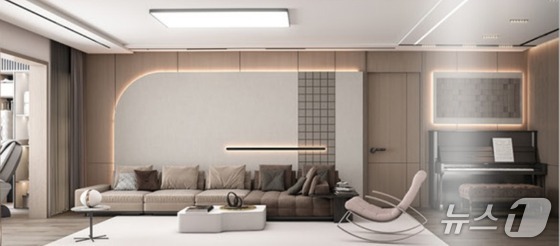
North Korea recently unveiled the interior of a modern-style residence reminiscent of a hotel lounge, highlighting improvements in living conditions and advancements in architectural technology. However, the absence of visible signs of habitation raises questions about whether this space is a genuine residence or merely a promotional model.
The February 2026 issue of the state-run monthly magazine Geumsugangsan spotlighted the growing influence of the Ryonjin Architectural Technology Exchange Center in the field of architectural decoration.
The published photos showcase the home’s interior, featuring bright-colored walls, curved structures, and minimalist designs with indirect lighting. Low sofas, lounge chairs, a wall-mounted television (TV), and even a piano create a sophisticated atmosphere rarely associated with traditional North Korean homes.
Notably, the lighting installed along the ceiling and walls, coupled with the carefully curated furniture arrangement, reflects contemporary interior design trends.
The magazine emphasized that the exchange center has uniquely implemented green materials in several buildings, including the Myohyangsan Grand Theatre in the Wonsan Galma Coastal Tourist Area, and has gained recognition for its architectural designs in homes, offices, and service buildings.
Established in 2017, the Ryonjin Architectural Technology Exchange Center aims to innovate across design, construction, and manufacturing while actively adopting globally recognized building materials and methods.
A key example is the Tensioned Resin Ceiling technique, which uses heat and tension to stretch synthetic resin film, allowing for ceiling finishes without additional plastering or wallpapering. This streamlined process reduces labor and construction time, and its low cracking rate makes it ideal for large-scale housing projects.
The media also noted the introduction of functional building materials like Glass Fiber Reinforced Gypsum (GRG), enabling the implementation of various curved and three-dimensional designs. GRG, stronger and more durable than regular gypsum, is commonly used in theaters and public buildings. This choice reflects North Korea’s efforts to elevate its interior finishing standards and emphasize construction modernization.
The design team primarily consists of young engineers in their 20s and 30s, who incorporate artistic details based on their expertise. The functional furniture produced by the exchange center is also touted as user-friendly and innovative, reportedly leading to ongoing orders and contracts.
However, the showcased spaces appear overly pristine and lack signs of daily life, suggesting they may be design concepts or exhibition model homes rather than actual residences.
As North Korea expands the construction of high-rise apartments and cultural facilities in Pyongyang and tourist areas, promoting civilized living as a regime achievement, some analysts interpret this report as an attempt to visually highlight improvements in residents’ living standards.