

The Donald Trump administration’s reciprocal tariff measures, the ongoing Russia-Ukraine conflict entering its fourth year, the controversial arrest of Venezuelan President Maduro in violation of international law, and attempts to annex Greenland have raised concerns about national interests and power dynamics in international relations. These developments have sparked significant worries about South Korea’s future.
South Korea leads the world in low birth rates and faces the highest risk of population decline due to rapid aging. Some experts predict that in a few decades, North Korean soldiers could easily march south and unify with a defenseless elderly population. However, South Korea’s economic potential remains strong, particularly in semiconductors, positioning the country favorably in the global artificial intelligence (AI) era. This situation presents a mix of positive and negative factors for South Korea’s future.
In this context, North Korea’s actions will significantly impact South Korea’s future. If North Korean missiles, including long-range artillery currently aimed at international waters in the East and West Seas, were to target South Korea, the region could quickly devolve into a war zone similar to Ukraine or Gaza.
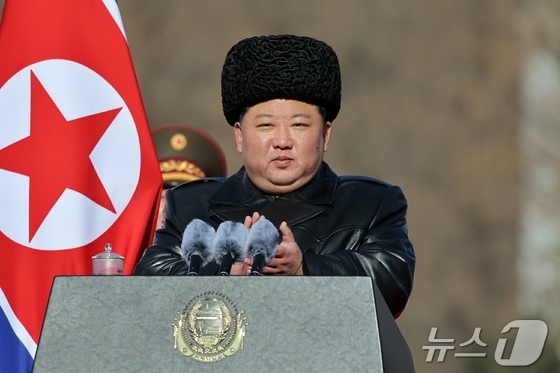
Currently, North Korea is tightening internal controls while closely observing domestic and international situations. Kim Jong Un, born in 1984 and the General Secretary of the Workers’ Party, likely aims to leverage the strategic advantages of its nuclear arsenal to create a secure and prosperous North Korea. To outline a new five-year plan, North Korea has been preparing for the 9th Party Congress, announced last year. The regime is systematically preparing at the grassroots level across the country, crafting a narrative of becoming a political, military, and economic powerhouse.
Today’s North Korea is vastly different from the mid-1990s when it exposed images of malnourished children to attract humanitarian aid during economic hardships and sought economic support through inter-Korean summits. North Korea has grown significantly, making it challenging for South Korea to influence its direction using outdated policies like the Sunshine Policy or big brother approach. North Korea is no longer a weak rogue state.
Defying international sanctions, North Korea has developed nuclear weapons and deployed combat troops to Ukraine, positioning itself as a key player in global affairs. From Pyongyang’s perspective, South Korea, struggling under U.S. tariff pressures, may not appear to be a partner capable of shaping North Korea’s future.
Consequently, North Korea maintains that it doesn’t need to engage directly with South Korea, which only influences the hearts of North Korea’s future generation through cultural exports. It treats the relationship as one between hostile belligerents.
Given North Korea’s elevated status and the international focus on national interests, South Korea must deploy creative leverage to ensure its security and national interests while influencing North Korea. It’s crucial to create an opportunity for North Korea to return to negotiations, especially with President Trump’s upcoming visit to China in April.
North Korea must recognize that reckless provocations are futile, and for its regime’s survival, collaborating with the United States and South Korea and opening up to the international community, like China and Vietnam, is the best path forward. Achieving this will require close cooperation and coordination with the international community, not just efforts limited to the two Koreas.
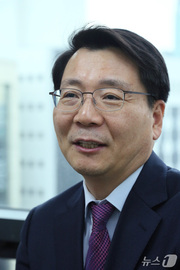
*Kim Hyung-seok, former Vice Minister of Unification, is a seasoned diplomat with extensive experience in key positions within the Ministry of Unification. Recognized for his diplomacy and communication skills, he has served as spokesperson, director of the Situation Analysis Bureau, chief negotiator for inter-Korean talks, and vice minister. He also held the position of Unification Secretary in the Blue House during the Park Geun-hye administration.
△ Born in 1965 in Suncheon, Jeonnam △ Suncheon High School △ Department of English Language and Literature, Seoul National University △ Graduate School of Public Administration, Seoul National University △ Director of Policy Coordination, Unification Policy Office, Ministry of Unification △ Planning Director, Inter-Korean Economic Cooperation Bureau, Ministry of Unification △ Director, Situation Analysis Bureau, Ministry of Unification △ Spokesperson, Ministry of Unification △ Chief Negotiator, Inter-Korean Talks Headquarters △ Senior Policy Advisor, Saenuri Party △ Unification Secretary, Office of National Security, Presidential Office △ Vice Minister of Unification △ Visiting Professor, Daejin University