

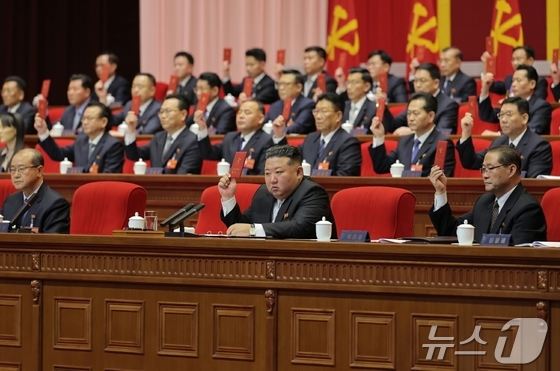
Kim Jong Un was unanimously re-elected as General Secretary of North Korea’s Workers’ Party at the 9th Party Congress. This outcome suggests that speculations about reviving the presidency or restructuring the head of state position did not materialize during this gathering.
The party’s official newspaper, Rodong Sinmun, reported on Monday about the fourth day of the congress. It stated that following the unwavering will of all representatives, millions of party members, and the entire nation, including the People’s Army, we have decided to elect Comrade Kim as General Secretary of the Workers’ Party of Korea.
The newspaper framed this decision as a historic evaluation of the struggles and significant achievements over the past five years, describing it as a solemn expression of the people’s collective choice and determination.
Rodong Sinmun portrayed Kim as the supreme leader of the Workers’ Party and the embodiment of dignity for the party, state, and people. It characterized the period since the 8th Party Congress in 2021 as an era of transformative struggles. The paper highlighted several key accomplishments: introducing five major party-building initiatives for a new era, implementing a five-year economic plan and boosting construction efforts, advancing rural and agricultural reforms, achieving progress in health, science, education, and sports, and enhancing war deterrence capabilities centered on nuclear forces. These points underscored the legitimacy and continuity of Kim’s leadership.
The newspaper further extolled Kim as the epitome of greatness, the guiding force of the party, and the strength of the state, elevating him as an irreplaceable political figure in North Korea.
Kim’s title changed from Chairman of the Party to General Secretary of the Party during the 8th Party Congress. This shift occurred alongside amendments to the party constitution, transitioning from a ‘Party Committee’ system to a Party Secretariat structure, which included renaming the highest party position.
This recent congress maintained the existing system without significant restructuring. Earlier, when Kim redefined North-South relations as between two hostile states and called for revisions to unification and constitutional matters, some speculated about potential leadership structure changes, including reviving the presidency. However, no substantial alterations were observed.
It appears that North Korea did not incorporate its revised South Korea policies, such as the two-state concept, into the party constitution amendments during this congress. This suggests a preference for stability over transformation in their decision-making process.