

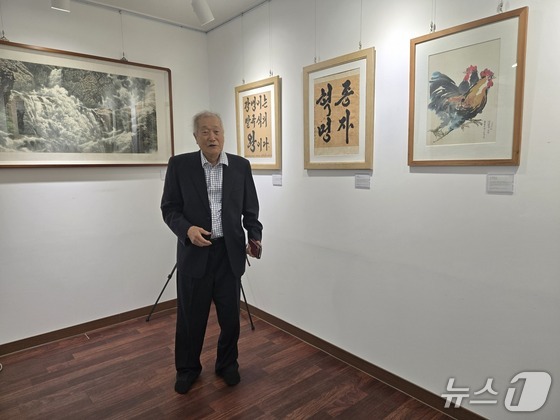
While the language of unification and nation may be fading, hunger still knows no borders. In North Korea, where traces of the 1990s famine linger, corn remains a crucial survival crop. An agricultural scientist continues to seek breakthroughs in restoring relations, bringing much-needed high-yield seeds to North Korea.
On February 22, Dr. Kim Soon-kwon (82) met with News1 at the International Corn Foundation office in Pohang, Gyeongbuk. He showcased the Dae Hong Dan corn, a variety specifically developed for North Korea’s mountainous agricultural regions.
North Korea’s terrain, characterized by numerous valleys, provides favorable natural conditions for hybrid seed production. The Dae Hong Dan corn is specially bred for the challenging agricultural environments of regions like Jagang, Yanggang, North Hamgyong, and North Pyongan provinces.
All of the previous corn varieties were suitable for lowland areas, Dr. Kim explained. However, the most severe food shortages occur in the highlands, so they’ve bred corn seeds adapted to these regions. Despite changing diets, corn remains a staple for the vulnerable in North Korea.
While working at the Rural Development Administration, Dr. Kim passed entrance exams for both a master’s program at Korea University and a U.S. study scholarship. After completing his studies at the University of Hawaii in just over three years, he declined a job offer from an American agricultural seed company to return home.
In 1976, Dr. Kim developed the Suwon Series, Asia’s first high-yield hybrid corn. This innovation reportedly boosted annual farm incomes in Gangwon Province by 40 billion KRW (about 27 million USD). His success came after nearly 30 years of failed attempts by countries like the UK and France, proving wrong those who deemed it impossible.
In 1979, the United Nations’ International Institute of Tropical Agriculture (IITA) recruited Dr. Kim. There, he developed corn varieties adapted to African conditions, including those resistant to viral stunting disease. He also made significant strides in addressing the parasitic weed Striga, which Western scholars had labeled devil’s grass, greatly contributing to alleviating Africa’s food crisis.
Dr. Kim’s connection with North Korea began in 1997 when he received an invitation shortly after returning from his 17-year stint in Africa. North Korea recognized the potential of his research to boost food production.
At that time, North Korea was grappling with severe agricultural setbacks. The collapse of the communist bloc in the 1990s had cut off imports of fertilizers and fuel, while repeated floods and droughts exacerbated the situation. The country faced not just a food shortage, but a systemic famine that claimed hundreds of thousands of lives due to the collapse of its distribution system.
Despite his background in the Korean War and anti-communist education, Dr. Kim felt compelled to help. Having experienced hunger as a child, he empathized with starving North Koreans. His wife, originally from North Hamgyong Province, worried about her siblings still living there, especially after news of crop losses due to severe flooding.
Despite tensions between South and North Korea halting mutual visits and exchanges, Dr. Kim made his first visit to North Korea in 1998, with government and National Intelligence Service approval. He then began researching solutions to the food crisis.
Initially, North Korean researchers were skeptical of Dr. Kim.
When Dr. Kim advised halving corn planting in favor of soybeans, North Korean researchers were suspicious of his motives.
At first, they misunderstood his intentions, Dr. Kim recalled. They thought he was sent by South Korean intelligence to worsen their starvation by recommending soybean planting. It planted Suwon 19 in 80 cooperative farms. It developed 3,000 corn varieties through joint North-South research. This marked the first technical cooperation between the countries since the Korean War, conducted under an agreement based on North Korea’s requests.
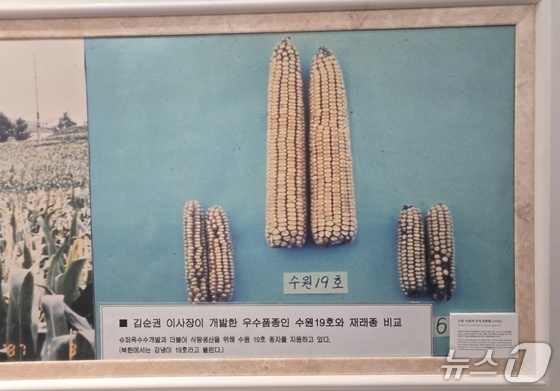
Dr. Kim proposed soybean planting due to its superior nutritional value compared to corn. Moreover, continuous corn planting can lead to disease issues and requires substantial fertilizer, making crop rotation advisable. However, North Korea had prioritized quantity over quality, repeatedly planting corn in the same fields.
Dr. Kim introduced Suwon 19, which yields more than double the output of traditional varieties and shows resilience against pests and wind. In 1998, trials across over 80 villages in 10 North Korean regions showed a production increase exceeding 20% compared to existing seeds. This success paved the way for developing 12 corn varieties tailored to different North Korean regions, in collaboration with local scientists.
Dr. Kim noted that North Korean officials understand the value of original seeds. Creating hybrids ultimately requires breeding with original seeds. Many highland original seeds were lost in floods, and while China appeared to help, they withheld original seeds. When he provided original seeds, he gained significant trust. Security was tight after North Korean scientists were caught attempting to steal seeds from Chinese corn farms at night.
During his visits, North Korea assigned Dr. Kim an escort for monitoring and communication. He recalls Choe Son-hui, now serving as Foreign Minister, as one of his strictest military guides.
Dr. Kim remembered that she was very direct, intelligent, and perceptive. Once, she tried to provoke Dr. Kim while escorting me to the Koryo Hotel, but later apologized. When Kwon Oh-hung, my initial handler who later became the head of North Korea’s inter-Korean summit delegation, was unavailable, Choe was among those who rotated as guides.
Reason for Continuing Seed Research in China, Mongolia, and Russia… Dreaming of Forming a Cooperative Structure for Unification
The newly developed Dae Hong Dan corn’ wasn’t directly created in North Korea but stems from seeds Dr. Kim secured during his previous research there. He has continued his work based on genetic resources collected at Pyongyang’s Agricultural Science Institute in 1999.
His ongoing collaborations with China, Mongolia, and Russia have also contributed to this progress. Unable to enter North Korea due to strained relations, he conducts research in similar climate and soil conditions, such as Dandong, China, and regions with comparable latitudes and longitudes.
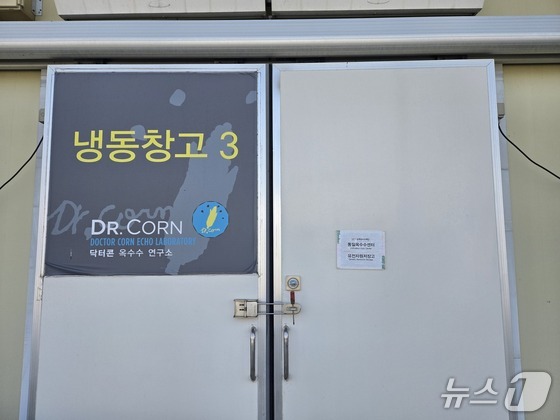
In 2004, Dr. Kim bred the Mongolian Corn Population (MCP) for Mongolian cultivation, cross-breeding corn varieties from Mongolia, Russia, the U.S., and Canada. Since 2008, he’s operated Dr. Corn Co., Ltd. in Northeast China to develop North Korea-adapted corn.
While cross-breeding MCP with Pohang-developed black corn, Dr. Kim discovered excellent hybrid vigor, leading to a new variety. The Dae Hong Dan Black Corn boasts a firm ear core and high anthocyanin content. Given Kim Jong Un’s current health, diabetes could become a concern. This corn’s antioxidant properties could help prevent such issues, Dr. Kim added.
In 2015, Dr. Kim expanded his eco-friendly corn breeding to Russia’s Republic of Buryatia. This effort addressed winter livestock feed issues and boosted incomes for ethnic Koreans in southern Russian states.
Russia struggles with corn farming, Dr. Kim explained. The U.S. has historically blocked corn exports to Russia. His expertise lies in developing regionally-adapted seeds, so he’s created tailored solutions for areas like Russia’s Primorsky Krai and parts of China, always seeking ways to deliver corn to North Korea. For unification, it must maintain good relations with China, the U.S., and Russia. Their opposition would make unification nearly impossible.
In 2019, Dr. Kim developed 550 new corn varieties adapted to North Korea and Northeast China’s climate at North Korean research facilities. His foundation and Handong University are now propagating these varieties along with 739 others from the U.S. Department of Agriculture.
Dr. Kim’s corn varieties await their chance to enter North Korea. A recent attempt to deliver Dae Hong Dan corn through the North Korean embassy in China failed. As the May planting season approaches, he’s leveraging his networks to facilitate delivery through a third country.
It has nearly two tons of seeds earmarked for North Korea, Dr. Kim stated. Some may oppose this, but he believes it must help North Korea achieve self-sufficiency to prevent them from seeking alternatives elsewhere. Trust is crucial in North Korean relations. It’s about fair exchange, not just aid. North Korea has ideal conditions for corn cultivation. He hopes corn can be a pathway to the people’s unification.