

Earlier this year, two major international events likely prompted North Korea to confront a fundamental question.
Does the nuclear arsenal truly guarantee the safety?
In January, U.S. special forces infiltrated Caracas, Venezuela’s capital, capturing President Nicolás Maduro and extraditing him to the United States. The following month, a joint U.S.-Israeli airstrike resulted in the death of Iran’s Supreme Leader Ayatollah Ali Khamenei, ending his 37-year rule.
While these incidents differed in specifics, they shared a common thread: the U.S. executed military operations directly targeting authoritarian leaders. This marks the first instance since the Iraq and Afghanistan conflicts where physical regime change has become a tangible U.S. strategy.
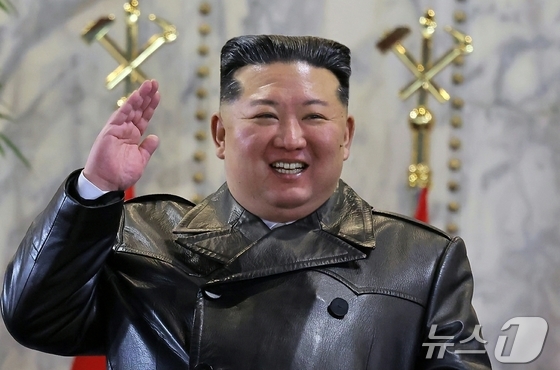
For Kim Jong Un, these events likely triggered deep-seated fears about his own survival.
Maduro’s fate was particularly alarming; not only did he lose power, but he also faced U.S. drug terrorism charges, resulting in a humiliating extradition to New York. This public spectacle demonstrated that a leader could be stripped of authority and subjected to foreign legal proceedings while their nation continued to function in their absence.
The Iranian situation potentially sets a precedent for regime collapse through U.S. military action, a scenario previously considered hypothetical. This could lead Kim to realize that while his robust national defense might safeguard his people, it may not ensure his personal survival. After all, a world without him holds no significance to the North Korean leader.
Consequently, North Korea must now develop a practical response to potential U.S. regime change scenarios. The leadership in Pyongyang cannot dismiss these events as improbable, given their recent occurrence elsewhere.
During the Donald Trump administration’s first term, officials openly discussed decapitation operations targeting North Korea. In late 2017, as tensions peaked on the Korean Peninsula due to nuclear threats exchanged between Trump and Kim, U.S. military options – including nuclear strikes or special forces deployment aimed at removing North Korean leadership – were publicly debated.
Former National Security Advisor Herbert McMaster revealed in his 2024 memoir that President Trump once inquired about simultaneously eliminating Kim and the North Korean leadership while observing a military parade. Similarly, John Bolton, another former National Security Advisor, disclosed in his 2020 memoir that Trump repeatedly asked about the speed at which the U.S. could destroy North Korea during unofficial meetings.
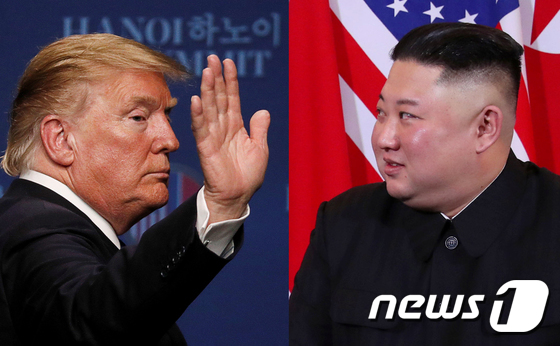
Last year, The New York Times reported that U.S. Navy Sea, Air, and Land teams (SEALs) covertly infiltrated North Korea’s east coast in February 2019 to install surveillance devices ahead of the Hanoi summit between Kim and Trump. Ironically, while Kim was showcasing his bromance with Trump in preparation for the summit, U.S. special forces were actively monitoring his every move. This incident underscores America’s demonstrated operational capabilities.
On March 3-4, Kim oversaw the launch of strategic cruise missiles from the new 5,000-ton destroyer Choe Hyon Ho. He expressed satisfaction with the test results, stating that the navy’s nuclear armament program is progressing as planned.
Some analysts interpret this missile test as a demonstration of North Korea’s countermeasures against potential decapitation operations. While ground-based missile launchers are vulnerable to satellite surveillance, naval assets like destroyers and submarines can rapidly change their strategic positions, enabling immediate retaliation even if Pyongyang or its leadership comes under attack.
However, this strategy presents a dilemma for North Korea. The fundamental concept of deterrence suggests that strengthening nuclear capabilities can prevent enemy invasions. Yet, the Iranian situation introduces a new paradigm: refusing U.S. demands to abandon nuclear weapons could lead to regime collapse. North Korea now faces a critical choice: should it enhance its nuclear capabilities to ensure survival, or consider relinquishing them?
While North Korea continues to label the U.S. as a rogue state with aggressive tendencies, it has not completely closed the door on dialogue. This reflects the complexity of their geopolitical situation.
The events in Venezuela and Iran have transformed the debate over whether nuclear possession guarantees regime security from abstract discourse into stark geopolitical reality. It remains to be seen whether President Trump will again propose dialogue with North Korea, and how Kim, having witnessed two regime changes, will respond to such overtures.