

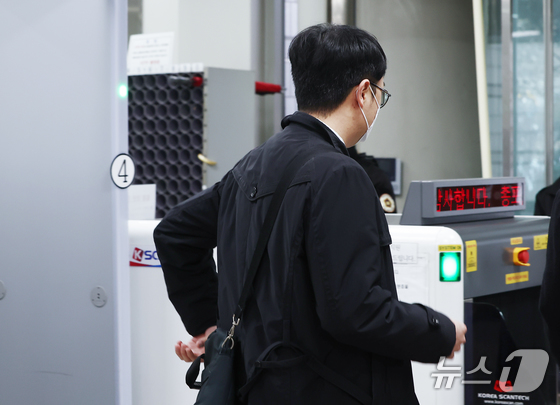
A graduate student in his 30s identified as Oh — arrested after sending multiple drones into North Korea — had his petition for a detention review denied by the court.
Seoul Central District Court’s Criminal Appeals Division 4-1 (Presiding Judges Song Jungho, Eom Cheol and Yoon Wonmuk) rejected Oh’s petition at 2:10 p.m. (South Korean time) on Wednesday.
The court received the detention-review petition on Monday. A detention review asks the court to re-examine whether a suspect’s arrest and continued detention are lawful and necessary.
Prosecutors say Oh flew a drone four times to test its performance, programming it to depart Ganghwa Island in Incheon, transit Kaesong and Pyeongsan County in North Korea, and return to Paju in Gyeonggi Province.
A military-police joint investigation task force concluded investigators believe he committed the acts to secure financial gain from a drone business.
On February 19, the task force sought an arrest warrant for Oh on charges including general transfer, violations of the Aviation Safety Act and violations of the Act on the Protection of Military Bases and Facilities. The Seoul Central District Prosecutors’ Office filed the warrant request on February 20.
After a pretrial warrant-review hearing on February 26, the Seoul Central District Court issued the arrest warrant, citing concerns that Oh might destroy evidence or flee.
The offense known as general transfer is codified in Article 99 of Chapter 2 (Crimes Against Foreign States) of the Criminal Act. The statute provides that anyone who harms the Republic of Korea’s military interests or confers military benefits on an enemy state is punishable by life imprisonment or a prison term of at least three years.