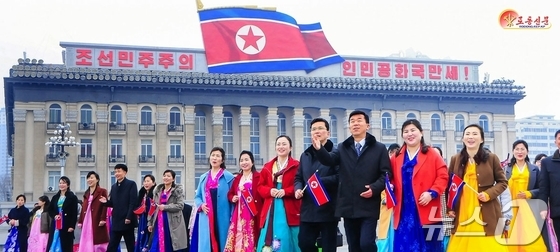
North Korea has announced the candidates for the upcoming 15th Supreme People’s Assembly elections, scheduled for March 15.
On March 13, the ruling party’s official newspaper, Rodong Sinmun, reported that the registration of delegate candidates was finalized during the electoral meeting for reviewing the qualifications of Supreme People’s Assembly delegate candidates, in accordance with the election law for the People’s Assembly of the Democratic People’s Republic of Korea.
The report further stated that local election committees are now publicizing all registered delegate candidates at each polling station and conducting promotional campaigns (essentially election rallies) for them.
North Korea has traditionally used these electoral meetings to select the final delegate candidates for each electoral district from a pool of numerous contenders.
The Supreme People’s Assembly functions as North Korea’s highest sovereign body, responsible for handling the constitution and various laws. The delegate election process is similar to that of South Korea’s National Assembly, with candidates chosen from regional electoral districts.
However, critics argue that these elections are largely symbolic, primarily involving a yes-or-no vote on a single party-endorsed candidate, conducted through a public voting method that lacks genuine democratic choice.
While Supreme People’s Assembly delegates typically serve five-year terms, this election comes seven years after the 14th Assembly was elected in 2019. Analysts suggest that the election schedule was adjusted to align the timing of the party congress with the term of the Supreme People’s Assembly delegates.
During a regular press briefing, Jang Yoon-jung, Deputy Spokesperson for the Ministry of Unification, commented that it appears they have completed the final procedures outlined in the election regulations. With only a few days remaining until the dates specified in the election law, various procedures seem to be underway. These processes are evidently being conducted in a compressed timeframe.