

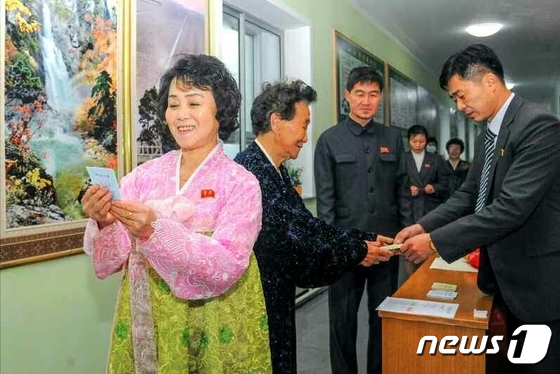
North Korea will hold elections for the Supreme People’s Assembly delegates on March 15, marking the first such event in seven years. This is equivalent to congressional elections in the U.S.
In this election for the Supreme People’s Assembly, North Korea’s constitutional highest organ of state power, all residents aged 17 and older are granted voting and candidacy rights. Typically, voting takes place from 9:00 a.m. to 6:00 p.m. (Korean time) on election day across approximately 690 electoral districts nationwide, with voters casting ballots for or against a single candidate.
North Korea amended its election law in August 2023, introducing a form of primary process for candidate selection in certain electoral districts.
In districts where farmers and workers—rather than high-ranking party officials—are running, two candidates will be nominated. A final candidate will then be selected through deliberation by an electoral assembly of about 300 members. However, most analysts predict that the central party will still wield significant influence over this process.
Previously, voters had to draw a line on their ballots to cast a negative vote. The new system allows voters to simply use separate yes and no ballot boxes. Given North Korea’s closed nature, concerns persist about voter privacy and the overall transparency of the election process. Critics argue that these changes represent only a superficial introduction of democratic elements to North Korean elections.
In the previous Supreme People’s Assembly election held on March 10, 2019, 687 delegates were elected. A similar number is anticipated this time.
During the 14th Assembly elections, results and the full list of elected officials were announced two days after the vote. Historically, North Korea’s supreme leader also served as a delegate. However, following a 2019 constitutional amendment, the supreme leader, who serves as the Chairman of the State Affairs Commission, is no longer eligible to be a delegate.
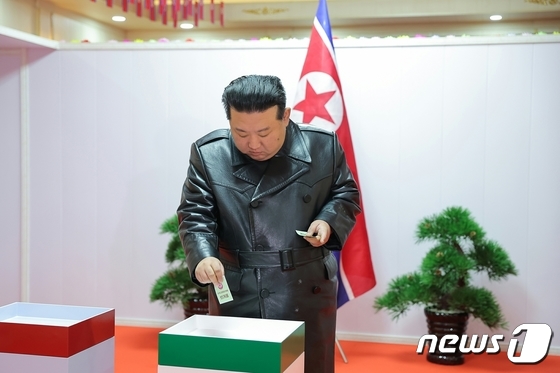
The Supreme People’s Assembly, as North Korea’s highest organ of state power according to its constitution, functions to transform Workers’ Party decisions into state policies through the cabinet.
While Supreme People’s Assembly elections typically occur every five years, this election comes seven years after the last one in 2019. This delay appears to be an effort to synchronize the cycles of the Workers’ Party Congress and the Supreme People’s Assembly, both of which have been held every five years since their revival in 2016 after a 36-year hiatus.
The Supreme People’s Assembly has the authority to address major issues including: drafting, amending, and repealing the constitution and state laws; electing and appointing key government officials; approving fundamental state policies and foreign policy directions; ratifying important treaties; approving national economic development plans and state budgets; and deciding on administrative district changes and pardons.
Before being proposed to the Supreme People’s Assembly, matters related to personnel and major policies must first be reviewed and decided upon by the plenary meeting of the Workers’ Party Central Committee. Key personnel decisions made at last month’s 9th Party Congress have now been proposed to the Supreme People’s Assembly. These proposals are expected to be ratified at the first meeting of the newly elected 15th delegates following the conclusion of the elections.