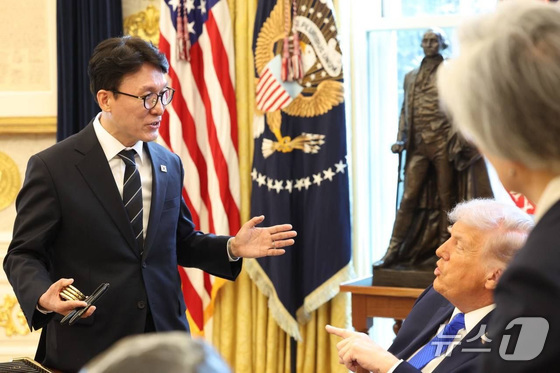
On March 13, Prime Minister Kim Min-seok met with U.S. President Donald Trump for approximately 20 minutes at the White House, where he offered advice on improving relations with North Korea. During a press briefing at the Korean Cultural Center in Washington, D.C., Kim stated that he had a conversation with President Trump for about 20 minutes without an interpreter. Although it was their first substantial interaction, they spoke freely and comfortably. He explained that this meeting was not pre-scheduled and occurred unexpectedly. Kim met with President Trump after a meeting with Pastor Paula White, head of the White House Office of Faith-Based and Neighborhood Partnerships. Kim conveyed to Trump that President Lee Jae Myung often refers to him as the only leader capable of resolving the Korean Peninsula issue. In response, Trump asked Defense Secretary Pete Hegseth and Chairman of the Joint Chiefs of Staff Dan Caine if they had heard this, requesting Kim to repeat the statement. After briefly mentioning the situation in Iran, Trump showed interest in the North Korean issue. He instructed his aides to bring a photo taken with Kim Jong Un at Panmunjom, and they continued their conversation while looking at the picture. According to Kim, Trump stated he maintains a good relationship with Kim Jong Un and inquired whether the North Korean leader wanted to communicate with the U.S. or with him personally. Kim told Trump that he is the only Western leader who has spoken with Kim Jong Un and possesses the unique capability as a peacemaker to resolve issues on the Korean Peninsula. Kim then shared his views on North Korea’s current situation, the possibility of dialogue between North Korea and the U.S., and ways to improve relations. However, he refrained from disclosing specific details, stating that it is a priority to report to the President upon his return to Korea. He also mentioned that after his explanation, Trump instructed his aides on several matters. Kim noted that he directed further investigation into one important point he mentioned and, based on that, to consider what actions would be advisable regarding relations with North Korea, but he did not disclose the specific instructions. Kim asked Trump if he could provide an English memo with additional opinions before leaving the U.S., and Trump granted permission.
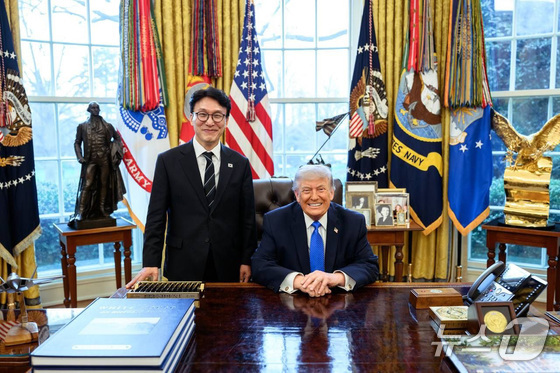
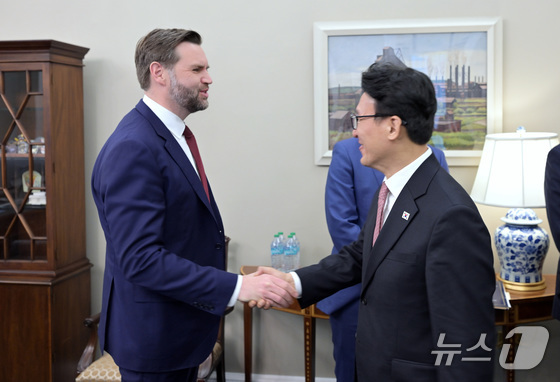
On the previous day, March 12, Kim reported that he met with Vice President JD Vance to discuss U.S.-Korea issues. He addressed the passage of the special law on U.S. investment in the National Assembly, Korea’s tentative intentions regarding the first U.S. investment project of interest to the U.S., progress on the issue of Google Maps export, and cooperation on critical minerals. Notably, U.S. Trade Representative Jamieson Greer also attended the meeting with Vice President Vance. Both Vance and Greer positively assessed the progress in U.S.-Korea relations over the past 50 days. Kim stated that Greer clarified regarding the Section 301 trade law investigation that it is not targeting Korea specifically and suggested that, in some cases, it might actually put Korea in a more favorable position than other countries. He also explained the Coupang issue to Vance and Greer, detailing public opinion and legal concerns in Korea. Kim noted that Coupang had downplayed the initial issues and delayed reporting, which was poorly received by the Korean public as it distorted the matter into a U.S.-Korea trade issue. Regarding digital regulation, Kim reported that the U.S. expressed interest in Korea’s system resembling the European Union’s regulations, but he explained the differences between Korea and Europe. Additionally, Kim mentioned that Vice President Vance sought advice regarding North Korea. He discussed various methods, including letters, special envoys, and direct visits, and agreed to provide a more detailed English memo. Kim emphasized that both Trump and Vance showed interest in the North Korean issue. He remarked that in their previous meeting with Vice President Vance, this meeting with Vice President Vance, and today’s meeting with President Trump, the U.S. side initiated the discussion on this issue. He added that while he cannot determine whether it ranks high in U.S. foreign policy priorities, he certainly felt that it exists within their area of interest.