

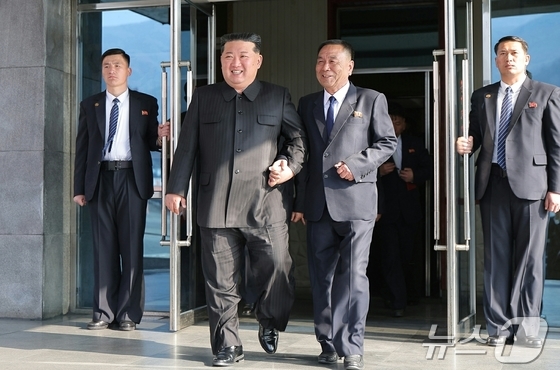
North Korea is set to convene the Supreme People’s Assembly, its equivalent to South Korea’s National Assembly, on March 22.
The Workers’ Party’s official newspaper, Rodong Sinmun, reported on Tuesday that the Standing Committee of the Supreme People’s Assembly has notified delegates of the first session of the 15th Assembly, scheduled for March 22, 2026, in Pyongyang.
The meeting’s agenda includes electing the Chairman of the State Affairs Commission, selecting state leadership bodies and Assembly sector committees, amending the socialist constitution, discussing the implementation of the five-year national economic development plan proposed by the 9th Party Congress, and addressing the final accounts of the 2025 national budget along with the 2026 budget. Delegate registration is set for March 21.
As North Korea’s highest sovereign body under its constitution, the Supreme People’s Assembly plays a crucial role in formalizing Workers’ Party decisions into state policies. The newly elected 15th Assembly delegates are expected to ratify these decisions at their inaugural meeting.
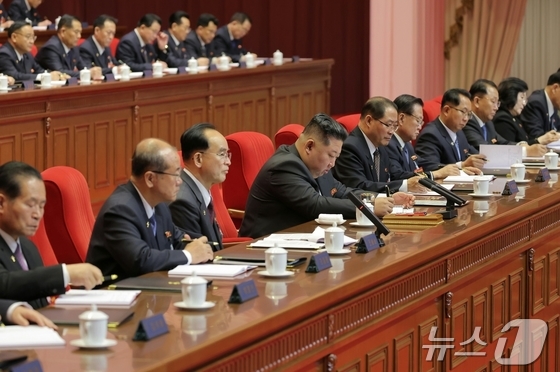
Potential Legal Codification of Two Hostile States Raises Concerns Over Territorial Definitions
The first session may include measures to legally reflect the stance of North and South Korea as two hostile states. This could manifest in North Korea unilaterally declaring its territory, maritime boundaries, and airspace, thereby reinforcing its national identity.
Kim Jong Un, General Secretary of the Workers’ Party, officially declared inter-Korean relations as two hostile states during the party’s plenary meeting in late 2023. Given North Korea’s recent actions, such as severing inter-Korean transportation links and erecting barriers near the demilitarized zone (DMZ), analysts believe it’s crucial to establish formal institutional measures during this party congress. In January 2024, Kim instructed the Supreme People’s Assembly to draft constitutional provisions defining North Korea’s territory, maritime areas, and airspace.
During the 9th Party Congress last month, Kim emphasized the severance of inter-Korean ties. He stressed putting a historical end to inter-Korean relations and establishing the most hostile state-to-state relationship, reinforcing the message that North Korea won’t return to previous inter-Korean dynamics.
There’s also potential for legislation that fundamentally revises the narrative of division and unification. The Korean War, previously termed the Fatherland Liberation War for unifying the peninsula, might be redefined as a conflict to defend North Korea’s sovereignty and territory against hostile nations and imperialist forces, recasting it as an international conflict.
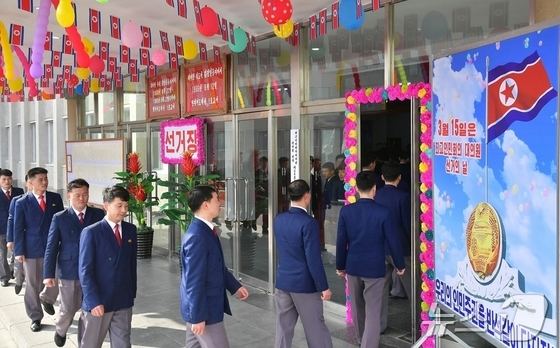
Delegates to 15th Congress Unveiled — Kim Yo-jong, Jo Yong-won, Choe Son-hui Included; Choe Ryong-hae Missing
The newspaper announced the results of the 15th Assembly elections held on March 15, which selected 687 delegates.
Kim Yo-jong, the General Secretary’s sister, was re-elected in the 5th crossroads constituency. While absent from the 13th Assembly elections in 2014, she joined the Supreme People’s Assembly in 2016 through a by-election and solidified her position by officially running in the 14th Assembly elections in 2019.
Choe Ryong-hae, who has chaired the Standing Committee since 2019, was not included in the new Central Committee at the 9th Party Congress. At 76, this is seen as a step back from the frontlines. Indeed, Choe was absent from the 15th Assembly delegate list released.
Jo Yong-won was elected in the 49th loyalty constituency. Previously unlisted in the 13th and 14th Assemblies, his exclusion from the Central Committee’s leadership roles at this congress has led to speculation about his potential election as Chairman of the Assembly’s Standing Committee.
Kim Hyung-sik, former Justice Minister in the Central Committee, also made the list. His previous appointment as Central Election Commission Chairman, traditionally held by a Standing Committee vice-chairman, suggests he might be elected to that role in the Assembly.
Pak Thae-song and Kim Jae-ryong, newly appointed to the Politburo Standing Committee, were elected from the 120th Muan and 24th Victory constituencies, respectively. Foreign Minister Choe Son-hui, previously representing the 484th Onjeong constituency, now represents the 61st Neunggeum constituency. International Department official Kim Song-nam was elected from the 169th Namjung constituency.
Notable defense and military figures include State Security Minister Li Qiang (681st Liberation constituency), missile development leader Jang Chang-ha (197th Subu constituency), and Social Safety Minister Bang Du-seop (683rd Byeongdong constituency), equivalent to South Korea’s National Police Agency chief.
North Korea reported 99.99% voter turnout, with only 0.0037% unable to vote due to overseas travel or being at sea, and 0.00003% abstaining. Of those who voted, 99.93% voted in favor, while 0.07% voted against.