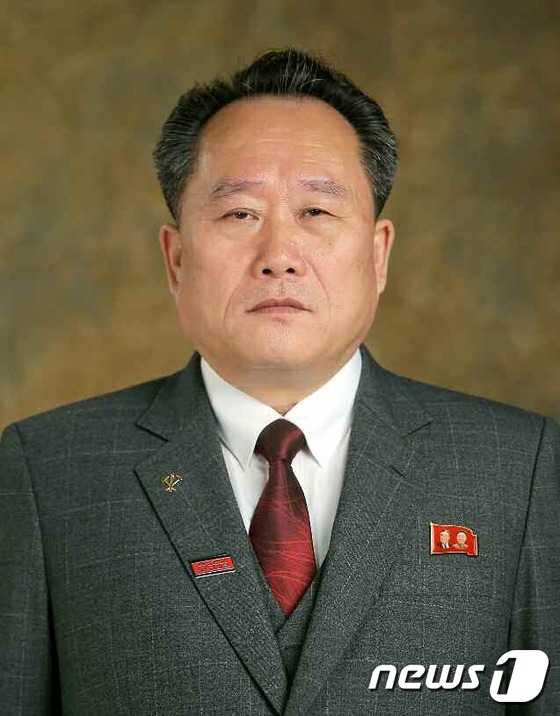
It has been officially confirmed that Ri Son-gwon, a prominent North Korean figure in inter-Korean relations, has assumed the role of chairman of the Korean Social Democratic Party (KSDP), a nominal opposition party.
On Monday, the Rodong Sinmun reported on the 15th Supreme People’s Assembly elections, stating that Ri Son-gwon, chairman of the KSDP Central Committee, cast his vote for Hong Seong-ho, manager of the Gangdong Comprehensive Greenhouse Farm, in electoral district 43 of precinct 77. This marks the first time North Korean state media has explicitly identified Ri as the KSDP chairman.
Ri, a military veteran, played a key role in inter-Korean talks during the 2018 denuclearization negotiations with the U.S. and South Korea. He served as chairman of the Committee for the Peaceful Reunification of the Fatherland, later becoming Foreign Minister and head of the United Front Department, which manages North Korea’s relations with South Korea. Reports suggest he maintained this position even after North Korea redefined inter-Korean relations as those between hostile states and reorganized the United Front Department in 2023.
However, following the 9th Congress of the Workers’ Party last month, indications emerged that Ri had been replaced as head of the 10th Bureau, raising questions about his future role. This latest report confirms that Ri, once a key figure in North Korea’s South Korea policy, has been moved to the largely ceremonial position of KSDP chairman, signaling a significant shift in his political influence.
The KSDP, along with the Chondoist Chongu Party, exists primarily to project an image of political pluralism in North Korea. In reality, these parties function as quasi-governmental organizations aligned with the Workers’ Party, lacking any genuine opposition role. This reassignment of Ri is viewed by some analysts as a de facto demotion, reflecting a scaling back of North Korea’s engagement with South Korea.
Notably, Ri’s vote for Hong Seong-ho, an agricultural official, suggests a significant change in his focus. This shift from his previous South Korea-centric role indicates that his responsibilities may now encompass areas such as domestic affairs or general administration, further pointing to a diminished political influence. However, given the KSDP’s historical use in international party relations and as a propaganda channel towards South Korea, it’s possible that Ri may still engage in new forms of external messaging within the context of North Korea’s state-to-state approach to inter-Korean relations.