

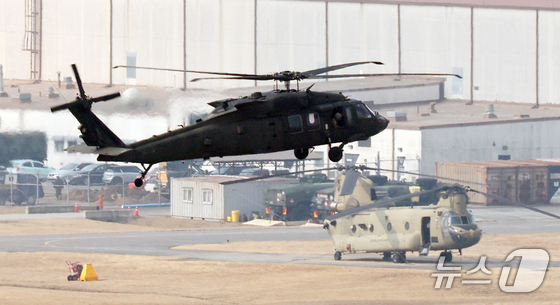
The biannual joint military exercise Freedom Shield (FS) between South Korea and the U.S. concludes today. While North Korea’s superficial justification for labeling these exercises as invasion war drills has dissipated, experts predict that Pyongyang will persist in its aggressive actions, including potential military provocations, as of Thursday.
North Korea Continues to Protest Joint Exercises Despite Significant Reduction
Military officials reported on Thursday that South Korea and the U.S. are wrapping up their joint exercises, which have been ongoing for about ten days since March 9. In an effort to improve relations with North Korea, the allies implemented a conciliatory approach by scaling back field training exercises (FTX) linked to simulations to less than half of last year’s scope. However, North Korea promptly expressed its displeasure following the commencement of FS, with Kim Yo-jong, Deputy Director of the Workers’ Party of Korea, issuing a statement condemning the exercises.
In a statement released through the Korean Central News Agency on March 10, Kim sharply criticized the Freedom Shield exercise as a war drill orchestrated by the U.S. and South Korea, maintaining a confrontational stance. She asserted that there is no distinction between practice and actual combat in military maneuvers conducted by hostile nations, insisting that such actions must be countered with overwhelming and preemptive force rather than proportional responses.
Indeed, since the implementation of FS this year, North Korea has carried out two military provocations, seemingly translating its warnings into action. The first incident involved the launch of strategic cruise missiles from the North Korean Navy destroyer Choe Hyon Ho on March 10. The second occurred on March 14, when North Korea fired over ten rounds from 600mm precision multiple rocket launchers in a concentrated strike drill aimed at South Korea.
Notably, the recently launched rockets are believed to be a new (upgraded) type first unveiled in March, capable of carrying tactical nuclear warheads identified as Hwasan-31. Kim Jong Un emphasized at the test launch site that this weapon is designed to strike targets within a 420 km (about 261 miles) range, highlighting its potential to hit key facilities in South Korea.
During the 9th Workers’ Party Congress held in February, Kim stated that continuously testing and demonstrating the reliability and effectiveness of the nuclear deterrence is a responsible exercise of war deterrence. This remark suggests North Korea’s intent to continue its various military provocations. It indicates a high likelihood that Pyongyang will express its ongoing hardline stance towards South Korea and the U.S. through military actions, regardless of the conclusion of the joint exercises.
Delayed U.S.-China Summit and Potential U.S.-North Korea Contact: Will Provocations Enhance Negotiating Power?
The postponement of the U.S.-China summit, which was expected to serve as a catalyst for U.S.-North Korea dialogue, may further amplify North Korea’s military provocations. On March 16, President Donald Trump revealed during a White House press briefing that he had requested China to delay the summit with President Xi Jinping, originally scheduled for March 31 to April 2, by about a month. Reports indicate that China is acknowledging the postponement and is currently in discussions with the U.S. side.
This development effectively grants North Korea more time for strategic planning. As a result, analysts speculate that Pyongyang might pursue additional provocations using strategic weapons to bolster its negotiating position. Major international media outlets, including the Associated Press and The Guardian, have suggested that North Korea, having observed the importance of nuclear deterrence from Iran’s experience, might engage in provocations to showcase its capabilities.
Park Won-gon, a professor of North Korean studies at Ewha Womans University, predicts that North Korea will not easily forfeit dialogue opportunities, as U.S. sanctions relief is essential for recognizing its status as a nuclear power and for economic development. He emphasized that while North Korea aims to differentiate itself from Iran, it will likely showcase its military prowess, as seen with the recent launch of new rockets, to steer negotiations in its favor.
There is also cautious speculation that Kim may deliver another message to the U.S. during the first session of the 15th Supreme People’s Assembly, scheduled for March 22.
Previously, during the 9th Party Congress, Chairman Kim stated that the prospects for U.S.-North Korea relations entirely depend on the attitude of the U.S. If the U.S. respects our current status as a nuclear power, as stated in the Constitution of the Democratic People’s Republic of Korea, and withdraws its hostile policy towards us, there is no reason for them not to get along with the U.S.
Regarding South Korea, he emphasized that the determination and will to treat South Korea as a thorough enemy and an eternal adversary is firm and conclusive, expressing his intent to reflect this hostile two-nation theory in the constitution.