The government has decided to terminate the Fourth Basic Plan for the Development of Inter-Korean Relations, which has been in effect since 2023, and is now working on establishing the Fifth Basic Plan. This decision stems from the need for a new strategy that aligns with the current geopolitical landscape, the state of inter-Korean relations, and the government’s approach towards North Korea, as the Fourth Plan was created during the Yoon Suk Yeol administration.
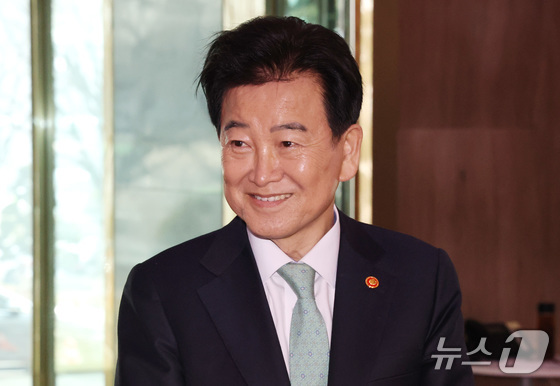
On Thursday morning, the government convened the first meeting of the Inter-Korean Relations Development Committee for 2026 at the Government Seoul Building. The session, chaired by Unification Minister Chung Dong-young, reviewed the draft of the Fifth Basic Plan for Inter-Korean Relations (2026-2030).
This new plan replaces the Fourth Basic Plan, which was originally intended to be in effect from 2023 to 2027. The government explained that the early termination and formulation of a new plan were necessitated by shifts in North Korea policy and changes in the political landscape following the change in administration.
The government has outlined the vision for the Fifth Basic Plan as Peaceful Coexistence and Joint Growth on the Korean Peninsula, aligning with the North Korea policy of the Lee Jae Myung administration. The plan aims to institutionalize peaceful coexistence, build a foundation for joint growth, and realize a nuclear-free Korean Peninsula.
Moreover, the government clearly articulated three core principles: respect for the North Korean regime, rejection of forced unification through absorption, and non-pursuit of hostile actions. These principles underscore the government’s commitment to reducing tensions and stabilizing relations. Specifically, the plan focuses on six key tasks: restoring regular communication channels between North and South Korea, normalizing relations through dialogue, pursuing a phased solution to North Korea’s nuclear issue, expanding exchanges and cooperation, addressing humanitarian issues such as separated families, and promoting a peace economy with increased public participation.
The government emphasized that this Fifth Basic Plan is the first to be formulated since North Korea redefined inter-Korean relations as those between two hostile states. It explained that the plan aims to transform inter-Korean relations into a peaceful coexistence relationship oriented towards eventual unification. However, the government refrained from officially using the term peaceful two states, instead focusing on policies aimed at reducing hostility.
A Unification Ministry official stated that given the significant changes in the goals and environment of North Korea policy, it was necessary to establish a new basic plan that aligns with the current direction rather than maintaining the existing one.
Furthermore, the government proposed the establishment of a new Inter-Korean Basic Agreement, which would build upon the Inter-Korean Basic Agreement adopted in 1991. This new agreement would outline fundamental principles and practical directions for reconciliation and cooperation between North and South Korea. For the first time, due to legal amendments, an assessment of the previous basic plan will be included. The government plans to focus on qualitative evaluations centered on policy effectiveness rather than quantitative indicators to inform future plans.
In his opening remarks, Minister Chung reflected that twenty years ago, it established the legal foundation for inter-Korean relations, but now those relations have deteriorated significantly. It cannot overlook the failures of Korean politics in this regard.
He continued that the fundamental principles of independence, peace, and democracy are being challenged. It must reflect on how the principle of peace has been compromised.
According to the Inter-Korean Relations Development Act enacted in 2005, the government is required to establish a basic plan for the development of inter-Korean relations every five years and to promote North Korea policy at a whole-of-government level.
Minister Chung mentioned the policy goals of the Lee administration, including eliminating the negative legacy of hostile confrontation and achieving self-defense through the return of wartime operational control. He stated that it will acknowledge the reality of the situation, respect the counterpart, and seek practical solutions.
The government plans to finalize the basic plan through upcoming vice-ministerial and cabinet meetings and aims to prepare an implementation plan within the year.