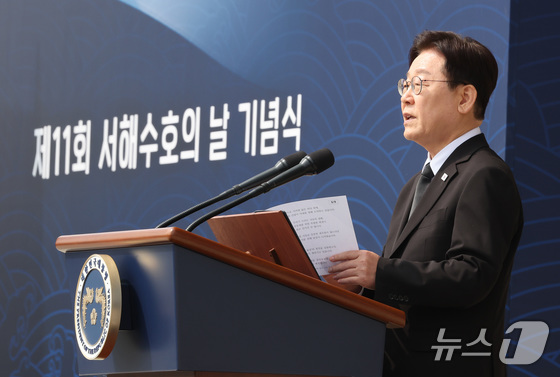
President Jae Myung Lee, during the 11th West Sea Defense Day ceremony on March 27, refrained from directly mentioning North Korea. Instead, he focused on honoring those who sacrificed their lives for peace and the nation.
Lee’s emphasis on peace stands in contrast to former President Suk Yeol Yoon’s focus on national defense and former President Jae In Moon’s stress on patriotism and military strength.
West Sea Defense Day pays tribute to 55 heroes who died defending against North Korean attacks, including the Second Yeonpyeong Naval Battle, the Cheonan sinking, and the Yeonpyeong shelling. Since 2016, the government has officially observed this day on the fourth Friday of March.
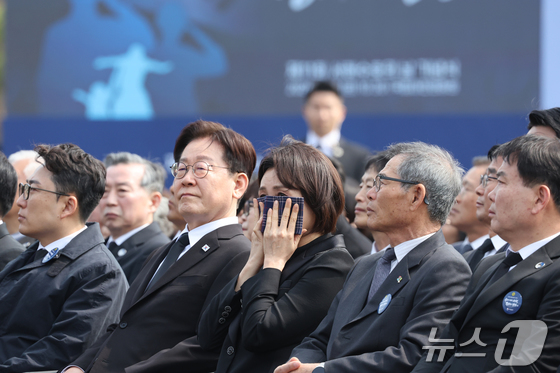
The ceremony, held at the National Cemetery in Daejeon, began with tributes at the graves of fallen soldiers from the aforementioned conflicts and the late Chief Warrant Officer Joo Ho Han. President Lee and his wife attended, along with Defense Minister Kyu Baek An, Minister of Veterans Affairs Oh Eul Kwon, and military chiefs of staff.
In his address, President Lee mentioned peace eight times, underscoring it as the central theme of the speech. This marks a shift from the Moon administration’s focus on patriotism and the Yoon administration’s emphasis on national defense. The ceremony’s slogan, “Our Sea, the West Sea: A Path to Peace and Prosperity,” underscores this new direction.
Previous West Sea Defense Day slogans under President Yoon highlighted national defense, with phrases like “Remembering the Heroes Who Safeguarded Freedom Through Sacrifice.” Yoon had warned of severe consequences for North Korean provocations.
The Moon administration also emphasized sacrifice and dedication to the nation, using slogans such as “Like that day, we will protect the Republic of Korea.” Moon praised the West Sea Defense heroes as symbols of patriotism, focusing on their commitment to duty rather than North Korean provocations.
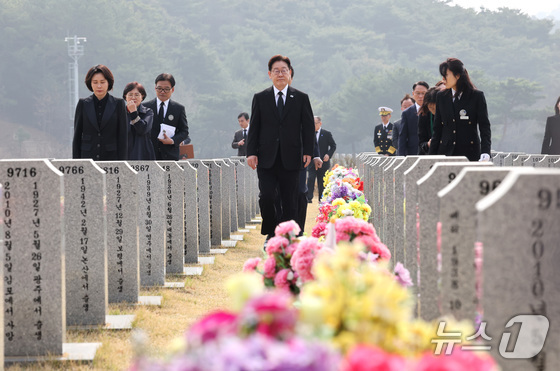
President Lee reiterated the principle that special sacrifices deserve special compensation in his speech, mentioning heroes seven times and veterans and compensation a combined four times.
He stated that the silent efforts and anonymous sacrifices had transformed the sea into a pathway of opportunity and hope, connecting South Korea with the world and helping overcome the scars of division. He added that South Korea’s economy and industries are now advancing on the sea protected by these heroes.
The President emphasized that the nation must never forget that its current freedom, peace, and prosperity are built on extraordinary sacrifices for the community. He also questioned who would step forward for the nation in the future if such noble sacrifices were not properly honored.
President Lee also highlighted ongoing policies to support veterans and their families, including financial aid for veterans’ spouses, expanding veteran healthcare facilities to 2,000 locations, and improving salary calculations for discharged soldiers to include mandatory service time.
Unlike his predecessor, Lee indirectly referenced North Korean provocations, using phrases such as barrage and chaos and the scars and memories of that day to allude to military confrontations. This approach differs from the previous administration’s explicit warnings about North Korean threats.
Notably, Lee’s speech reframed the West Sea not as a zone of conflict over the Northern Limit Line (NLL), but as the people’s sea, vital for national industry and economic growth.
Lee said that the West Sea is the nation’s frontline, requiring constant vigilance, and a critical territory that the community had united to protect. He acknowledged the continued efforts of Navy and Marine Corps personnel to safeguard the sea, as well as the Coast Guard’s role in protecting livelihoods and the economy from illegal fishing.
The President concluded by stating that peace is the nation’s sustenance and livelihood, asserting that robust peace is the most valuable form of national defense and that achieving a state of peace in which conflict is unnecessary, though challenging, is the surest path to security.