North Korea responded with unusual positivity to President Lee Jae Myung’s expression of regret over the civilian drone incident, praising it as a candid and bold attitude within just half a day. While cautious voices suggest that the frozen inter-Korean relations won’t thaw immediately, analysts emphasize the need to closely monitor North Korea’s subtle shifts.
Unusual Friendly Response Amid Inter-Korean Rift… A Step Toward Peace from Hostile Two States
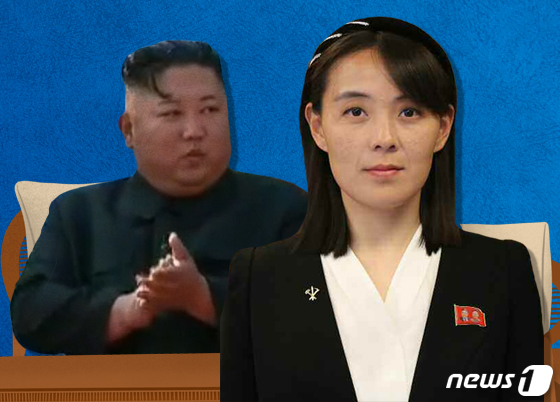
Kim Yo-jong, director of the Workers’ Party’s General Affairs Department, stated through the Korean Central News Agency on Monday that it views the President’s direct expression of regret and mention of preventive measures as highly fortunate and a wise decision for himself.
Kim added that its leader sees this as demonstrating a candid and bold person’s attitude, directly quoting Secretary Kim Jong Un’s words, which significantly elevated the statement’s importance.
Earlier that day, during the 14th Cabinet meeting and 4th Emergency Economic Inspection meeting at the Blue House, President Lee addressed the civilian drone incident, stating that although it wasn’t the government’s intention, he expresses regret to North Korea for the unnecessary military tension caused by some irresponsible and reckless actions.
Given the ongoing inter-Korean disconnect, some experts interpret this indirect communication as a positive sign that could transform the rhetoric between the two nations.
Dongguk University Emeritus Professor Ko Yu-hwan noted that the statement initially showed a positive reaction to President Lee’s regret and overall reflects a desire to avoid conflict and military tension while coexisting. Ultimately, this can be seen as North Korea taking a step towards peace from their ‘two hostile nations’ narrative.
Professor Ko continued that North Korea likely recognizes that in a democracy like South Korea, individuals can potentially fly drones to Pyongyang, and due to advancing civilian technology, similar incidents could recur. They may perceive this as a significant threat.
Professor Lim Eum-chul from Kyungnam University also predicted that given the statement’s content, excessive confrontation or heightened tensions between North and South are unlikely for now, suggesting a clear shift towards situation management.
The Blue House expressed hope that this swift mutual confirmation of intentions would contribute to peaceful coexistence on the Korean Peninsula, indicating a cautious approach rather than asserting definitive relationship improvements.
Before President Lee’s statement, Unification Minister Chung Dong-young had also received an immediate response from North Korea regarding his February 18 remarks on the drone incident. Minister Chung had officially acknowledged the drone provocation and announced plans for three major preventive measures, including establishing a no-fly zone in border areas.
That evening, Kim Yo-jong issued a statement praising Minister Chung’s commitment to prevent recurrence, interpreted as indicating some consensus on avoiding accidental clashes.
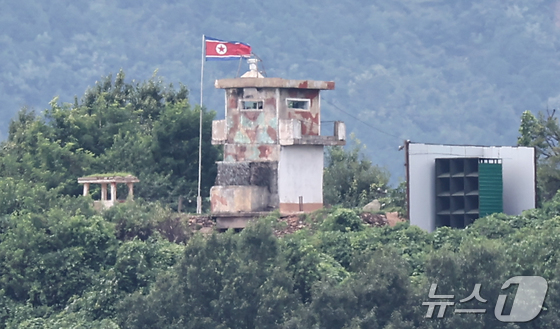
Accepts but Maintains Rebuke… Preemptively Blocks Admit Fault, Restore Ties Diplomatic Path
Experts analyze that Kim’s statement, while formally showing acceptance, emphasizes drawing a line. Kim maintained an admonishing tone, stating that it must remember that if provocations infringe upon the inviolable sovereignty again, as previously warned, there will be an unbearable price to pay.
She didn’t forget to deliver this threatening message.
Analysts suggest that the subtext indicates North Korea’s intention to steer future Korean Peninsula dynamics towards their established two-nation relationship concept. Some experts noted that while North Korea offered some level of evaluation, it simultaneously continued to block contact.
Hong Min, a senior researcher at the Korea Institute for National Unification, analyzed that presenting acceptance of regret alongside abandoning attempts at contact fundamentally blocks the typical diplomatic flow of ‘relationship recovery after acknowledging mistakes’ and aims to preemptively thwart any South Korean attempts to use this issue as a dialogue reopening opportunity.
He continued that despite the appearance of accepting regret, this is actually the most aggressive part of the entire statement. While superficially accepting President Lee’s regret, it fundamentally focuses on securing binding preventive measures and proactively establishing justifications for future responses.
Professor Lim emphasized that the phrase abandoning attempts at contact is crucial, representing a firm line against further discussions of national unity or shared ethnicity, indicating an intention to allow only cold border management within the two hostile nations framework.