U.S., South Korean, and Japanese diplomatic officials shared intelligence on North Korea’s recent military provocations, including the launch of cluster munition-equipped short-range ballistic missiles (SRBMs), and discussed potential response strategies.
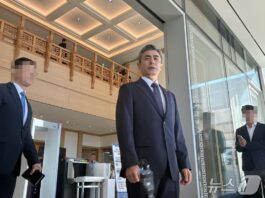
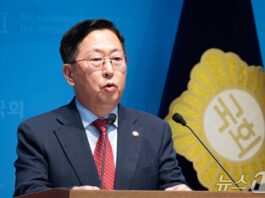
A State Department spokesperson revealed on Thursday that Baek Yong-jin, Director of South Korea’s Korean Peninsula Policy Bureau, David Wille, U.S. Deputy Assistant Secretary of State, and Kengo Otsuka, Director of Japan’s Foreign Ministry Asia-Pacific Bureau, held a conference call to address the situation.
The spokesperson noted that the three nations exchanged relevant information and deliberated on future countermeasures during their discussions. He emphasized that diplomatic channels between South Korea, the U.S., and Japan are consistently maintained to rapidly share intelligence and situational assessments whenever North Korea conducts ballistic missile launches.
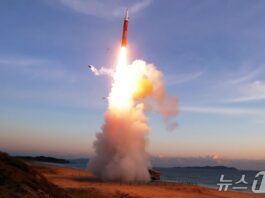
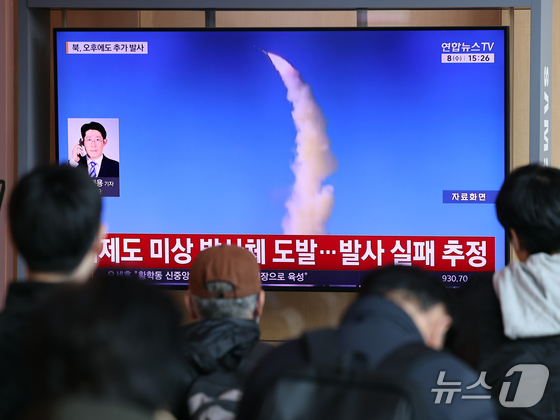
The Joint Chiefs of Staff reported that North Korea fired multiple SRBMs into the East Sea from the Wonsan area on the morning of the 8th, followed by an additional SRBM launch around 2:20 p.m. (Korean time) the same day.
Prior to these incidents, on Tuesday, North Korea attempted to launch an unidentified projectile, but the missile reportedly malfunctioned and disintegrated mid-flight while heading eastward.
In a related development, North Korea announced on Thursday that it had conducted tests on several key weapons systems from Monday to Wednesday. These tests reportedly included cluster munition-equipped SRBMs, electromagnetic weapon systems, carbon fiber decoys, and a mobile short-range air defense missile system. Analysts believe these tests were aimed at verifying the performance of their new weapons arsenal.