

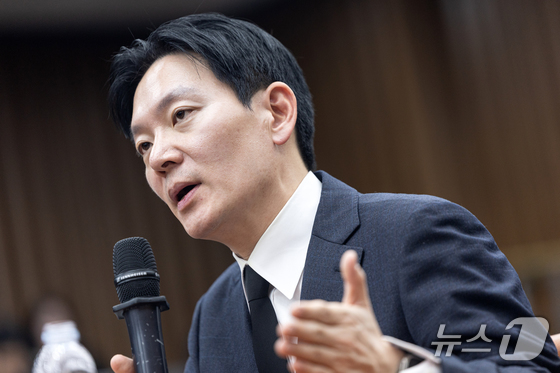
The second comprehensive special prosecutor, led by Kwon Chang-young, has officially named Park Sang-yong, the deputy chief prosecutor of the Incheon District Prosecutor’s Office, as a suspect in the alleged manipulation and coercion of testimonies during the investigation into the Ssangbangwool North Korean remittance case.
Park immediately pushed back, criticizing the special prosecutor’s office as an illegal congressional investigation assistant without proper investigative authority. Former Suwon District Prosecutor Hong Seung-wook, who oversaw the original investigation, condemned these actions as clear retaliation, citing collective defamation and incitement against the investigation team.
On THursday morning, the comprehensive special prosecutor’s office announced that they have received a complaint against Prosecutor Park and have officially designated him as a suspect. Additionally, it has imposed a travel ban on him.
Park is accused of hosting a salmon sashimi drinking party within the Suwon District Prosecutor’s Office during the Ssangbangwool North Korean remittance case investigation. It is alleged that he attempted to coerce Lee Hwa-young, the former vice governor of Gyeonggi Province and a key suspect, into making statements implicating President Lee Jae Myung.
The Seoul High Prosecutor’s Office’s Human Rights Violation Task Force (TF) initiated an investigation into these allegations against Park last September and recently transferred the case to the comprehensive special prosecutor at their request.
Following the announcement, Park took to Facebook, asserting that Kwon’s special prosecution is manipulating public opinion through travel bans, search warrants, and media play to support the dismissal of the illegal congressional investigation.
He added that as the investigation into the salmon drinking party by the Seoul High Prosecutor’s TF stalled, he was suddenly thrust into the role of assisting the congressional investigation. Lacking investigative authority, they’re spreading baseless conspiracy theories about President Yoon Suk Yeol’s office involvement and state corruption.
Park predicted that he expects these cases will eventually be transferred to a newly established special prosecutor tasked with dismissing charges after the congressional investigation.
Hong, the former prosecutor general, also weighed in, referencing the confirmed ruling against Lee. He argued that dismissing the evidence and court-verified facts as manipulation is an attempt to obscure the truth through political power.
He criticized the allegations against Park, stating that targeting Prosecutor Park individually for conducting an unpopular investigation, launching collective defamation and aggressive attacks, and conducting surveillance and illegal investigations are clear acts of retaliation.
Hong expressed deep concern, saying that beyond merely attacking public officials, he worries that pardoning the former vice governor and dismissing charges through a special prosecutor might actually occur. If this trend materializes, it will leave a significant stain on the criminal justice system and South Korea’s history.
Meanwhile, the comprehensive special prosecutor’s office is investigating individuals who worked in President Yoon’s office and the National Intelligence Service, based on evidence suggesting attempts to interfere with the prosecution’s investigation of Lee.
The Democratic Party of Korea has raised additional allegations that Park also attempted to coerce An Bu-soo, the chairman of the Asia-Pacific Peace Exchange Association. An provided key testimony that Gyeonggi Province directed Ssangbangwool to cover North Korean travel expenses during the remittance case investigation. This new allegation has drawn attention to whether the comprehensive special prosecutor will expand its investigation.