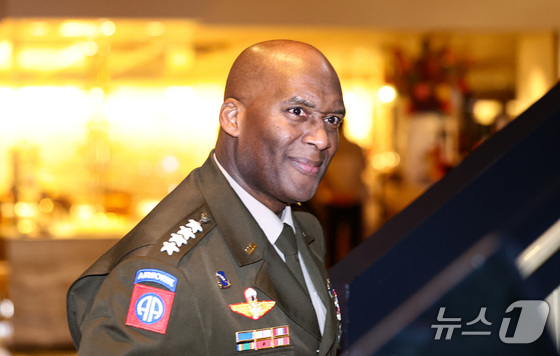
The South Korean Ministry of National Defense has refuted claims made by Representative Seong Il-jong, chair of the National Defense Committee, regarding an alleged protest by U.S. Forces Korea (USFK) Commander General Xavier Brunson to Defense Minister Ahn Gyu-back over Unification Minister Chung Dong-young’s remarks about North Korean nuclear facilities.
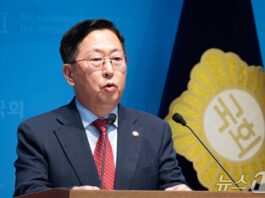
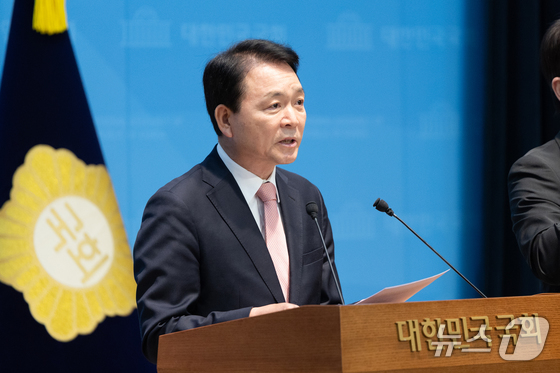
During a press conference on Tuesday morning, Rep. Seong stated that based on information he’s gathered as the Defense Committee chair, the USFK Commander urgently met with Defense Minister Ahn to strongly object to Minister Chung’s mention of a third North Korean nuclear facility in Kusong. He also claimed that the U.S. Embassy’s information officer had lodged a similar protest with the National Intelligence Service.
Seong further argued that if an allied commander directly confronted the Defense Minister with such strong objections, it underscores the severity of Minister Chung’s confidentiality breach. If true, Chung should immediately step down. How can a Unification Minister who has undermined the South Korea-U.S. alliance, benefiting North Korea, continue to hold office?
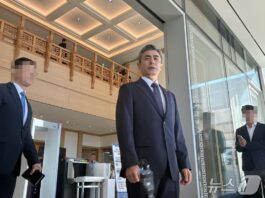
In response, the Ministry of National Defense issued a statement saying that the claim that the USFK Commander protested to the Defense Minister is both inappropriate in terms of South Korea-U.S. military diplomacy and entirely false.
The Ministry clarified that while South Korea and the U.S. maintain regular communication on key issues and strictly adhere to the Military Information Protection Agreement, specific details regarding military diplomatic matters cannot be disclosed.
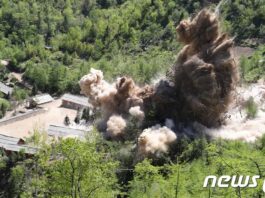
Previously, on March 6, during a National Assembly Foreign Affairs and Unification Committee meeting, Minister Chung had stated that the International Atomic Energy Agency (IAEA) Director General Rafael Grossi made a very serious report to the board on March 2. He reported that uranium enrichment facilities exist in Yongbyon, Kusong, and Gangseon, and while Iran’s uranium enrichment is at 60%, North Korea is producing weapons-grade uranium at 90%.
The U.S. expressed concern that Minister Chung’s remarks may have disclosed shared classified information about North Korean uranium enrichment facility locations beyond the known sites in Yongbyon and Gangseon. Consequently, the U.S. has reportedly begun limiting some intelligence sharing on North Korea.
Sources indicate that the restricted information includes satellite-collected data on North Korean technology. However, South Korean military officials maintain that the sharing of reconnaissance information on North Korea continues as usual, ensuring no impact on military readiness.
During a regular press briefing on April 22, Defense Ministry spokesperson Jeong Bit-na addressed questions about the duration and conditions for normalizing U.S. restrictions on North Korea intelligence sharing. She stated that South Korea and the U.S. continue to maintain close information-sharing channels, including on North Korean missile activities.
Jeong emphasized that information sharing between the allies is reciprocal, not unilateral. She cited the recent North Korean ballistic missile launch on April 19 as an example of successful collaboration in information sharing and analysis between South Korea and the U.S.
North Korea test-fired a ground-to-ground tactical ballistic missile, the Hwasong-11, on April 19. Both South Korea and the U.S. effectively coordinated their efforts in response to this launch, demonstrating their ongoing cooperation.