On March 23, North Korea convened the first session of the 15th Supreme People’s Assembly and enacted a constitutional amendment that fully embodies the core political ideology of the Kim Jong Un era, known as people-first socialism. This revised constitution is being analyzed from various angles, including a significant expansion of the State Affairs Commission Chairman’s powers, the codification of nuclear command authority, the introduction of territorial clauses, and the removal of unification-related language, effectively institutionalizing a two-state theory.
North Korea defines its constitution as the fundamental law of the state that comprehensively governs the principles of national and social life, including politics, economics, and culture. It provides direction and standards for drafting all other legal norms and regulations. Given North Korea’s party-state system, the constitution legally establishes the principles of state and social systems by reflecting the Workers’ Party of Korea’s guiding ideology and policies, while also charting the course for national development.
Constitutions, as products of historical experience and political activity, are amended in response to changes in the zeitgeist, policies, and social values. Since its first constitution, North Korea has amended its constitution 19 times through revisions and supplements, coinciding with shifts in guiding ideologies and changes in state organs. To grasp the significance of this latest constitutional amendment in North Korean society, it’s crucial to examine how evolving guiding ideologies have been reflected in the constitution over time.
North Korea’s inaugural constitution, enacted in 1948, did not explicitly state a guiding ideology. It merely indicated that sovereignty resided with the people, exercised through local people’s committees and the Supreme People’s Assembly, characterizing the state as a people’s democratic state.
The first explicit mention of a guiding ideology in North Korea’s constitution came with the 1972 Socialist Constitution. Article 4 of this constitution stated that the Workers’ Party of Korea’s activities were guided by the creative application of Marxism-Leninism to North Korean realities. The 1992 amended constitution removed references to Marxism-Leninism, presenting only the independent Juche Idea as the guiding principle.
The 2009 constitutional amendment added the Songun (military-first) Idea to the guiding ideologies in Article 3, stating that it takes the Juche Idea and Songun Idea as the guiding principles of our activities. It also introduced the term “Songun revolutionary line.” While the 1998 amendment, four years after Kim Il Sung’s death, elevated the National Defense Commission to the supreme military leadership organ of sovereignty, the Songun Idea’s elevation to guiding ideology status occurred only after the Songunization of the entire party and society had been implemented.
Following Kim Jong Un’s rise to power, North Korea formalized Kimilsungism-Kimjongilism. The party’s regulations replaced the previous ultimate goal of applying the Juche Idea throughout society with the Kimilsungism-Kimjongilization of the entire society. However, the 2012 constitutional amendment did not yet include Kimilsungism-Kimjongilism as a guiding ideology.
It wasn’t until seven years later that North Korea elevated Kimilsungism-Kimjongilism to the status of the sole guiding principle for state construction and activities. The constitution now states that the Democratic People’s Republic of Korea takes the great Kimilsungism-Kimjongilism as the only guiding principle for state construction and activities, and aims for the Kimilsungism-Kimjongilization of the entire society as the overall direction and goal of state construction.
The evolution of North Korea’s guiding ideology, as reflected in constitutional amendments, has progressed from the Juche Idea creatively applied with Marxism-Leninism to the Juche Idea (Kimilsungism) to the Juche Idea and Songun Idea and finally to Kimilsungism-Kimjongilism. Each ideological shift has been accompanied by significant constitutional revisions.
Notably, the Kimilsungism-Kimjongilism currently enshrined in party regulations and the constitution is effectively being supplanted by Kim Jong Un-ism. While not synonymous, North Korea defines Kim Jong Un-ism as a comprehensive inheritance and further development of Kimilsungism-Kimjongilism to a new, higher level.
North Korea maintains that these ideologies are fundamentally the same. In a speech at the 4th Party Cell Secretaries’ Conference on January 29, 2013, General Secretary Kim Jong Un defined the essence of Kimilsungism-Kimjongilism as people-first socialism. North Korea characterizes Kim Jong Un-ism as a people-centered revolutionary philosophy and theory, outlining leadership methods and a commitment to serving the people.
The core principles of Kimilsungism-Kimjongilism, as defined by Kim Jong Un, align with North Korea’s conceptualization of Kim Jong Un-ism, both rooted in people-first socialism. Kim Jong Un-ism is viewed as the historical and practical expansion of Kimilsungism-Kimjongilism, incorporating the fundamental principles of the Juche Idea while developing new principles to address contemporary challenges.
North Korea presents parallel goals for the party and state. Both party regulations and the constitution emphasize the Kimilsungism-Kimjongilization of the entire party and society. This slogan was prominently displayed at the 9th Congress of the Workers’ Party of Korea. However, since the 8th Party Congress in 2021, Kim Jong Un-ism has been formalized, with North Korean media frequently advocating for the Kim Jong Un-ization of the entire party and society. North Korea itself describes Kim Jong Un-ism as the political ideology and method of the party and government, serving as both strategy and practical guidelines. Theorists at North Korea’s Academy of Social Sciences now conceptualize Kim Jong Un-ism as a systematic theory of ideology, theory, and method, rather than focusing solely on Kimilsungism-Kimjongilism.
In this context, the recent constitutional amendment can be seen as a comprehensive implementation of Kim Jong Un-ism. This is evident in the modifications and additions to the constitution’s preamble, particularly in provisions reflecting people-first socialism.
The definition of the state’s nature now includes the phrase a socialist state centered on the people in addition to representing the interests of the Korean people. The preamble also now states that establishing the unique leadership system of the leader, adhering to the path of self-reliant revolution, and thoroughly implementing people-first socialism as the fundamental principle of state construction and activities, and that the Democratic People’s Republic of Korea prioritizes and upholds the demands and interests of the people and considers the enhancement of the people’s welfare as its highest principle of activity.
The provision on the legal system has been revised to read to improve and complete the legal system and strengthen legal life so that the law protects the people and the people uphold the law, replacing the previous wording about completing the socialist legal system.
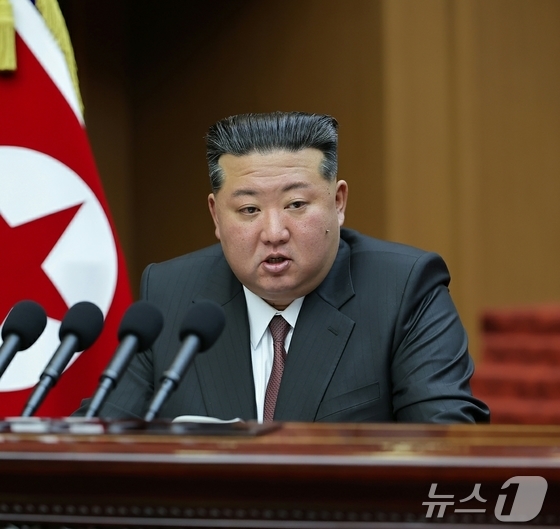
These changes align with Kim Jong Un’s statements during the first session of the 15th Supreme People’s Assembly, where he emphasized the prosperity and well-being of the people as a key government priority. He stressed the need to prevent phenomena contrary to the people’s interests, such as corruption and bureaucracy, and to continuously improve laws and regulations to protect citizens’ rights and welfare.
Kim Jong Un particularly emphasized that national development and economic growth must primarily manifest in improved living standards for the people, asserting that the well-being of the people is the government’s absolute criterion and guiding principle. This marks a shift from focusing solely on economic indicators and growth rates to prioritizing tangible improvements in people’s lives.
Both the revised constitutional preamble and Kim Jong Un’s speech underscore the centrality of people-first socialism, reflecting Kim Jong Un’s ideology. However, it’s unlikely that this ideology will be officially elevated to Kim Jong Un-ism and included alongside Kimilsungism-Kimjongilism in party regulations or the constitution in the near future.
The two-year delay in amending the constitution after Kim Jong Un’s call for a two-state theory in late 2023 likely reflects internal debates not only about unification-related language and territorial clauses but also about how to incorporate Kim Jong Un’s ideology into the constitutional text.
While North Korea claims to have based its constitutional provisions on people-first socialism, the practical application of these principles remains to be seen. Nevertheless, Kim Jong Un’s March speech subtly acknowledged that times are changing and the public is demanding more mature leadership, indicating a clear growth in political consciousness among North Koreans, who increasingly expect a genuine commitment to their welfare and selfless service from their leaders.