Russia reportedly pushed hard to remove all references to North Korea’s nuclear program during negotiations over a consensus document at the 11th Review Conference of the Treaty on the Non-Proliferation of Nuclear Weapons (NPT), held for the first time in five years.
The move is being interpreted as a sign of Moscow’s increasingly overt support for North Korea’s nuclear status as Russia deepens military ties with Pyongyang.
According to diplomatic sources on Tuesday, the 11th NPT Review Conference, held at U.N. headquarters in New York from April 27 to May 22 local time, ended without the adoption of a final consensus document.
The NPT review conference is held every five years over a four-week period, and this marks the third consecutive failure to adopt a consensus document, following breakdowns in 2015 and 2022.
References to North Korea’s nuclear program were reportedly pared back through the second and third draft revisions before being removed entirely from the fourth draft, with Russia said to have played a decisive role in the process.
Under the NPT’s consensus-based procedure, even a single objection can block adoption of a final document. Russia is understood to have taken a hard-line stance, signaling it would break consensus if language concerning North Korea’s nuclear program remained in the text.
Analysts view the move as a form of political repayment for North Korea’s military support for Russia’s war in Ukraine, including troop deployments and weapons assistance, effectively shielding Pyongyang’s status as a de facto nuclear power.
Russia’s unusually explicit opposition stands in stark contrast to previous NPT review conferences, where references to North Korea’s nuclear program had not been a source of major disagreement.
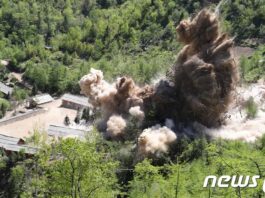
North Korea joined the NPT in 1985 but later became the only country to twice declare unilateral withdrawal while continuing to pursue nuclear weapons development since the mid-1990s. Until now, NPT member states had largely maintained a unified stance on the issue.
Even when final consensus documents failed to materialize in 2015 and 2022, draft texts still included language condemning North Korea’s nuclear program.
In response to Russia’s position, South Korea’s delegation reportedly maintained throughout the negotiations that references to North Korea’s nuclear activities had to remain in the document.
Seoul is said to have insisted on including three core principles: denuclearization of the Korean Peninsula, non-recognition of North Korea as a nuclear weapons state, and support for dialogue and diplomacy.
After all references to North Korea were removed from the fourth draft, the South Korean delegation reportedly urged conference organizers to restore the language and continued consultations with allies including the United States and Japan.
China, another close partner of North Korea, reportedly refrained from taking a clear public position on the wording related to Pyongyang’s nuclear program.
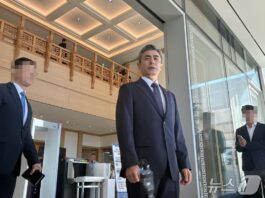
At the conference’s closing session, Kim Sang-jin, deputy permanent representative of South Korea to the United Nations, said, “It should have been clearly stated that North Korea can never be recognized as a nuclear weapons state under the NPT regime and that the issue must be resolved through negotiations and diplomacy.” He added that Seoul deeply regretted the failure to include “even a single line” addressing North Korea in the outcome document.
Diplomatic sources noted, however, that disagreements over North Korea-related language were not the only factor behind the collapse of the negotiations, as participating countries remained divided on a range of other issues as well.
Do Hung Viet, Vietnam’s ambassador to the United Nations and chair of the conference, ultimately concluded that consensus was unattainable after consultations with member states and ended the meeting without formally presenting a final draft document.
Such an outcome is also considered highly unusual in the history of the review conference.
The latest breakdown means the NPT review process has now failed three consecutive times to produce a final consensus document.
The repeated failures have fueled growing concerns over the weakening authority and credibility of the global nonproliferation regime.
Amid increasingly volatile geopolitical tensions, including the Russia-Ukraine war and conflicts in the Middle East, diplomatic divisions among NPT member states also appear to be deepening.