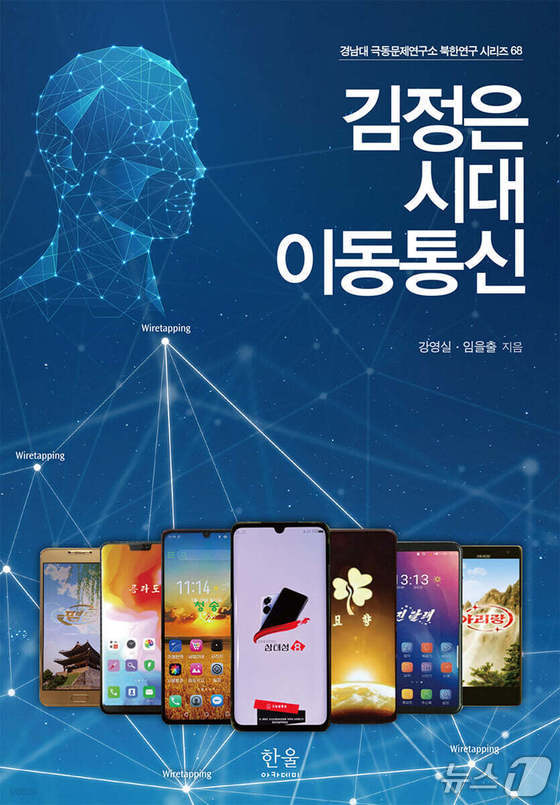
Mobile Communications in the Kim Jong Un Era examines how North Korea has expanded mobile communications into a key pillar of state administration, social control and digital economic development under Kim Jong Un’s leadership. Authors Kang Young-sil and Lim Eul-chul analyze the country’s mobile communications ecosystem through the lens of policy, legal and institutional reforms, organizational restructuring, device adoption and user behavior.
The authors argue that mobile communications in North Korea extend far beyond voice calls and text messaging. Instead, the technology sits at the intersection of national security, economic management and social governance, providing insight into both the ambitions and limitations of the Kim Jong Un regime.
The book traces the evolution of information and communications technology policies, legislative revisions, post-pandemic regulatory changes and the creation of the Ministry of Information Industry through the consolidation of the Ministry of Posts and Telecommunications, the Ministry of Electronics Industry and the National Informatization Bureau.
It also explores how organizational integration has supported the expansion of telecommunications infrastructure, the localization of communications equipment manufacturing and the centralization of national digitalization efforts.
Human resource development and research activities form another major theme. The authors examine the roles of key universities and research institutions, national standardization initiatives and research trends spanning cloud computing, the Internet of Things and artificial intelligence, offering a snapshot of North Korea’s current ICT capabilities.
The book also details the growing role of artificial intelligence in education, public administration and surveillance systems. Examples include the integrated search platform within the government network “Naenara” and video surveillance systems, illustrating how technological development is intertwined with state governance objectives.
A section dedicated to infrastructure and services traces the development of North Korea’s mobile communications network from its origins in a 2008 joint venture with Egypt-based telecommunications company Orascom Telecom. The authors describe how the network transitioned to domestically managed operations after 2013 and expanded base station coverage to border regions and frontline military areas while deploying the country’s Kangsong network.
The book also examines how North Korean citizens purchase and use mobile phones. Topics include handset distribution, application ecosystems, service fees and methods of information exchange. It additionally explores informal markets, including the circulation of market-sourced mobile phones and modifications made to imported foreign devices.
The research draws on interviews with more than 500 North Korean defectors, analysis of more than 30 mobile devices obtained by the researchers and a review of North Korean publications and media reports spanning the past decade. The authors combine policy analysis with observations of everyday usage patterns to provide a detailed portrait of the country’s mobile communications landscape.
Kang Young-sil specializes in North Korean science, technology and information and communications technologies, while Lim Eul-chul is a scholar of inter-Korean relations and science and technology cooperation on the Korean Peninsula.