

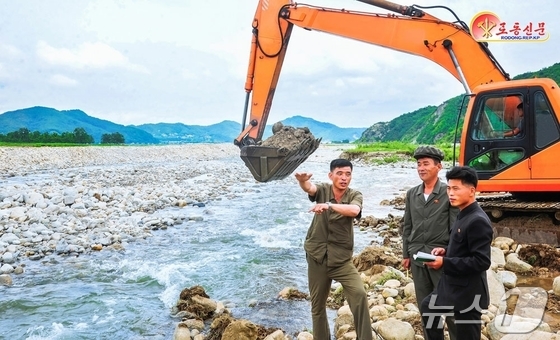
North Korea has called for a nationwide strengthening of disaster response measures, declaring that no area is absolutely safe as the country enters its main rainy season. The regime emphasized the possibility of extreme weather events this year, including record-breaking heatwaves, floods, and droughts. Officials have redefined disaster prevention as a political task rather than a mere administrative or economic issue, repeatedly stressing the responsibility of cadres.
The Workers’ Party’s official newspaper, Rodong Sinmun, published an article on July 3 titled, There Are No Absolutely Safe or Inviolable Areas. The piece stated that it has become a given fact that it may experience more severe climate crises this year, such as record-breaking heat, floods, and droughts. It urged all officials to remain on high alert, anticipate all possible scenarios, and enhance disaster prevention measures and crisis response capabilities a hundredfold.
The newspaper defined disaster prevention efforts as not simply an economic or administrative task, but a crucial political endeavor to protect the precious lives of the people and the country’s assets, as well as to successfully achieve this year’s strategic goals. It also argued that preventing natural disasters is essential for implementing the decisions made at the Party’s 9th Congress and advancing economic development plans without setbacks.
The article particularly emphasized that in the face of severe climate change-induced disaster risks, there can be no absolutely safe or inviolable areas. It called for accepting disaster-prone extreme weather as a reality and urged mobilization and concerted efforts. This implies that response systems should be established based on the premise that natural disasters can occur in any region or unit.
The newspaper also stressed that the success of disaster response hinges on officials’ sense of responsibility. It stated that the perspective, attitude, and work ethic of officials regarding disaster prevention efforts serve as a litmus test for evaluating their level of political consciousness. It demanded that all operations be conducted with the safety of people’s lives as the top priority.
Furthermore, it pointed out that the main enemies in the fight against disaster-inducing climate are complacency, laxity, and the it-won’t-happen-to-us mentality of hoping for the best. It emphasized the need to put an end to the misguided approach of merely reacting after disasters occur. This underscores the importance of preemptive prevention and proactive response over post-disaster recovery.
In a separate article, Rodong Sinmun showcased regional disaster response efforts. Yodok County in Kangwon Province has completed river maintenance, embankment construction, and repairs to at-risk housing ahead of the rainy season. They have also replaced equipment at meteorological and hydrological observation stations to reinforce early warning systems.
The North Hwanghae Provincial Rural Economy Committee reported that the Unjong Livestock Farm is intensifying education and propaganda efforts to raise natural disaster awareness among agricultural workers. The Cholma Mine is also taking measures to prevent rainy season damage through erosion control works, embankment repairs, and drainage system maintenance.
North Korea has been consistently highlighting the importance of disaster prevention and crop management in preparation for summer extreme weather events, including monsoons and heatwaves, through various outlets such as Rodong Sinmun. Last year, the regime designated post-flood recovery as a national priority. This year, it continues to urge officials’ accountability and on-site responses to minimize the impact of natural disasters on agricultural production and economic plan implementation.