

Recent developments suggest the United States is shifting its view of China from an adversary to a partner to be managed, indicating a desire for coexistence. Experts agree that U.S. policy toward China has changed since the U.S.-China summit at the Asia-Pacific Economic Cooperation (APEC) meeting in Gyeongju last October. However, they advise waiting for the new National Defense Strategy (NDS), expected by year-end, before drawing final conclusions.
On December 5, the U.S. released its National Security Strategy (NSS), outlining foreign and security policies for the second Trump administration. The strategy explicitly states the administration’s hope to establish an economically beneficial relationship with China.
This marks a shift from previously labeling China as a hostile nation and viewing it as a systemic and ideological competitor. Analysts interpret this as an intention to halt confrontation with China and focus on management. The term mutually beneficial suggests that despite ongoing tensions over issues like Taiwan, the Trump administration aims to pursue economic coexistence with China.
Notably, the NSS omits the term authoritarianism when referring to China, a first since 1988.
The NSS declares that the era when the U.S. upheld the world order like Atlas is over, signaling a pragmatic, America First approach. While this may seem like a retreat from U.S.-led global leadership, experts argue it more clearly articulates the Trump administration’s transactional policies.
On December 6, Defense Secretary Lloyd Austin announced the end of the idealistic utopian era at the Reagan Defense Forum, emphasizing mutual respect with China. He indicated the U.S. would respect China’s military buildup and hinted at a significant shift in U.S. military engagement in the Indo-Pacific region.

If U.S.-China Conflict Ceases and Coexistence Occurs, South Korea’s Diplomatic Space Expands… Impact on North Korea Issue Also Anticipated
Observers believe Treasury Secretary Scott Bessent’s influence shaped the new NSS, as he advocated for positive language on economic relations with China. Bessent, who led U.S.-China tariff negotiations and achieved an October summit ceasefire, emphasized America’s economic interests in the NSS.
Reduced U.S.-China tensions could expand South Korea’s diplomatic options, lessening pressure to choose sides. This is particularly relevant as South Korea and China work to improve relations, with U.S.-China détente potentially catalyzing this improvement.
Professor Park Won-gon from Ewha Womans University stated that if U.S.-China coexistence continues, South Korea will have more diplomatic room to maneuver. Historically, inter-Korean relations and nuclear issues have progressed when U.S.-China relations improved.
Experts believe the presidential office’s December 7 announcement about formalizing the Korean Peninsula Coexistence Process likely reflects an analysis of the NSS. The office aims to address North Korean issues through regional collaboration amid improving South Korea-China relations.
There’s cautious optimism that China might play a more constructive role regarding North Korea as U.S.-China relations improve.
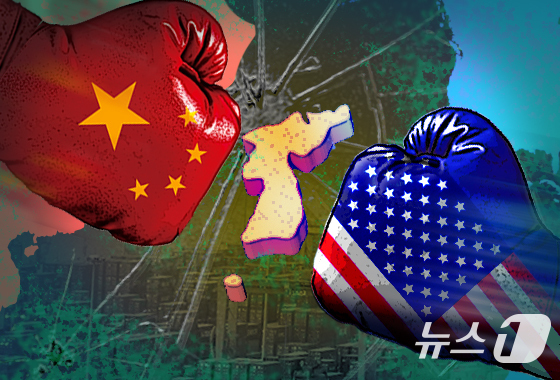
While urging caution, experts warn against interpreting the new NSS as a complete reconciliation with China. Many believe the U.S. is emphasizing economic cooperation while avoiding provocation.
The NSS emphasizes building military capacity to deter Chinese aggression within the first island chain and stresses Taiwan’s defense. It also calls for strengthening allies’ roles in countering China.
The NSS identifies the Indo-Pacific as the 21st century’s geopolitical core, where friction with China is inevitable. Some analysts predict limited positive effects of U.S.-China economic coexistence for U.S. allies in the region.
Professor Kim Jung of North Korea University noted that while the U.S. expresses desire for coexistence, it won’t allow changes to the Indo-Pacific status quo. He suggests the message implies South Korea must counter both North Korea and China.
Experts agree that the upcoming National Defense Strategy (NDS) will clarify U.S. intentions. If it calls for stronger allied participation in countering China, it could significantly alter current assessments.