

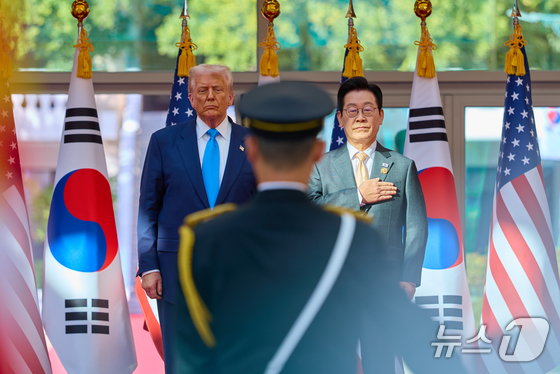
The Trump administration’s recently unveiled National Defense Strategy (NDS) marks a pivotal shift in the U.S.-South Korea alliance. This new approach officially places the primary responsibility for defending the Korean Peninsula on South Korea, with the U.S. transitioning to a limited support role.
James Kim, a senior fellow at the Stimson Center in Washington, D.C., released an analysis on Sunday stating that the NDS signals a move towards a more asymmetric alliance. In this new dynamic, South Korea would assume greater responsibilities while the U.S. reduces its military footprint in the region under a broader strategy of selective engagement.
Kim’s assessment of the NDS, alongside the White House’s National Security Strategy (NSS) and the State Department’s Strategic Plan (ASP), highlights three key aspects of the Trump administration’s national security approach: peace through strength, recalibration of security priorities based on U.S. geopolitical interests, and revitalization of the defense industrial base.
The analyst observes that the Trump administration is prioritizing homeland defense and Western Hemisphere security while de-emphasizing traditional alliance regions like Europe. In the Indo-Pacific, the focus is on a selective engagement strategy centered on deterring China.
Kim emphasizes that for South Korea, this shift likely portends significant changes in U.S. posture on the peninsula, beginning with the ongoing push for the transition of wartime operational control (OPCON).
He notes that South Korea, like other U.S. allies, will be expected to take on a larger share of its defense burden. Meanwhile, the U.S. will maintain its primary focus on bolstering deterrence in the Indo-Pacific while continuing to concentrate on homeland and Western Hemisphere defense.
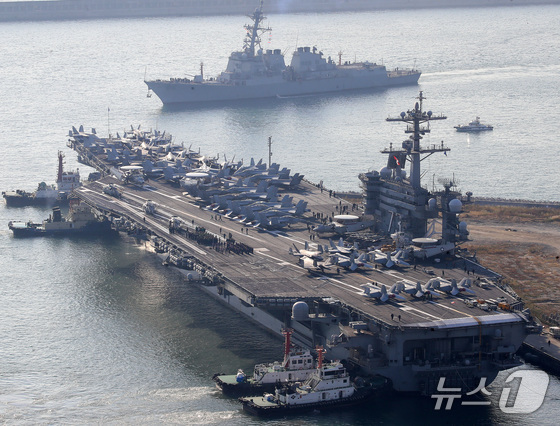
At the 57th Security Consultative Meeting (SCM) in Seoul last November, the South Korean government already committed to increasing its defense spending to 3.5% of GDP and pursuing the OPCON transition.
Currently, the U.S.-led Combined Forces Command (CFC) exercises OPCON. Post-transition, the command structure would shift to South Korean leadership.
Kim also highlights the potential for defense cooperation to become a cornerstone of the alliance. Citing data from the Stockholm International Peace Research Institute (SIPRI), he notes that South Korea’s top four defense firms recorded sales of over 14 billion USD as of 2024, and that the country aims to become a top-four global arms exporter by 2030. He points out that Hanwha Group has already pledged over 6 billion USD to establish defense facilities in the U.S., particularly in the artillery and naval sectors.
The analyst suggests that relations with China could be influenced by the broader U.S.-China strategic landscape. The NDS emphasizes pursuing strategic stability with China while strengthening deterrence by denial along the First Island Chain.
Kim predicts that the impact on South Korea’s diplomatic relations with China and security in the Yellow Sea region will depend on the trajectory of Washington-Beijing relations.
He concludes that the NDS signifies a critical juncture for the 70-year-old U.S.-South Korea alliance. While this partnership has maintained peace and stability on the Korean Peninsula since the 1953 armistice, it now faces pressure to adapt to changing geopolitical realities.
Kim stresses that South Korea’s response to this transition – through its strategies, military operations, defense policies, and diplomatic approaches – will shape not only the future of the U.S.-South Korea alliance but also the broader security order in Northeast Asia.