

President Donald Trump’s threat to raise tariffs on South Korea is becoming increasingly likely to materialize. Despite the National Assembly initiating legislation for a special U.S. investment law and the government’s efforts to persuade the U.S. administration, a swift resolution seems unlikely.
The Blue House and government are on high alert as concerns grow that this tariff hike could impact ongoing security negotiations and other matters.
According to government sources on Monday, Trade Minister Kim Jung-kwan, who rushed to the U.S. following Trump’s tariff announcement, met with U.S. Commerce Secretary Howard Gutman in Washington, D.C. on January 30 but returned without significant progress.
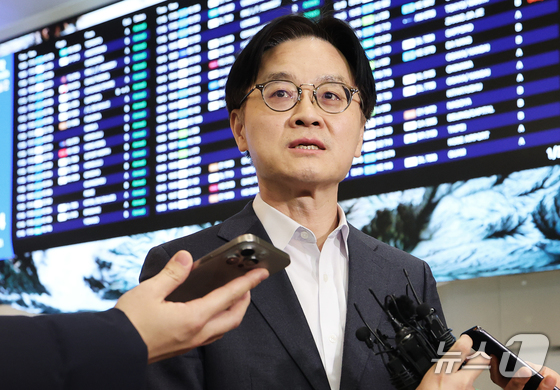
Upon his return to Incheon International Airport on January 31, Minister Kim told reporters that mutual understanding had deepened considerably in the Korea-U.S. tariff talks. He stated that he believes it has cleared up unnecessary misunderstandings, while also noting that the U.S. had already begun preparations to publish the tariff increase in the Federal Register.
He explained to U.S. officials the reasons for delays in processing the special investment law, including the opposition’s filibuster and the confirmation hearing for former Budget Minister Lee Hye-hoon. Despite these explanations, he reported that practical measures for reimposing tariffs on various goods, including automobiles, had already begun.
Trade Negotiations Chief Yeo Han-koo has now taken over, traveling to the U.S., but pessimistic forecasts suggest he may struggle to shift the current dynamic.
The Blue House is acutely aware of this situation and is deliberating on potential countermeasures.
A senior Blue House official stated that publishing in the Federal Register is a standard procedure, adding that it is trying to prevent it, but there’s a chance it might not succeed.
He continued that it can’t be certain whether the tariff increase will take effect immediately upon publication or if there will be a preparation period of several weeks, but emphasized that it’s largely irrelevant. It should assume the tariff increase becomes effective at the time of publication.
In response to the U.S. plans to publish the tariff increase, the Democratic Party has announced its intention to push for the passage of the special investment law during the February special session of the National Assembly (late February to early March).
Seven Months of Progress Undone… Internal Criticism of Complacency Emerges
After months of grueling negotiations since the new administration took office, South Korea had reached a dramatic agreement on tariffs with the U.S. However, the Trump administration’s threat to reimpose a 25% tariff has raised concerns that negotiations may be back to square one.
While Trump has often threatened high tariffs only to later withdraw them, it’s unprecedented for him to announce an increase after previously agreeing to a reduction. This has led to worried speculation about potential damage to the trust between South Korea and the U.S.
Within the government, some are criticizing the lack of effective follow-up after the Korea-U.S. tariff negotiations concluded. They argue that despite continuous pressure from the U.S. to implement the joint fact sheet, the response was complacent.
A high-ranking government official noted that there were indications that tension was rising from the U.S. regarding the implementation of the agreement, but added that despite this, it failed to create an atmosphere conducive to discussions on how to respond.
In fact, U.S. Deputy Ambassador to South Korea James Heller sent a letter on January 13 to Deputy Prime Minister and Science Minister Bae Kyung-hoon, urging the implementation of the Korea-U.S. joint fact sheet. The letter addressed government platform regulations and was interpreted as U.S. pressure hinting at a potential tariff reimposition.
Security Negotiations Also at Risk
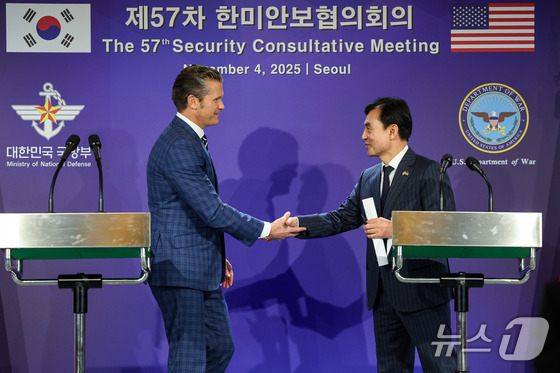
The possibility that President Trump’s 25% tariff reimposition could affect ongoing security negotiations between South Korea and the U.S. cannot be dismissed.
Both countries have initiated practical discussions on South Korea’s acquisition of nuclear-powered submarines, uranium enrichment, spent nuclear fuel reprocessing, and increased defense spending, as outlined in the security sector joint fact sheet. If the tariff increases materialize, it could dampen the momentum for these dialogues.
A Blue House official remarked that the Trump administration’s tariff reimposition is not a trivial matter, adding that it can’t rule out the possibility that it may impact negotiations in other areas, including security.