

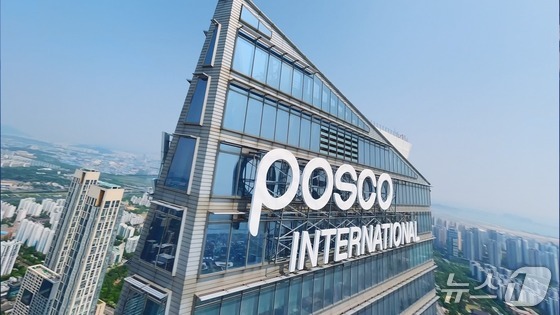
The race to reduce dependence on Chinese rare earths is gaining momentum across public and private sectors. Major South Korean companies like POSCO, LS, and Korea Zinc are establishing rare earth production hubs in the U.S. to diversify their supply chains. Meanwhile, the government has pledged 1 trillion KRW (about 691 million USD) to support this initiative through a coordinated one-team approach.
Industry sources reported on February 14 that POSCO International is set to begin producing rare earths and permanent magnets next year at a joint manufacturing facility in Indiana, established in partnership with ReElement Technologies. This marks the first tangible outcome of their memorandum of understanding (MOU) signed last September to bolster the rare earth supply chain.
The joint venture will function as an integrated production center, covering rare earth separation and purification, permanent magnet manufacturing, and recycling operations. POSCO International has already forged partnerships with 30 companies across North America, Australia, and Asia. Once operational, the facility will vertically integrate the entire rare earth supply chain, from mining to processing, magnet production, and waste recycling.
Rare earths are critical materials for cutting-edge industries, essential for electric vehicle motors, humanoid robots, semiconductors, displays, and precision defense equipment. However, South Korea heavily relies on imports for these materials. The Korea International Trade Association reports that the country’s dependence on China reaches 99.3% for rare earth permanent magnets and about 80% for rare earth metals.
As the U.S. and China retreat into protectionist policies, securing a stable rare earth supply chain has become a strategic imperative for South Korean manufacturing. This explains why the domestic industry is eagerly anticipating POSCO International’s rare earth permanent magnet production in the U.S.
Among domestic companies, POSCO Group is taking the lead in diversifying the rare earth supply chain.
POSCO International has secured contracts worth 900 billion KRW (about 622 million USD) over six years with a North American automaker and 260 billion KRW (roughly 179 million USD) over nine years with a European automaker for permanent magnet supply. Last September, it also landed a 600 billion KRW (approximately 414 million USD) contract to supply motor cores to a North American electric vehicle manufacturer. The total value of these contracts reaches 1.76 trillion KRW (about 1.21 billion USD).
POSCO Group Chairman Jang In-hwa, serving as the Korean co-chair of the Korea-Australia Economic Cooperation Committee, plays a pivotal role in fostering resource development partnerships with Australia, a key ally in the supply chain for critical minerals like iron ore and lithium.
Notably, Chairman Jang inaugurated the Australian Core Resources Research Institute in Australia last year, accelerating efforts to gain a competitive edge in technologies for steel, battery materials, and rare earths.
LS Cable & System and Korea Zinc Establishing Production Bases in the U.S., With Government Backing
LS Cable is exploring plans to build a permanent magnet factory in Chesapeake, Virginia, near its upcoming submarine cable plant, to supply major automakers and electronics firms.
On January 13, Korea Zinc announced a strategic partnership with U.S.-based Alta Resource Technologies, experts in rare earth separation biotechnology, to form a joint venture in the U.S. They aim to construct a facility capable of producing 100 tons of high-purity rare earth oxides annually, targeting commercial operations by 2027.
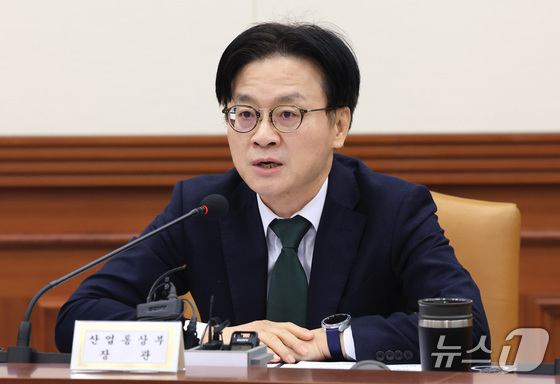
The government unveiled a comprehensive rare earth supply chain strategy on February 5, pledging support for the initiative. This marks the first all-encompassing government plan addressing the entire rare earth ecosystem, aiming to establish a management system from resource acquisition to recycling, backed by a 1 trillion KRW (about 691 million USD) investment.
The strategy focuses on strengthening oversight of the entire supply chain, from resource procurement to separation, purification, industrial application, and recycling. Significantly, it will classify rare earths as a national strategic resource and expand the list of key minerals under management from seven to 17.
Academia and industry have also joined forces in this effort. Last September, major players including LS Cable, LS Eco Energy, POSCO International, and Hyundai Materials launched the Korea Rare Earth Industry Association, collaborating with over 20 institutions such as Seoul National University, Hanyang University, and the Korea Institute of Industrial Technology.
Koo Bon-kyu, chairman of the Korea Rare Earth Industry Association, emphasized that diversifying the rare earth supply chain and achieving technological self-reliance are crucial for maintaining competitiveness in advanced industries. He affirmed their commitment to realizing these goals through collaborative efforts among industry, academia, research institutions, and government agencies.