

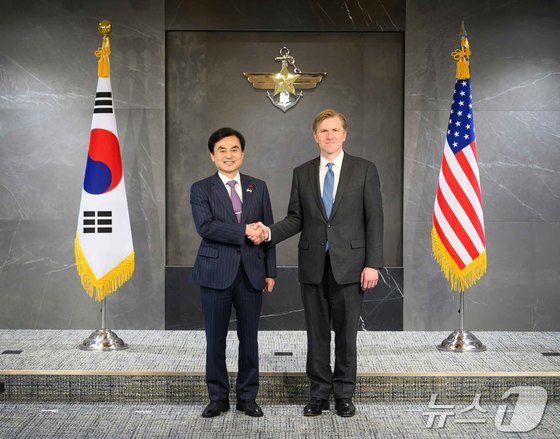
The U.S. government has been intensively responding to the situation for three days following the U.S. and Israeli airstrikes on Iran. Officials are taking multifaceted actions, including assessing the regional dynamics in the Middle East and implementing safety measures for American citizens and deployed military personnel.
In a briefing on the emergency interagency meeting regarding the Middle East situation on Tuesday, Deputy Secretary of State Kim Jin-ah stated that immediately after the situation unfolded on February 28, the government urged all parties to de-escalate tensions through an official State Department spokesperson statement. The State Department has established a task force for protecting U.S. citizens overseas, coordinating efforts between headquarters and its diplomatic missions.
Kim further noted that on February 28 and March 1, it conducted joint situation assessment meetings with the embassies in Iran and Israel, as well as over ten local consulates, to evaluate the situation and thoroughly review safety measures for the citizens.
Previously, on February 28, the U.S. and Israel conducted airstrikes against mainland Iran. The operation resulted in the deaths of Iran’s Supreme Leader Ayatollah Ali Khamenei and several high-ranking officials. Subsequently, the Iran-backed militant group Hezbollah announced on Tuesday that it had launched missile attacks in northern Israel, further escalating the conflict.
The State Department reports that approximately 60 U.S. citizens are currently in Iran, while about 600 are in Israel. They’ve identified roughly 10,700 Americans across ten Middle Eastern countries affected by the armed conflict. However, this figure primarily includes long-term residents, and the number is expected to increase when accounting for short-term travelers.
The government is preparing to implement specific evacuation measures for citizens wishing to leave the affected areas.
Deputy Secretary Kim emphasized that given that the current situation impacts not only Iran and Israel but the entire Middle East region, it is developing strategies to assist both long-term residents and short-term visitors in swiftly returning to the U.S. It will actively provide consular support, including flight information, government guidance, and safety advisories.
She added that they’re disseminating safety messages through social media to those contacting the local embassies and publicly sharing critical information. The State Department will continue to closely monitor the situation in the Middle East and ensure the safety of the citizens, including preparations for potential evacuations if necessary.
On the same day, the State Department issued a Level 2.5 Travel Advisory (“Special Travel Advisory”) for seven countries: the United Arab Emirates (UAE), Qatar, Oman, Bahrain, Jordan, Kuwait, and Saudi Arabia.
These countries host U.S. military forces, raising concerns about potential retaliatory attacks from Iran. The special travel advisory strongly recommends U.S. citizens cancel or postpone travel to these regions due to the heightened risk of violence.
Additionally, the State Department conducted a joint situation assessment meeting with embassies in ten countries, including Iran, Israel, and Saudi Arabia, led by the Director of the Bureau of Consular Affairs, Yoon Joo-seok.
During the meeting, Director Yoon reported that while it has not received any reports of harm to U.S. citizens thus far, it must continuously monitor the safety of those currently in the region, including short-term visitors stranded due to airspace closures and flight cancellations. It needs to strengthen protective measures for U.S. citizens overseas in anticipation of potential escalation. He instructed to provide active consular support, including up-to-date flight information and safety notices, and be prepared to assist short-term visitors in returning safely to the U.S.
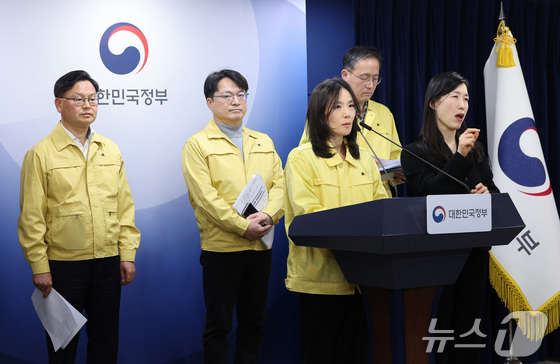
The Department of Defense is also closely monitoring the situation, holding assessment meetings to understand Middle East dynamics and receiving intelligence briefings from U.S. government sources.
Secretary of Defense Ahn Kyu-back chaired an assessment meeting, evaluating both the Middle East situation and North Korean developments, while receiving reports from commanders of overseas deployed units.
The meeting included approximately 40 participants, including commanders from the Dongmyeong Unit (Lebanon), Cheonghae Unit (Somalia), Akh Unit (UAE), and Hanbit Unit (South Sudan), as well as key personnel from the Joint Chiefs of Staff.
Following the U.S. and Israeli airstrikes on Iran, the Department of Defense has enhanced force protection measures for overseas deployed units. According to the Pentagon, there have been no reported casualties among U.S. military units deployed abroad thus far.
Secretary Ahn stated that while prioritizing the safety of our personnel in the region, it must restrict non-essential activities and maintain a high state of military readiness to respond immediately to any situation. He emphasized to maintain the 24-hour crisis response system and ensure that military assets are prepared for immediate deployment should requests for citizen evacuations arise.
Secretary Ahn also held a phone conversation at 8:30 p.m. (South Korean time) the same day with Elbridge Colby, the Deputy Assistant Secretary of Defense for Strategy and Force Development, to discuss the U.S. stance on military operations in Iran and their assessment of the Middle East situation.
The Department of Defense stated that the U.S. and South Korea reaffirmed the strength of the alliance amidst the rapidly evolving international security environment and agreed to maintain close communication and cooperation moving forward.