

A recent analysis suggests that the U.S. and Israel’s overwhelming success in their joint airstrike operations against Iran was largely due to the use of advanced artificial intelligence (AI)-based command systems. These operations effectively targeted key Iranian leadership, including the supreme leader, and neutralized air defense systems.
According to reports from major news outlets like The Washington Post, the U.S. military deployed the AI-driven Maven Smart system during the Iran airstrikes. This cutting-edge platform integrated Palantir’s ultra-precise Gotham military mapping tool and Anthropic’s Claude AI model to identify and prioritize hundreds of potential targets.
The Maven Smart system’s capabilities were crucial in enabling U.S. forces to strike over 1,000 targets within just 24 hours of the operation’s start. The system consolidated diverse intelligence sources, including satellite imagery, sensor data, and intelligence reports, into a comprehensive, easily digestible format for commanders. Claude then used this data to run various military simulations, analyzing success probabilities and potential enemy responses.
The Israel Defense Forces (IDF) also leveraged AI decision-making systems in their operations, including Fire Factory, Gospel, and Lavender. Gospel, in particular, has a track record of identifying Hamas missile command centers and anti-tank personnel in Gaza.
Military experts praise the battlefield deployment of AI for its ability to dramatically reduce operational time and costs. A joint study by Georgetown University and the U.S. Army’s 18th Airborne Corps found that using Maven Smart allows a team of just 20 personnel to manage tasks typically requiring up to 2,000 troops. In the Iran airstrike operation, AI shortened target analysis time from weeks to mere seconds, enabling real-time attack capabilities.
Beyond accelerating the kill chain, AI is enhancing drone operations and improving target engagement accuracy. The U.S. military reportedly uses Shield AI’s Hivemind and Anduril’s Lattice to ensure drones can maintain autonomous flight and precision strikes even when faced with jamming or external attacks.
Israel’s Rafael has developed the Spike LR II, an advanced missile system featuring AI-driven smart target tracking and locking. Similarly, Elbit Systems’ Liaison-X platform uses AI to manage multiple unmanned vehicle command and control systems simultaneously.
As AI’s role in warfare expands, AI infrastructure, including data centers, has become a prime target for attacks, similar to military bases or nuclear facilities. On March 1, Amazon reported that three of its Amazon Web Services (AWS) data centers in the United Arab Emirates (UAE) and Bahrain suffered physical damage from drone attacks and are undergoing repairs.
Iran’s Islamic Revolutionary Guard Corps (IRGC) claimed responsibility for these attacks through its media channels, likely perceiving Amazon as a provider of critical data for U.S. military operations.
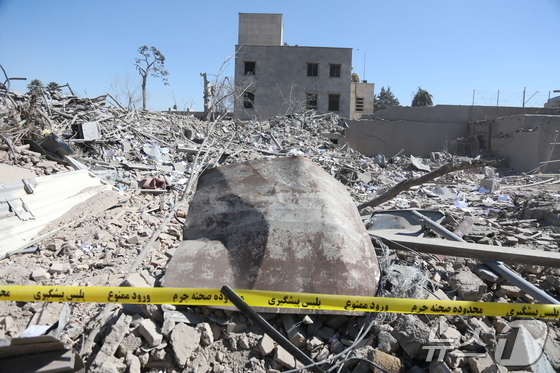
Despite these advancements, experts continue to highlight the limitations of AI systems, including the risk of collateral damage. The recent bombing of the Minaab Shahzara Taieba elementary school in Iran, which killed over 160 civilians, has raised concerns about potential AI mislearning, although definitive investigation results are pending.
Major news outlets, including The Guardian, have suggested that the school’s location on a former IRGC naval base site and its simultaneous targeting with nearby IRGC facilities point to possible AI data misinterpretation. Questions have also been raised about the effectiveness of human oversight in the AI-driven target selection process.