

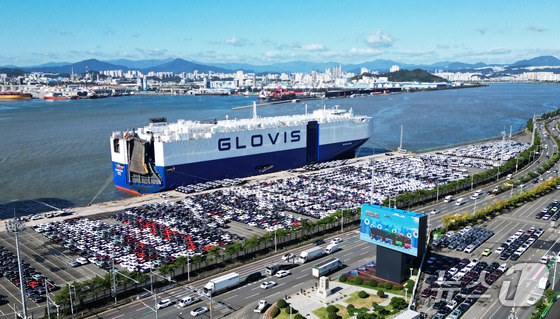
The South Korean automotive industry welcomed the passage of the Special Law on U.S. Investment by the National Assembly on Thursday. Industry leaders expressed relief that tariff uncertainties in their largest market, the U.S., have been resolved, ensuring a level playing field with international competitors.
The Korea Automobile Mobility Industry Association (KAMA) issued a statement expressing deep gratitude for the bill’s passage. The statement read that it sincerely thanks the National Assembly for their bipartisan effort in processing this crucial legislation to support the automotive sector, a key national industry. It also appreciates the government’s vigorous trade negotiations.
KAMA highlighted the industry’s previous concerns, stating that the automakers faced significant anxiety over the potential increase in U.S. export tariffs from 15% to 25%. Such a hike would have severely impacted the export competitiveness and potentially led to decreased domestic production, threatening the entire automotive ecosystem.
The association pledged that with this legislative breakthrough that the auto industry will redouble its efforts in technological innovation, productivity enhancement, and investments in future mobility. The goal is to cement Korea’s position as a global leader in the mobility sector. KAMA expressed optimism that the new law would foster a stable business environment across the automotive value chain and stimulate further investments.
In closing, KAMA emphasized its commitment to strengthening domestic production bases by boosting local demand and nurturing a sustainable parts ecosystem. The association called for continued support from the government and National Assembly in these endeavors.