

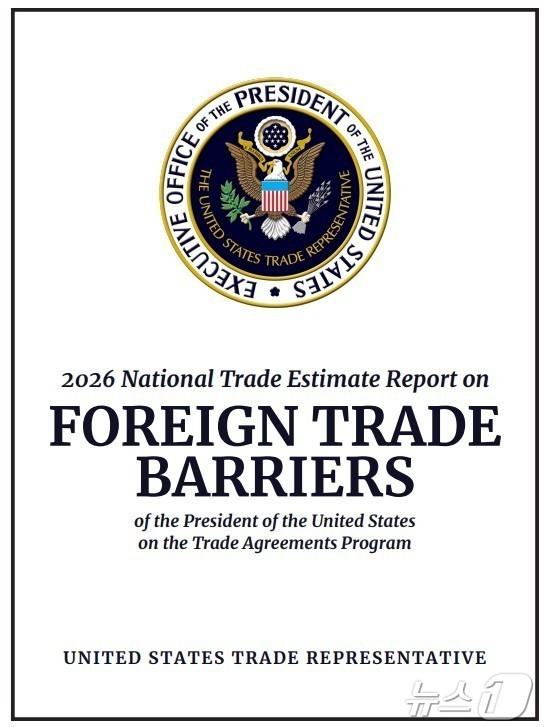
The Trump administration has identified South Korea’s restrictions on AI infrastructure and cloud procurement as non-tariff trade barriers, marking a new addition to the annual U.S. trade barrier report.
The Office of the United States Trade Representative released its 2026 National Trade Estimate Report on Foreign Trade Barriers on March 31, expanding its focus this year to advanced industries including AI, data, and cloud services.
On AI infrastructure, the USTR alleged that South Korea’s Ministry of Science and ICT conducted a bidding process last May for high-performance GPUs and cloud resources that effectively excluded U.S. companies from participating.
The report also pressed for the prompt release of guidelines tied to South Korea’s Industrial Technology Protection Act. Under that framework, the government maintains a list of core national technologies — spanning semiconductors, automobiles, robotics, and aerospace — and bars foreign cloud service providers from handling related work, citing concerns over cross-border data transfers. The USTR noted that U.S. stakeholders have been working with the ministry to develop new cloud computing guidelines and urged their release.
For the first time, the report flagged the absence of a cooperative framework between the two countries to prevent duty evasion through indirect exports via third countries.
On digital platform regulation, the report noted ongoing discussions about pre-designating certain digital service providers based on global revenue and imposing restrictions on competitive practices and content management — rules the USTR said could affect U.S. companies operating in the market.
Most previously identified barriers remained on the list. In agriculture, restrictions on U.S. beef imports over 30 months, a ban on processed beef products, quarantine delays, and pesticide residue standards were all reiterated. In the digital sector, network usage fee debates and limits on map and location data exports continue to be cited, though the report acknowledged that South Korea recently granted Google conditional permission to export high-precision mapping data.
In automotive, emissions-related component regulation clarity remains unresolved. In pharmaceuticals, transparency issues in drug pricing and reimbursement persist. The defense sector again flagged technology transfer requirements tied to foreign procurement contracts, while cloud security certification requirements continue to limit foreign companies’ entry into public procurement. No foreign firm has obtained certification at intermediate levels or above despite announced reforms.
Investment restrictions on foreign ownership in telecommunications, broadcasting, energy, and nuclear power were also reiterated as standing barriers.