

President Donald Trump has once again voiced his frustrations with allies over the issue of troop deployments in the Strait of Hormuz. On Thursday, concerns emerged about potential retaliatory measures against South Korea due to Trump’s lingering resentment.
During a White House Easter luncheon on Wednesday, Trump explicitly criticized South Korea and Japan for not complying with his demands to send warships to the Strait of Hormuz.
He argued that the blockade of the Strait is not America’s problem, insisting that Europe and South Korea should handle it. Trump particularly emphasized that it has 45,000 troops stationed right next to nuclear-armed North Korea, yet South Korea hasn’t helped them.
While the actual number of U.S. Forces Korea (USFK) is around 28,500, Trump routinely cites 45,000 when discussing U.S. troops in Germany, Japan, and South Korea. Given that approximately 45,000 U.S. troops are stationed in Europe and 50,000 in Japan, some speculate he habitually uses this figure to emphasize large numbers. The key point is that Trump significantly highlights the U.S. military’s contributions to South Korea, using it as leverage.
In this instance, he appeared to express dissatisfaction that South Korea did not assist during America’s crisis, despite the U.S. military playing a crucial role in deterring North Korea.
Following airstrikes on Israel and Iran on February 28, Trump has been demanding that major allies, including South Korea and Japan, send naval vessels to pressure Iran after it threatened to block the Strait of Hormuz, a critical oil supply route.
However, the South Korean government has refrained from accepting this request, considering the implications of direct involvement in a potential conflict and the complex effects that deploying naval vessels could have on future relations with Iran and the Middle East. The government has taken an ambiguous stance, stating that there was no official request while emphasizing that it did not reject U.S. demands.
Tailored Diplomacy Fails to Halt Pressure on Alliance Contributions… Trump’s Transactional Diplomacy Continues
Since its inauguration last June, the government has been striving to fill the diplomatic void created by the December 3 state of emergency by focusing on tailored diplomacy aligned with Trump’s expectations.
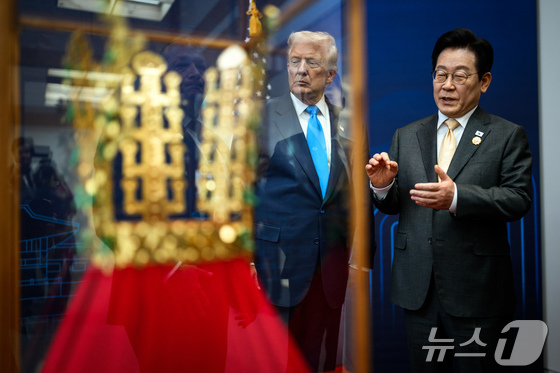
A notable example occurred during the October Asia-Pacific Economic Cooperation (APEC) summit in Gyeongju, where President Lee Jae Myung presented Trump with a model of the Gold Crown from Cheonmachong Tomb and the Grand Order of Mugunghwa before their bilateral meeting. Trump, visibly pleased with the royal treatment, promoted the gifts on social media.
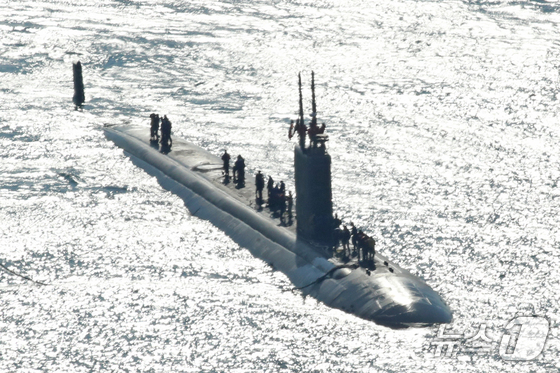
However, pressure on allies stemming from Trump’s transactional perspective has persisted. In February, the U.S. threatened to increase tariffs to 25% over delays in South Korea’s legislative actions regarding investments in the U.S. Moreover, discussions for the introduction of nuclear-powered submarines and amendments to the U.S.-Republic of Korea (ROK) nuclear cooperation agreement, which should have started in January, are still ongoing.
Trump’s Long Memory May Lead to Comprehensive Pressure on Trade and Security… Likely to Hold Allies Accountable
Diplomatic circles are concerned that Trump’s lingering resentment over the Strait of Hormuz issue may lead to retaliatory measures against South Korea, Japan, and European allies once the situation in the Middle East stabilizes.
Following a Supreme Court ruling in February that invalidated the International Emergency Economic Powers Act (IEEPA), the U.S. is currently investigating Section 301 of the Trade Act of 1974. This could potentially result in the imposition of new tariff bombs once the investigation concludes.
There’s also speculation that the U.S. might complicate South Korea’s progress on nuclear submarines and nuclear cooperation. If bilateral talks don’t occur this month, some analysts cautiously predict that U.S. retaliatory measures may become more apparent.
Professor Park Won-gon of Ewha Womans University stated that the U.S. will hold South Korea and its allies accountable in some form. They’re already putting direct pressure on the North Atlantic Treaty Organization (NATO). While they won’t demand payment for war costs, they might suddenly express disappointment and significantly raise tariffs.
Park added that they might also demand higher costs for nuclear submarines or the U.S.-ROK nuclear cooperation agreement. Trump fundamentally believes allies are exploiting the U.S. and will seek to extract more concessions.