On Thursday, Yan Xuetong, a prominent Chinese scholar and honorary director of the Institute of International Relations at Tsinghua University, addressed recent calls within South Korea for developing its own nuclear arsenal in response to North Korea’s nuclear threat. He argued that South Korea must consider nuclear threats not only from North Korea but also from the U.S. Yan pointed out that while the U.S. continues to advance its nuclear capabilities, it faces no criticism or opposition.
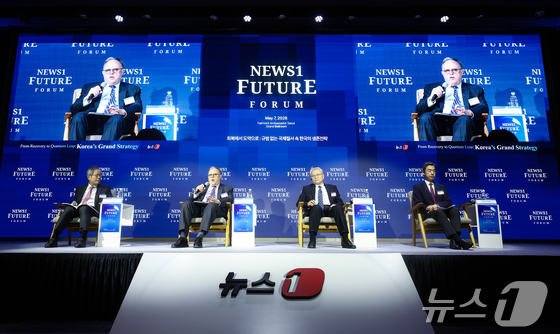
Yan made these remarks during a panel discussion at the News1 Future Forum held at the Fairmont Hotel in Seoul. The session, titled, Modernizing Alliances and Strategic Autonomy: What is South Korea’s Position? was the first of the forum’s discussions.
When asked by Cheon Young-woo, chairman of the Korea Future Forum, about China’s stance if South Korea and Japan were to become nuclear powers for peaceful purposes, Yan responded that as a signatory to the Nuclear Non-Proliferation Treaty (NPT), China opposes any nuclear weapons development by countries outside the existing five permanent the United Nations (UN) Security Council members. He emphasized that China already has the most nuclear-armed neighbors, and any increase would heighten regional risks.
Yan further highlighted that while the U.S. has no nuclear-armed neighbors, it continues to modernize its nuclear arsenal without facing pushback. He suggested that U.S. allies, including South Korea, should be concerned about potential nuclear threats from both North Korea and the U.S.
When Cheon cited reports of China’s plans to expand its nuclear arsenal to between 300 and 1,000 weapons, Yan declined to comment, stating he was not privy to information about China’s nuclear capabilities.
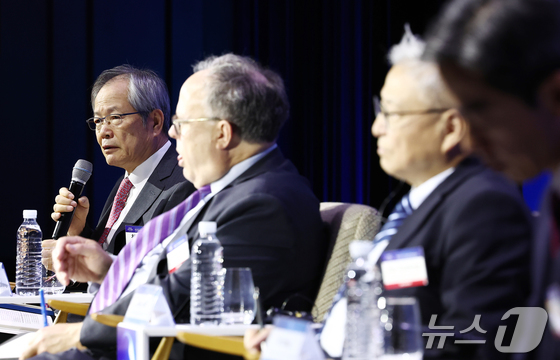
The discussion also explored differing perspectives on modernizing the U.S.-South Korea alliance. Cheon noted that South Korea’s primary concern is maintaining U.S. extended deterrence despite changing alliance roles, while the U.S. focuses on increased South Korean defense spending and potential involvement in regional issues like the Taiwan Strait.
Sydney Seiler, a senior advisor at the Center for Strategic and International Studies (CSIS), emphasized that security threats in Asia, including North Korea’s nuclear program, pose equal risks to both South Korea and the U.S. He asserted that the continued U.S. military presence in South Korea for seven decades underscores its strategic value.
Seiler cautioned against excessive skepticism about modernizing the U.S.-South Korea alliance, stressing the need for confidence in the alliance’s strength and deterrence capabilities, backed by coordinated messaging.
Panelists suggested a gradual approach to Japan-South Korea military cooperation, starting with low-risk initiatives to address lingering mutual distrust.
Junya Nishino, director of Keio University’s East Asian Institute, noted that while South Korea and Japan agreed in January to resume joint maritime rescue exercises after a nine-year hiatus, implementation has stalled. He stressed the importance of building public support and addressing historical tensions to improve bilateral relations, given the interplay between diplomatic issues and domestic public opinion in both countries.